
Who Is Taylor Swift? Inside the Career of a Global Cultural Icon? To ask who is Taylor Swift is to ask a larger question about modern popular culture, creative ownership, and global celebrity in the 21st century. Swift is not only an American singer-songwriter but also a central figure in contemporary entertainment whose influence extends beyond music into media economics, cultural discourse, and audience engagement. Over nearly two decades, she has evolved from a teenage country artist into one of the most powerful figures in the global music industry.
Understanding who is Taylor Swift requires examining her artistic evolution, business decisions, and cultural resonance. Her career offers a case study in how artists navigate fame, creative control, and the changing structures of the entertainment economy.
Early Life and Musical Foundations
Roots in Pennsylvania and Nashville
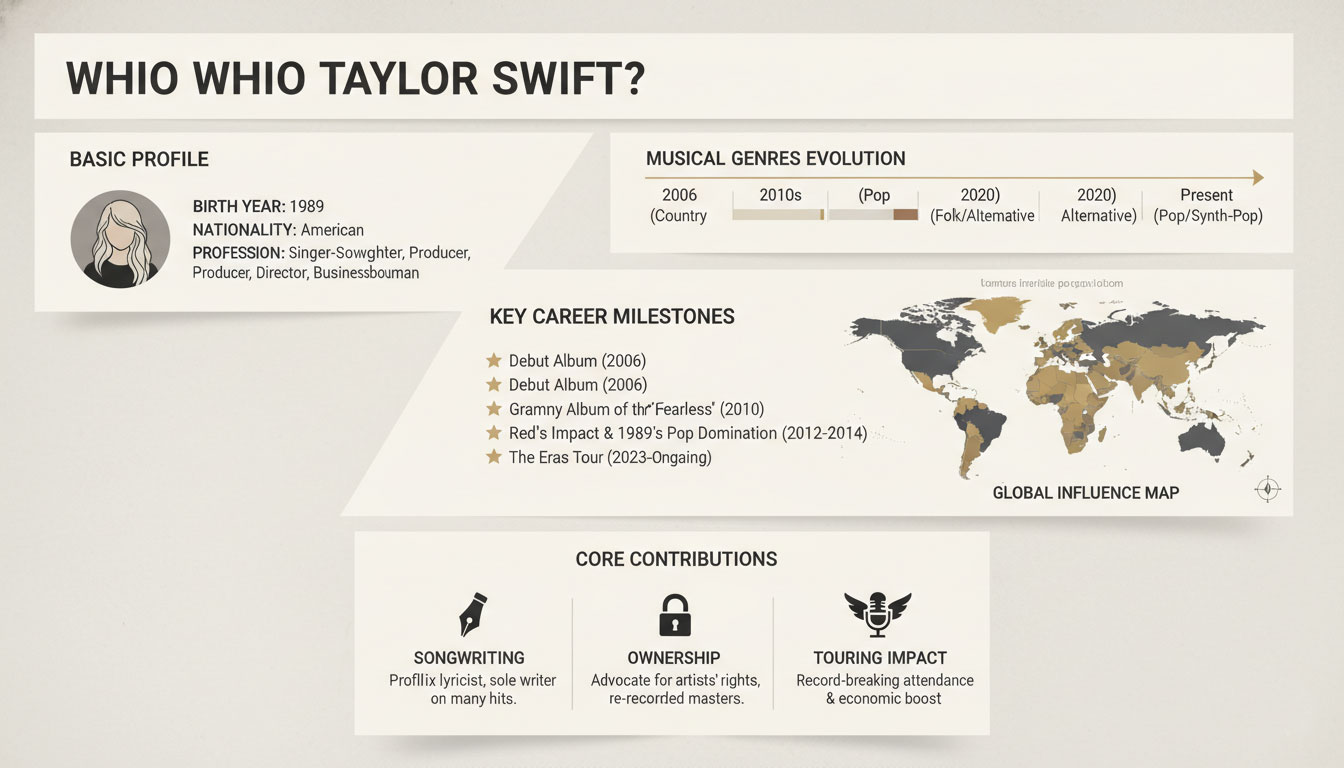
Taylor Swift was born on December 13, 1989, in Reading, Pennsylvania. Her early exposure to country music and storytelling shaped her artistic instincts. As a child, she learned guitar and began writing songs inspired by personal experiences, a practice that would later define her songwriting identity.
At the age of 14, Swift and her family relocated to Nashville, Tennessee, the center of the American country music industry. This move was instrumental in her development, placing her within a professional ecosystem that nurtured young songwriters and performers.
Entry Into the Music Industry
Swift signed a publishing deal as a teenager, marking an early recognition of her songwriting abilities. Her self-titled debut album introduced her as a country artist with a distinctive voice rooted in autobiographical storytelling. From the beginning, her work emphasized narrative clarity, emotional accessibility, and melodic simplicity.
Breakthrough and Mainstream Recognition
Transition From Country to Global Pop
The question of who is Taylor Swift cannot be answered without acknowledging her strategic genre transitions. While her early success was grounded in country music, Swift gradually incorporated pop sensibilities, expanding her audience without abandoning her narrative style.
This crossover culminated in albums that dominated international charts and established her as a global pop figure. Her ability to reinvent her sound while maintaining lyrical authenticity became a defining feature of her career.
Chart Performance and Industry Impact
Swift’s releases consistently performed at the top of global charts, reflecting both commercial success and sustained audience interest. Her albums often debuted at number one in multiple countries, signaling a level of international reach few artists achieve.
Artistic Identity and Songwriting
Narrative Songcraft
A central answer to who is Taylor Swift lies in her songwriting. Her lyrics often function as short stories, blending personal reflection with universal themes such as identity, love, ambition, and resilience. This narrative approach has fostered deep fan engagement and critical recognition.
Authorship and Creative Control
Unlike many pop artists, Swift has maintained a strong role in writing or co-writing her material. This authorship reinforces her credibility as a songwriter and strengthens her position within industry debates about creative ownership.
Business Strategy and Ownership
Re-recording Her Catalog
One of the most significant developments in understanding who is Taylor Swift is her decision to re-record her early albums to regain control over her master recordings. This move drew global attention to issues of artist rights, contract structures, and intellectual property within the music industry.
By releasing re-recorded versions, Swift not only reclaimed ownership but also reshaped industry conversations about power dynamics between artists and record labels.
Streaming, Sales, and Market Influence
Swift’s relationship with streaming platforms and physical sales reflects a nuanced understanding of music economics. She has repeatedly demonstrated an ability to mobilize audiences across formats, influencing how music is marketed and monetized globally.
Cultural Influence and Public Image
Media Visibility and Narrative Control
Who is Taylor Swift in the media landscape? She is a figure who actively manages her public narrative. Through selective interviews, public statements, and controlled digital communication, Swift has shaped how her story is told.
Her approach reflects broader shifts in celebrity culture, where direct audience engagement through social platforms plays a central role.
Fan Culture and Community
Swift’s fan base represents one of the most organized and engaged communities in popular music. This relationship is built on symbolic communication, lyrical interpretation, and shared cultural moments. Her ability to maintain this connection contributes significantly to her longevity.
Global Reach and Touring Power
The Economics of Live Performance
Taylor Swift’s live performances have become major economic events. Her tours generate significant revenue and attract audiences across continents, reinforcing her position as a global entertainer.
Below is a key information table On: summarizing major aspects of her professional profile:
| Category | Key Information |
|---|---|
| Profession | Singer-songwriter |
| Primary Genres | Country, Pop, Alternative Pop |
| Active Years | Mid-2000s to present |
| Global Reach | North America, Europe, Asia-Pacific |
| Core Strength | Songwriting and narrative identity |
| Industry Role | Artist, songwriter, cultural influencer |
This table highlights why discussions around who is Taylor Swift often extend beyond music into economics and cultural studies.
Critical Reception and Awards
Industry Recognition
Swift has received numerous awards across major institutions, reflecting both critical and commercial acclaim. These honors recognize songwriting, performance, and album-level cohesion rather than single-track popularity alone.

Critical Evolution
Early reviews emphasized youthful relatability, while later assessments focus on artistic maturity and conceptual ambition. This critical evolution mirrors her audience’s generational growth.
Gender, Power, and Representation
Women in the Music Industry
Another dimension of who is Taylor Swift relates to gender dynamics within entertainment. Swift has spoken publicly about creative ownership, professional autonomy, and the challenges faced by women in high-visibility industries.
Her career trajectory illustrates how female artists navigate institutional constraints while building independent authority.
Longevity and Legacy
Sustained Relevance
Few artists maintain cultural relevance across multiple decades. Swift’s adaptability, combined with a consistent creative core, has enabled her to remain influential amid shifting musical trends.
Future Impact
As the music industry continues to evolve, Swift’s strategies around ownership, audience engagement, and storytelling are likely to influence future generations of artists.
Defining Who Is Taylor Swift?
Ultimately, who is Taylor Swift is not a static answer but an evolving narrative. She is an artist whose career reflects broader transformations in music, media, and cultural power. Her influence rests not only on chart success but on her ability to reshape industry norms while maintaining artistic integrity.
For global audiences, Taylor Swift represents a rare combination of creative authorship, commercial intelligence, and cultural resonance, positioning her as one of the defining figures of contemporary popular culture.


