
The Cultural Impact of Iconic Entertainment Weekly Covers Over Decades. Since its inception in 1978, Entertainment Weekly has become a barometer of popular culture, chronicling shifts in celebrity influence, cinematic trends, and societal attitudes. Beyond reporting, its covers have served as cultural artifacts, capturing moments that resonate far beyond their newsstands.
From early cinematic icons to modern-day streaming stars, the magazine’s editorial and visual choices reflect not only entertainment industry trends but also broader cultural currents. This article examines the historical significance of Entertainment Weekly covers, their influence on pop culture, and the ways in which they continue to shape public perception.
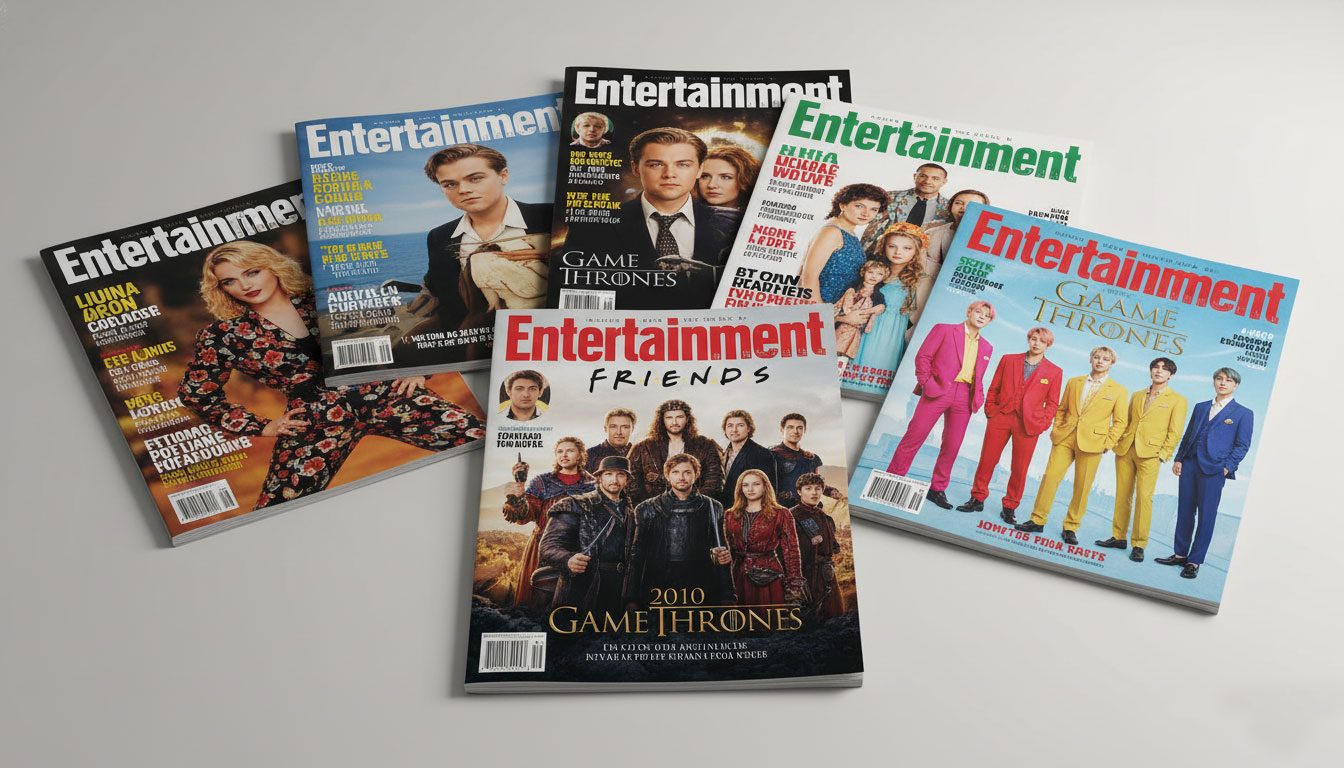
A Historical Overview of Entertainment Weekly
Entertainment Weekly launched in 1978 as a print magazine covering movies, television, music, and books. Its distinctive covers combined vivid photography, strategic headlines, and cultural commentary, quickly positioning the publication as both a news source and a pop-culture curator.
Over the decades:
- The magazine documented Hollywood’s evolution from blockbuster cinema to streaming dominance.
- Iconic covers highlighted both emerging stars and established legends, often predicting cultural phenomena.
- Each decade’s visual and editorial choices mirrored societal trends, from fashion to politics to diversity in media representation.
These covers serve as snapshots of their eras, offering insights into both the entertainment industry and public sentiment.
The 1980s: Celebrity and Blockbuster Culture
During the 1980s, Entertainment Weekly covers frequently emphasized rising film stars, chart-topping musicians, and the blockbuster phenomenon. Notable examples include covers featuring Madonna, Michael Jackson, and Steven Spielberg.
- Visual Style: Bold photography, dramatic lighting, and vibrant typography emphasized star power.
- Cultural Impact: The magazine helped codify celebrity personas, influencing fan culture and merchandising.
- Industry Influence: Movie releases and music albums often saw increased attention following cover features, demonstrating the publication’s sway in entertainment promotion.
These covers positioned Entertainment Weekly as a central node between the entertainment industry and its audiences, shaping both consumption and perception.
The 1990s: Diversification and Global Influence
As the 1990s unfolded, Entertainment Weekly expanded coverage to include global cinema, emerging television series, and influential music subcultures. Covers featured stars like Quentin Tarantino, Leonardo DiCaprio, and Whitney Houston.
- Visual and Editorial Strategy: The magazine experimented with layout, photography, and thematic design, reflecting diversity in entertainment media.
- Cultural Commentary: Covers often provided subtle critiques or celebrated emerging genres, from indie film to hip-hop culture.
- Impact on Media Consumption: Readers increasingly relied on the magazine to navigate a growing landscape of entertainment choices, establishing it as an authority for cultural taste-making.
| Decade | Iconic Covers | Cultural Themes | Industry Influence |
|---|---|---|---|
| 1980s | Madonna, Michael Jackson, Spielberg | Celebrity power, blockbuster cinema | Amplified star recognition and album/movie sales |
| 1990s | Tarantino, DiCaprio, Houston | Global media, indie trends, diverse music | Influenced fan communities and critical discussion |
| 2000s | Beyoncé, Lord of the Rings cast | Reality TV, franchise films, pop icons | Increased coverage of global franchises and streaming phenomena |
| 2010s | Marvel Universe, Game of Thrones, BTS | Streaming, fandom culture, K-pop | Expanded cultural conversation, social media integration |
| 2020s | Streaming stars, diverse representation | Inclusivity, digital culture, celebrity activism | Shapes discourse on modern entertainment trends |
This table illustrates the evolution of Entertainment Weekly covers and their significance across decades.
The 2000s: Franchises and Reality TV
With the rise of franchise films and reality television, Entertainment Weekly covers reflected both commercial and cultural shifts:
- Signature Features: High-profile film casts, reality TV personalities, and pop icons dominated cover stories.
- Cultural Influence: By spotlighting reality stars alongside traditional celebrities, the magazine shaped perceptions of fame and media consumption.
- Industry Dynamics: Coverage often drove discussions in mainstream media, online forums, and social platforms, reinforcing the magazine’s role as a cultural tastemaker.
The 2010s: Streaming, Fandoms, and Global Pop Culture
The 2010s marked the transition from print-centric media to digital platforms. Entertainment Weekly adapted by integrating online content and social media while maintaining iconic print covers:
- Notable Covers: Marvel Universe ensemble, Game of Thrones cast, BTS.
- Cultural Reach: Covers reflected global fandoms, international entertainment trends, and the rise of K-pop in mainstream culture.
- Digital Expansion: Covers became shareable assets online, extending influence beyond physical newsstands and into global social media discussions.
More: The untold stories behind Entertainment Weekly’s most iconic covers from the past 35 years
This era cemented Entertainment Weekly as a bridge between entertainment content and engaged audiences worldwide.
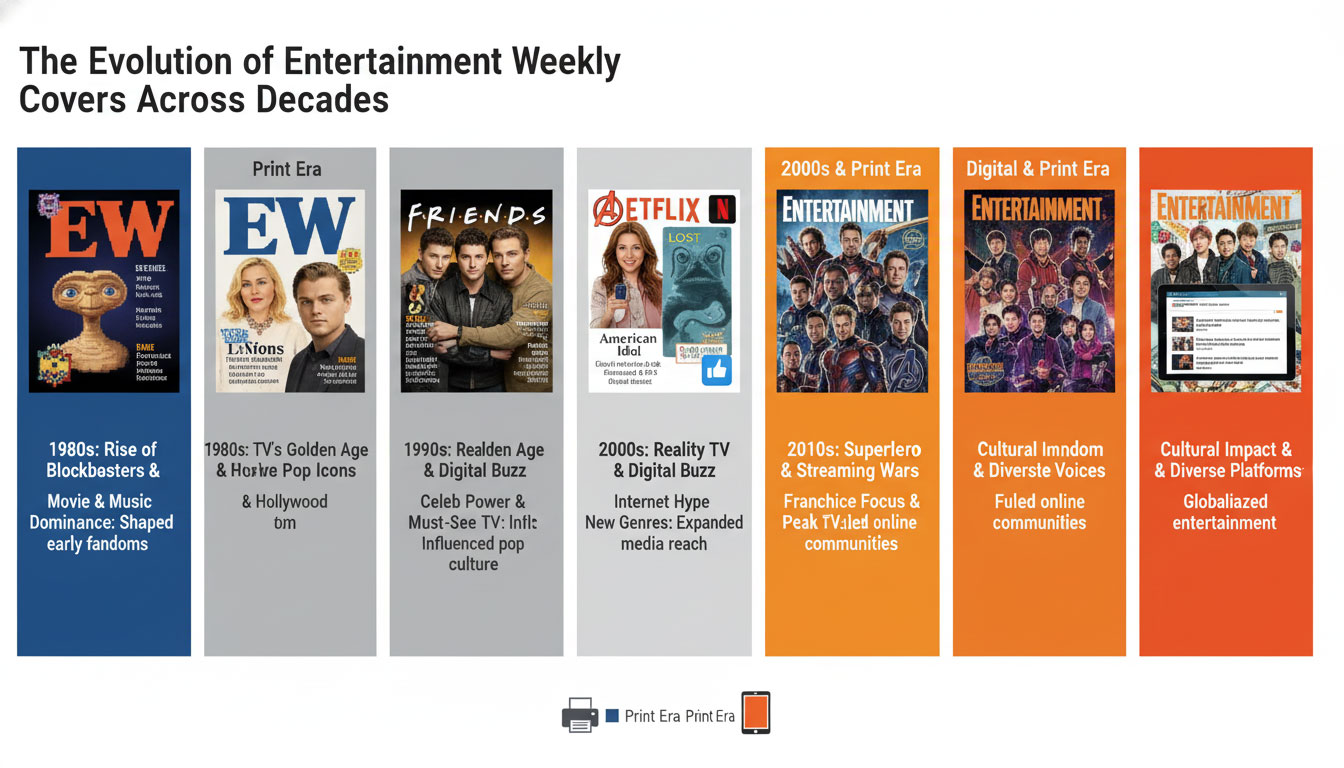
The 2020s: Diversity, Inclusivity, and Digital Culture
In the current decade, covers reflect a broader societal focus on inclusivity, activism, and digital-native celebrities:
- Diverse Representation: Increased coverage of female, non-binary, and international stars highlights evolving cultural norms.
- Integration with Digital Media: Covers often coincide with viral campaigns, streaming releases, and social media announcements.
- Cultural Commentary: Beyond entertainment, covers now contextualize celebrity influence within social and political discourse.
This continued evolution underscores the magazine’s dual role as both a chronicler of entertainment and a cultural commentator.
Why Entertainment Weekly Covers Matter?
- Cultural Preservation: Covers serve as historical documents reflecting societal values and entertainment trends.
- Celebrity Branding: Iconic imagery shapes public perception, contributing to long-term star identity.
- Media Influence: Covers drive discussion, critical engagement, and consumer behavior in entertainment markets.
- Visual Storytelling: The combination of photography, typography, and editorial framing conveys narrative at a glance.
By examining covers over decades, scholars, journalists, and fans can trace cultural shifts and understand the interplay between media, celebrity, and society.

Planning a Cultural Study Using EW Covers
For researchers and media analysts:
- Archival Access: Explore digital and physical archives for chronological studies.
- Comparative Analysis: Compare cover subjects with broader societal events to interpret cultural impact.
- Cross-Media Correlation: Examine how cover stories influenced social media trends, box office performance, and music sales.
| Research Focus | Approach | Outcome |
|---|---|---|
| Celebrity Influence | Track recurring cover stars | Understand long-term branding effects |
| Cultural Trends | Compare decade-based themes | Identify shifts in media priorities |
| Media Evolution | Study layout, photography, typography | Assess changes in visual storytelling |
| Fan Engagement | Analyze online response to covers | Determine influence on social discourse |
This structured approach ensures a comprehensive understanding of Entertainment Weekly covers as cultural artifacts.
The covers of Entertainment Weekly have transcended mere promotional function, becoming essential markers of cultural history. From blockbuster stars to streaming sensations, each cover captures the zeitgeist of its era, shaping both media discourse and popular culture.
By examining these visual and editorial choices, audiences and researchers can gain insight into celebrity influence, societal trends, and the evolving landscape of entertainment journalism. As the magazine continues to adapt to digital media, its covers remain a vital bridge between the entertainment industry and global audiences.


