
Pakistan’s New Military Chief Issues Stern Warning to India on Future Threats. Pakistan’s newly appointed top military commander, Field Marshal Asim Munir, has delivered a direct and pointed warning to India, emphasizing that any future acts of aggression would meet a “swift, severe, and intense” response. This declaration, made on December 8 in Islamabad, follows his historic appointment as the nation’s first Chief of Defence Forces (CDF), a role designed to unify Pakistan’s army, air force, and navy under a coordinated command structure.
The announcement marks a pivotal moment in Pakistan’s defense strategy, signaling both a reorganization of its military hierarchy and a strategic posture in the volatile South Asian region. Analysts suggest that this restructuring could influence the long-standing balance of power between Pakistan and India, two nuclear-armed neighbors with a history of military confrontations.
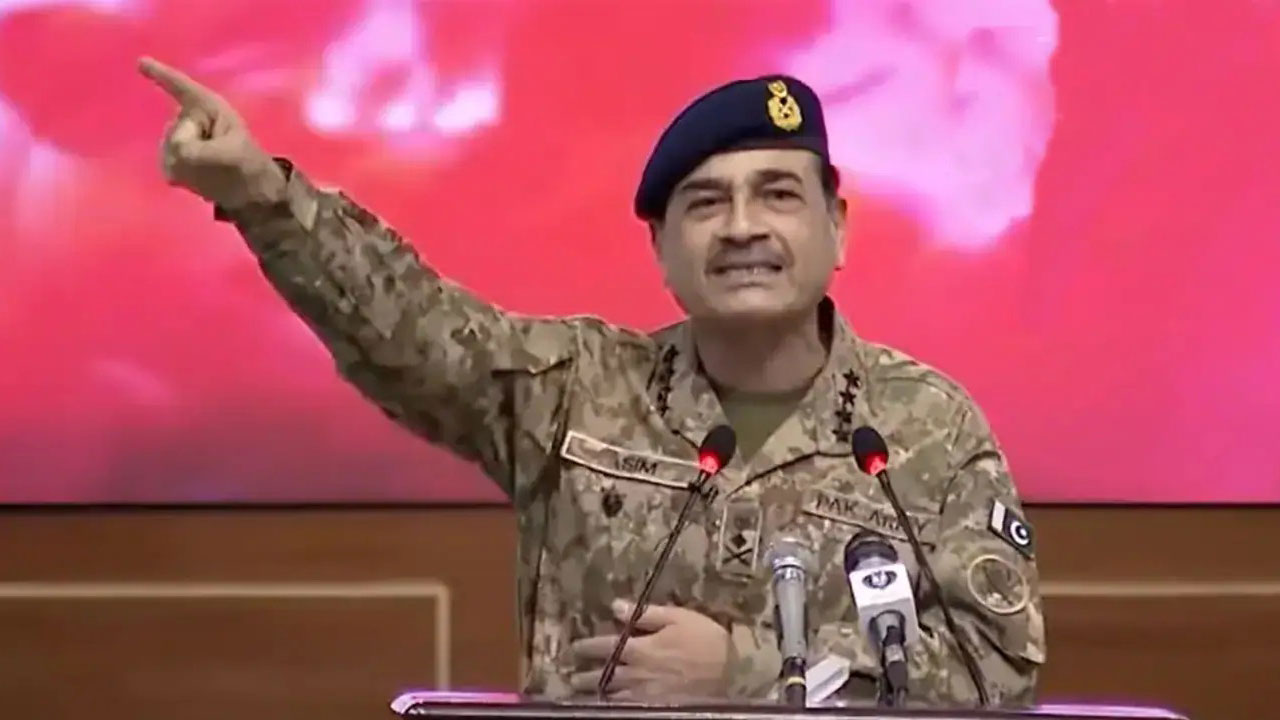
Unified Command for Multi-Domain Readiness: Pakistan’s New Military Chief
In his address, Field Marshal Munir emphasized the necessity of the new CDF headquarters in preparing Pakistan for contemporary threats. According to Munir, integrating operations across the army, air force, and navy enables Pakistan to respond rapidly to conventional and unconventional threats, including those emerging in cyberspace and artificial intelligence-driven warfare.“Any deluion about Pakistan’s readiness will be met with swift, severe, and intense action,” Munir stated.
The newly formed command structure aims to balance integration with autonomy, allowing each branch of the armed forces to maintain operational independence while fostering unified strategic planning. This approach is particularly relevant given the increasing complexity of regional security, including cross-border skirmishes, cyber-attacks, and technological challenges in defense operations.
Key Information Table On Pakistan’s New Military Chief
| Attribute | Details |
|---|---|
| Name | Field Marshal Asim Munir |
| Position | Chief of Defence Forces (CDF) |
| Historic Rank | Second officer in Pakistan’s history to become Field Marshal |
| Appointment Date | December 8, 2025 |
| Headquarters | Unified Defence Forces HQ, Islamabad |
| Key Responsibilities | Integrate army, air force, navy operations; oversee multi-domain warfare readiness |
| Strategic Focus | Swift response, cyber defense, AI integration, regional deterrence |
Historical and Legal Context: India on Future Threats
The creation of the Chief of Defence Forces role required amendments to Pakistan’s military legislation, which were recently approved by President Asif Ali Zardari. This legal reform enables a more centralized strategic oversight, ensuring the military can operate cohesively during crises.
Munir’s promotion to Field Marshal, only the second in Pakistan’s history, underscores the symbolic and practical significance of this restructuring. Military experts note that such appointments are rare and are usually reserved for officers who have demonstrated exceptional leadership in significant conflicts. In Munir’s case, Operation Sindoor—a prior military engagement—was cited as a “case study” for integrated defense planning and serves as a reference point for future operations.

Regional Implications and Strategic Significance
The warning delivered by Pakistan’s unified military command comes amid long-standing tensions with India. Historical disputes, territorial conflicts, and cross-border incidents have repeatedly tested the security framework of South Asia. By creating a coordinated multi-branch command, Pakistan aims to increase both deterrence and operational effectiveness.
Military analysts argue that the CDF role signals Pakistan’s intention to adapt to contemporary threats while reinforcing deterrence strategies. Unlike past structures where individual services operated independently, the new framework is designed for synchronized action, particularly in scenarios requiring rapid mobilization.“This represents a long-term strategic shift. Regional powers will now closely monitor Pakistan’s military readiness and operational posture,” noted a defense analyst based in Islamabad.
Operational Philosophy: Swift, Severe, Intense
Munir’s rhetoric was measured yet firm, reflecting an operational philosophy rooted in decisiveness and deterrence. The unified command intends to enhance Pakistan’s readiness not just for conventional military threats but also for asymmetric challenges such as cyber intrusions, drone warfare, and AI-driven surveillance systems.
The Field Marshal’s emphasis on a “swift, severe, and intense” response indicates a recalibration of Pakistan’s military doctrine. By consolidating command, the nation hopes to shorten decision-making cycles during crises and improve inter-service communication.
Technology and Modern Warfare: Pakistan military
A key driver behind the reorganization is the evolving nature of warfare. With increasing reliance on technology, Pakistan’s military aims to incorporate artificial intelligence, cybersecurity, and advanced surveillance into its operational framework. These capabilities are intended to complement traditional military readiness, ensuring that Pakistan can respond effectively to both kinetic and non-kinetic threats.

Regional Stability and International Observation
The international community, particularly neighboring South Asian countries, is likely to closely observe the implications of this military restructuring. Experts suggest that while the unified command may enhance Pakistan’s defense efficiency, it could also prompt India to reassess its own military readiness and strategic planning.
Long-term observers of South Asian security note that such institutional changes can influence crisis management, deterrence dynamics, and regional alliances. By establishing a Chief of Defence Forces, Pakistan is signaling its commitment to modern, coordinated, and technology-informed military planning.
Historical Milestones in Pakistan’s Military Leadership
- First Field Marshal: The creation of the rank was historically rare; only one officer previously held this position.
- Operation Sindoor: Cited by Munir as a benchmark for future strategic planning.
- Legal Amendments: President Asif Ali Zardari’s approval reflects civilian-military alignment for structural reforms.
Field Marshal Asim Munir’s appointment as Pakistan’s first Chief of Defence Forces represents a landmark in the country’s military evolution. His stern warning to India, coupled with the creation of a unified command structure, underscores a strategic shift designed to enhance deterrence, integrate technological advancements, and streamline operational readiness.
As South Asia continues to navigate longstanding tensions, this development highlights Pakistan’s focus on modernized defense capabilities and coordinated strategic planning. Regional observers, analysts, and international policymakers will be closely monitoring how this restructuring impacts the balance of power in the subcontinent.


