
Israeli Forces Storm UNRWA Jerusalem Compound Amid Rising Regional Tensions. Early Monday morning, Israeli security forces conducted a significant incursion into the UNRWA compound in East Jerusalem, a move that has drawn widespread international criticism. The United Nations Relief and Works Agency (UNRWA), which provides education, healthcare, and essential relief services to millions of Palestinian refugees across Gaza, the West Bank, and neighboring countries, described the raid as “an unacceptable breach of its privileges.”
According to the Associated Press, the operation involved a substantial contingent of Israeli police utilizing motorcycles, armored trucks, and foot patrols. The raid targeted the Sheikh Jarrah compound, home to UNRWA’s East Jerusalem offices.
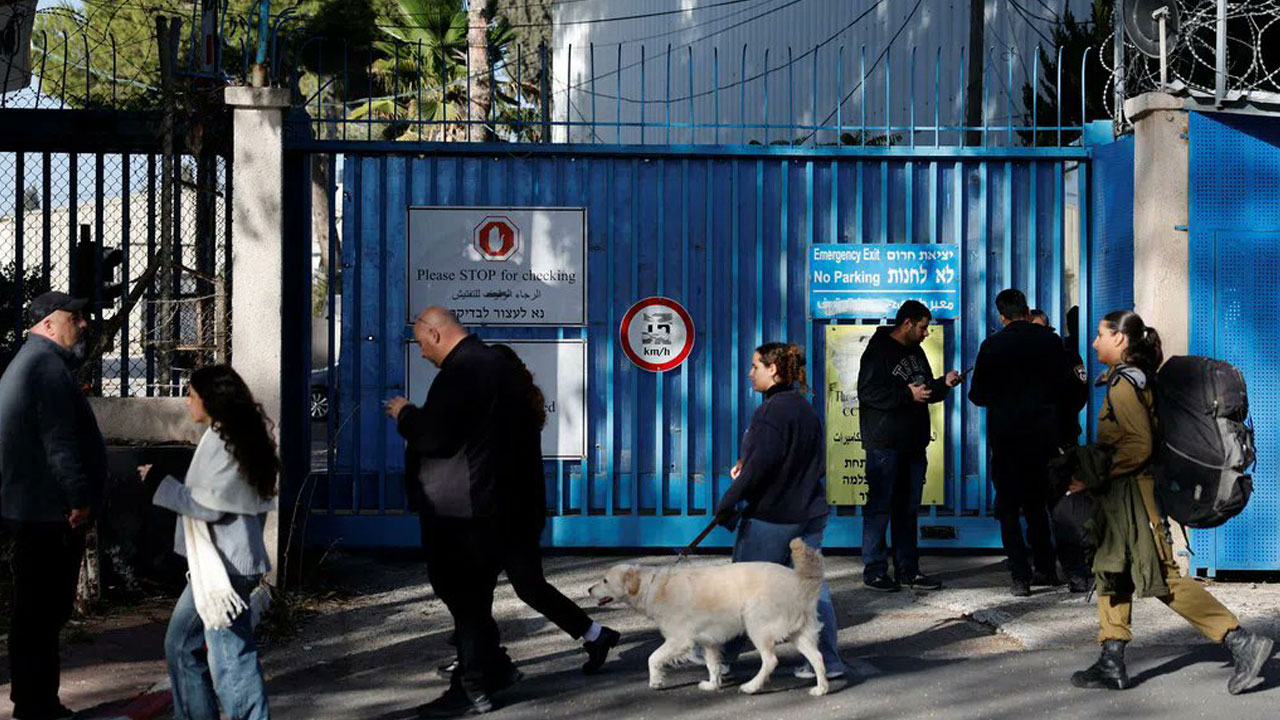
Israeli authorities defended the action as part of a municipal procedure to recover outstanding debts, though the raid has been widely interpreted as part of Israel’s broader campaign against the organization. UNRWA officials, human rights observers, and international diplomats have condemned the move as a violation of international law protecting United Nations facilities.
Historical Context of UNRWA
Established in 1949, UNRWA was created to provide relief to Palestinian refugees displaced by the first Arab-Israeli war. At its inception, the agency supported approximately 750,000 refugees, a number that has grown to over 5 million registered beneficiaries today. UNRWA operates alongside, but separately from, the United Nations High Commissioner for Refugees (UNHCR) due to its unique mandate for Palestinian populations.
UNRWA’s mission encompasses:
- Education: Operating 711 schools serving over 500,000 students, combining academic instruction with psychosocial support for children living in conflict zones.
- Healthcare: Managing 140 health centers across Gaza, the West Bank, Lebanon, Jordan, and Syria, offering maternal care, vaccinations, chronic disease management, and emergency medical aid.
- Relief and Social Services: Distributing food, cash assistance, winter aid, and hygiene kits, especially during conflict-related crises.
- Community Development: Implementing youth programs, vocational training, and psychosocial counseling to foster resilience in refugee populations.
- Infrastructure Support: Maintaining shelters, sanitation systems, and water distribution networks within refugee camps.
During the recent 2023–24 Gaza conflict, UNRWA schools and facilities were converted into temporary shelters for tens of thousands of civilians, demonstrating the agency’s critical role in crisis response.
Sheikh Jarrah – The Epicenter of Tensions
Neighborhood Overview
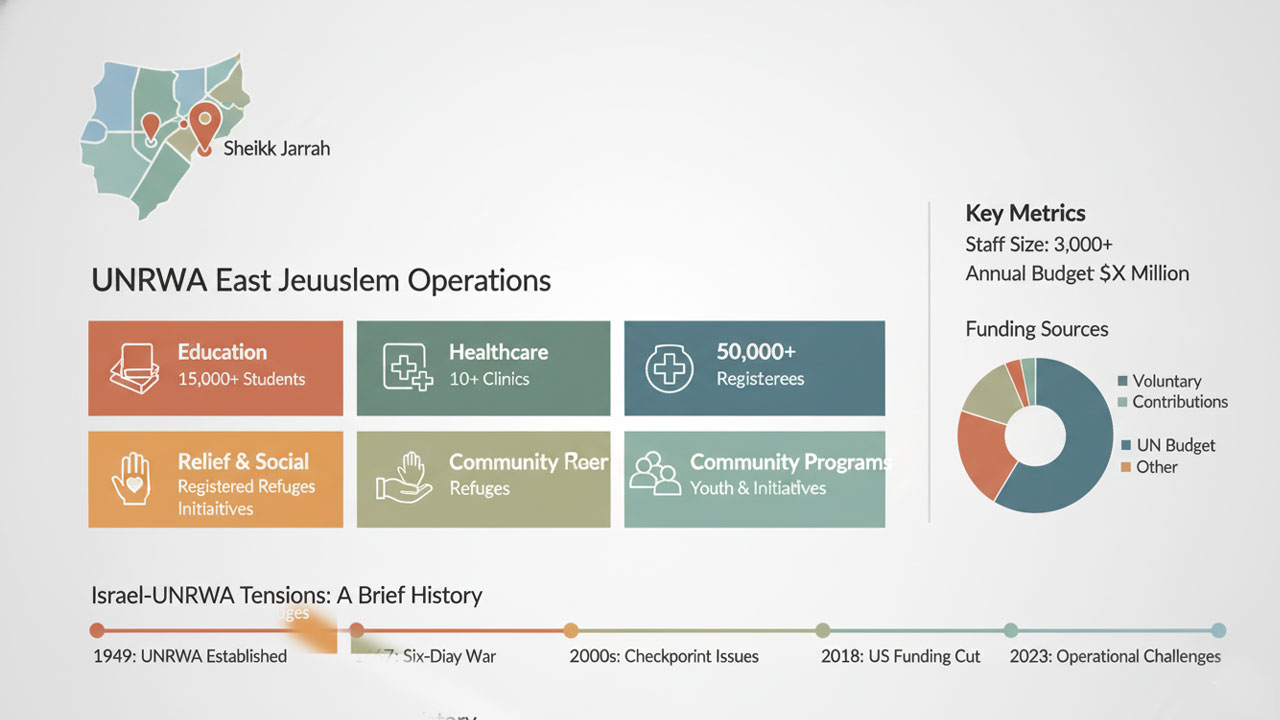
Sheikh Jarrah, located in East Jerusalem, has become a focal point of Israeli-Palestinian tensions, particularly over property rights and eviction disputes. The UNRWA compound in the area serves both as an administrative hub and a symbol of international humanitarian presence.
The neighborhood is densely populated, surrounded by residential buildings and key infrastructure, making any Israeli security operation highly sensitive. Past attempts by Israeli authorities to enter UN or NGO facilities in the area have triggered local protests and international condemnation.
Security Implications
The Israeli raid in Sheikh Jarrah reflects broader security and political considerations. Authorities cite municipal debt, but the operation coincides with accusations of UNRWA harboring ties to Hamas, which the agency denies. Analysts note that targeting UNRWA’s offices in this strategic neighborhood underscores Israel’s intent to assert stronger control over East Jerusalem.
Israel’s Escalating Measures Against UNRWA
The Monday raid is part of a broader Israeli campaign to limit UNRWA operations. Earlier in 2025, Israel formally prohibited the agency from functioning on its territory, citing security and political concerns.
- Government Statements: An Israeli spokesperson described UNRWA as “a stain on the United Nations” and suggested that its mandate be reassessed.
- U.S. Funding Freeze: The United States suspended its financial support to the agency earlier this year, aligning with Israel’s increasingly critical position.
- Security Barrier Expansion: Israel began constructing a new security barrier along its border with Jordan, citing threats from Iran and its regional proxies.
While Israel frames these measures as administrative or security-oriented, human rights organizations argue that the raids and operational bans violate international norms governing UN facilities.
International Reaction
UN Secretary-General António Guterres strongly condemned the incursion, emphasizing the inviolability of UN premises. “The United Nations cannot accept the violation of its facilities,” Guterres stated.
Other international actors, including the European Union, Arab League, and leading donor nations, have also expressed concern. Analysts warn that disrupting UNRWA’s work could create a humanitarian vacuum with no alternative agency equipped to manage the breadth of relief services the organization provides.
U.S.-Israel Diplomatic Context: Israeli Forces Storm UNRWA Jerusalem
The raid coincided with delicate U.S.-Israel diplomatic engagements. On the same day, American officials met with Prime Minister Benjamin Netanyahu in Jerusalem to discuss a U.S.-brokered plan for Gaza.
- Ceasefire Agreement: The plan proposes a continuation of the current ceasefire while outlining long-term stabilization efforts.
- Upcoming Trump-Netanyahu Meeting: Later in December, President Donald Trump is scheduled to meet Netanyahu to discuss international stabilization forces in Gaza and security arrangements.
At the same time, searches continue for the last Israeli hostage held in Gaza, with the family urging for their safe return before advancing to subsequent peace phases.
Regional Tensions and Security Developments
Violence continues in the region:
- West Bank Incident: Israeli forces shot and killed a Palestinian teenager on Sunday.
- Border Security: Construction of a new barrier along the Jordan border aims to counter perceived threats from Iran-backed groups.
- Broader Implications: The UNRWA raid signals a hardening Israeli stance toward humanitarian agencies and may affect regional diplomacy.
Analysts suggest that such actions reflect Israel’s strategic approach to UN and international organizations perceived as politically contentious.
Humanitarian Impact of the Raid
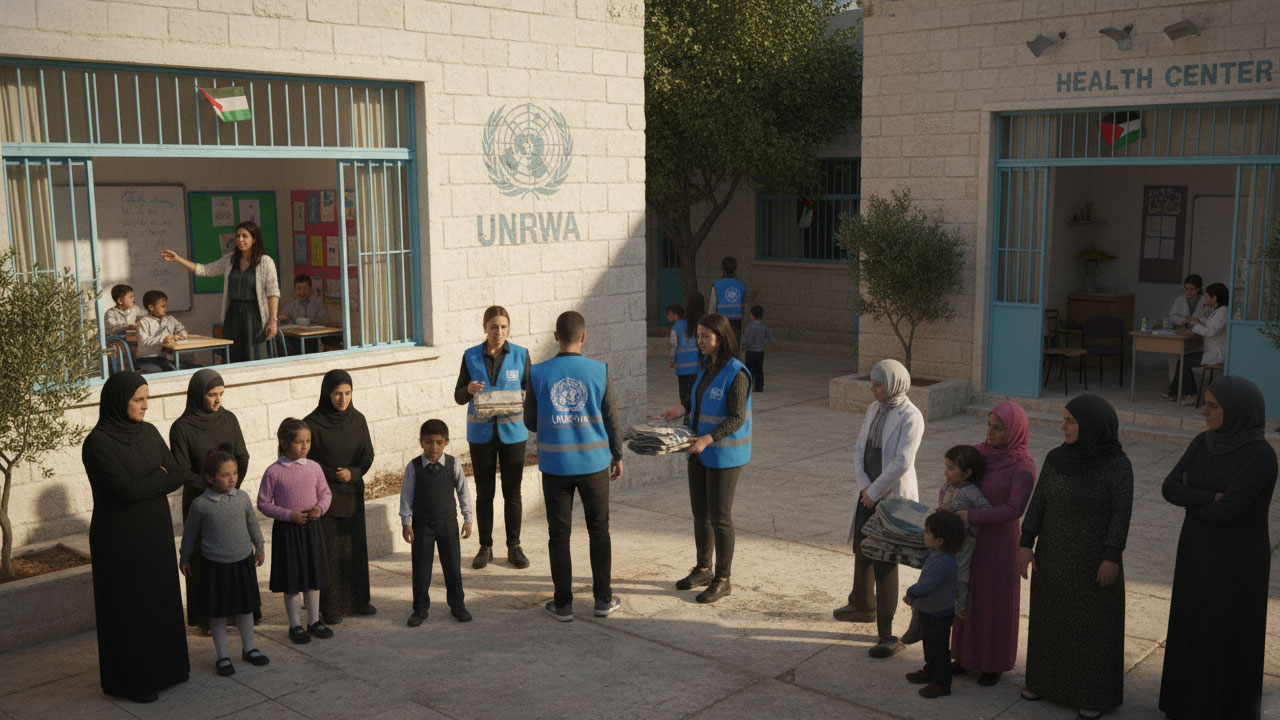
UNRWA provides essential services to millions of Palestinian refugees, and any disruption could have severe consequences:
- Education: Thousands of children risk losing access to school.
- Healthcare: Chronic disease management and maternal care programs may be interrupted.
- Relief Distribution: Food, cash, and emergency aid deliveries could be delayed.
- Social Stability: Diminished services may fuel unrest in refugee camps.
Humanitarian organizations, including UNICEF and the Red Cross, warn that removing or destabilizing UNRWA could reverse decades of progress in refugee welfare.
Legal and Geopolitical Considerations
UNRWA operates under international legal protections, including invulnerability of UN premises. Israeli raids challenge these norms, raising concerns about compliance with international law.
- Comparative Cases: Similar UN facility incursions in conflict zones have historically drawn global censure.
- Regional Politics: Disrupting UNRWA operations could affect Palestinian Authority negotiations and the broader Israeli-Palestinian peace process.
- International Isolation: Israel risks diplomatic backlash from key allies and humanitarian organizations.
Key Information Table On Expanded Overview
| Parameter | Details |
|---|---|
| Year Established | 1949 |
| Headquarters | Amman, Jordan |
| East Jerusalem Compound | Sheikh Jarrah |
| Refugees Supported | 5+ million |
| Staff | 30,000+ |
| Annual Budget | ~$1.5 billion (2025) |
| Funding Sources | UN member states, emergency donations, USAID, EU |
| Education Programs | 711 schools, 500k students |
| Health Centers | 140 centers, 2.5 million beneficiaries |
| Controversies | Accusations of Hamas links, Israel ban 2025 |
| Emergency Role | Shelters, crisis relief in Gaza conflicts |
| Community Programs | Youth training, psychosocial counseling |
Historical Incidents of UNRWA Challenges
- 2018 Gaza Escalation: Temporary closure of facilities due to security concerns.
- 2021 West Bank Tensions: Eviction-related protests impacted UNRWA access.
- Funding Fluctuations: Periodic cuts from major donors have strained operations, making Israel’s 2025 ban more critical.
Voices from the Field
UNRWA Spokesperson: “Our mission is purely humanitarian. Forcing us out jeopardizes millions of lives.”
Middle East Analyst: “This is not merely administrative—it reflects strategic calculations about Israel’s control over East Jerusalem.”
Palestinian Refugee Testimony: “UNRWA schools and clinics are lifelines for my family. Losing them would be devastating.”
The Israeli incursion into the UNRWA Jerusalem compound highlights the tension between national security priorities and international humanitarian obligations. As diplomatic negotiations continue, the agency’s presence remains critical to the survival of millions of Palestinian refugees.
The operation underscores the fragility of humanitarian frameworks in conflict zones and illustrates the broader struggle over UN authority, refugee welfare, and regional stability. International actors now face a complex balancing act between political alliances, legal norms, and the urgent needs of civilians dependent on UNRWA.
The coming weeks will be crucial for determining whether UNRWA can continue operating in East Jerusalem and how Israel’s policies will shape humanitarian and diplomatic outcomes in the region.


