
How the New York Times Adapted its Entertainment Coverage for the Digital Era? The New York Times, long revered for its authoritative coverage across news and culture, has undergone a transformative evolution in its approach to entertainment journalism. As digital media reshaped how audiences consume content, the Times embraced technology-driven storytelling, interactive features, and multi-platform engagement strategies. This article explores how the New York Times adapted its entertainment coverage, balancing tradition with innovation to remain a global authority.
Historically, the entertainment section of the New York Times relied heavily on print reviews, feature articles, and scheduled columns. With the advent of digital media, the publication faced a fundamental shift in consumption patterns. Readers increasingly sought instant access, multimedia storytelling, and mobile-friendly formats. Recognizing this change, the Times implemented a comprehensive digital strategy to complement its legacy editorial standards.

Key adaptations included:
- Interactive Multimedia Features: Embedding videos, audio clips, and slide shows to supplement written reviews and cultural critiques.
- Data-Driven Audience Insights: Leveraging analytics to tailor coverage to reader interests and trending topics.
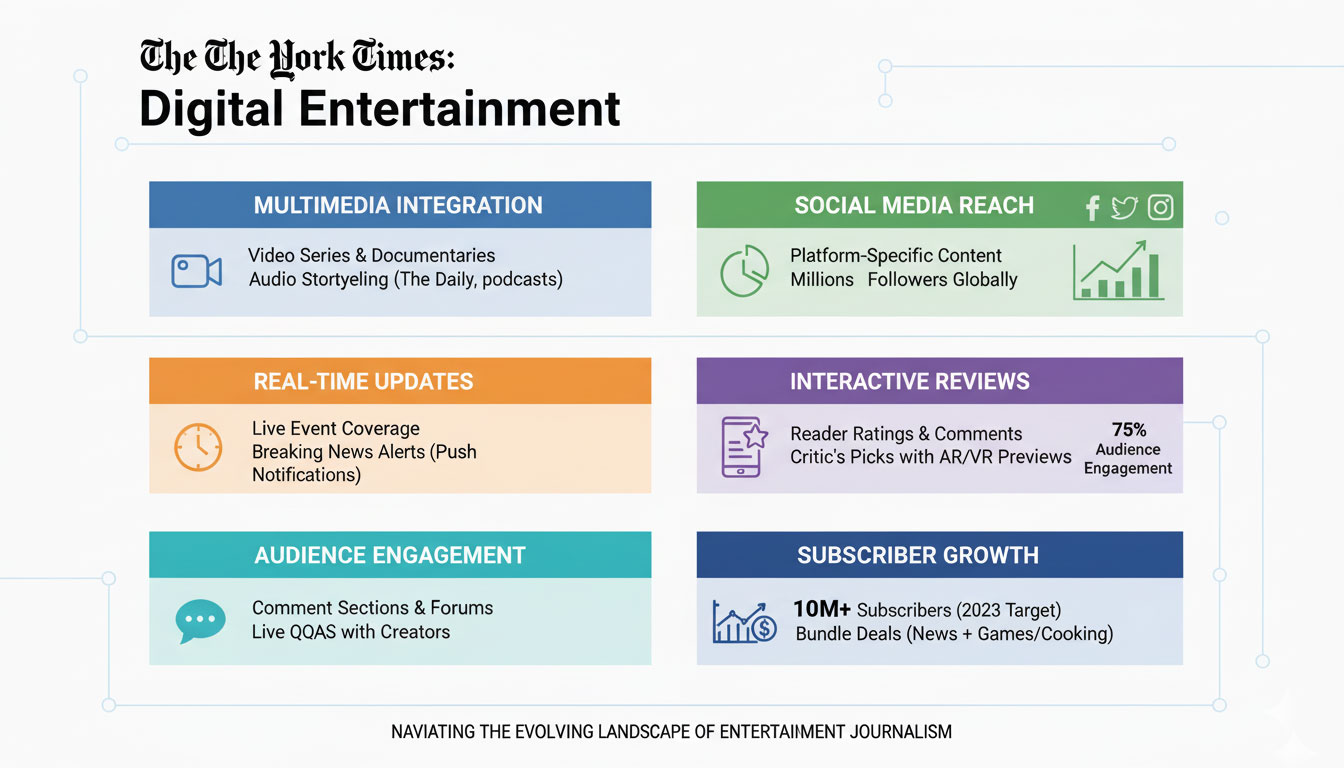
- Real-Time Updates: Providing up-to-the-minute reporting on film releases, television programming, and streaming events.
These initiatives reflect the publication’s commitment to maintaining journalistic rigor while embracing modern consumption habits.
Expanding Entertainment Coverage Across Platforms
The New York Times recognized that entertainment journalism could no longer exist solely in print. The digital era demanded cross-platform presence, including web, mobile apps, podcasts, newsletters, and social media.
More: The New York Times Adapts to the Digital Age
Multimedia Storytelling
Multimedia storytelling became a cornerstone of the Times’ strategy. Critics and journalists began producing content that integrates video interviews, behind-the-scenes footage, and interactive timelines of cinematic releases. This approach caters to audiences who value immersive experiences over static reporting.
Social Media Integration
Social media platforms amplified reach and engagement. The New York Times strategically employed Twitter, Instagram, and TikTok to highlight reviews, share critic insights, and tease feature stories. Social media also facilitated direct audience interaction, allowing readers to comment, share opinions, and engage in discussions about entertainment trends.
Podcasts and Audio Content
Podcasts became an essential avenue for expanding the entertainment section’s influence. The Times launched shows that provide in-depth analysis of movies, music, and television, featuring interviews with industry insiders and critics. Audio storytelling complemented traditional written journalism, offering audiences flexible consumption options.
Editorial Strategy and Content Diversification
Adapting to the digital era required more than technological upgrades; editorial strategy needed evolution. The New York Times restructured its entertainment teams, blending traditional critics with digital-savvy reporters. Coverage expanded to include:
- Streaming services and digital premieres
- Interactive television and gaming
- Celebrity social media trends and online cultural phenomena
This diversification ensures that the New York Times remains relevant across demographic segments, from traditional print readers to younger digital-native audiences.
Key Table On: How the New York Times Adapted its Entertainment Coverage for the Digital Era?
| Feature | Digital Adaptation | Impact |
|---|---|---|
| Reviews & Critiques | Video and interactive slideshows | Increased engagement and reader retention |
| Breaking News | Real-time reporting on releases & events | Immediate audience access to cultural developments |
| Social Media | Twitter threads, Instagram reels, TikTok clips | Broader reach and community interaction |
| Podcasts | In-depth interviews and analyses | New subscriber base and brand loyalty |
| Data Analytics | Tracking reader behavior and trends | Informs editorial focus and content personalization |
Challenges in the Digital Era
While adaptation offered numerous benefits, the transition posed challenges. Digital content requires constant updates, multimedia production resources, and an agile editorial workflow. Balancing depth and quality with rapid reporting became essential to maintain credibility. Additionally, the New York Times had to navigate copyright issues, platform algorithms, and evolving audience expectations in a fragmented media landscape.
Despite these hurdles, the Times’ emphasis on editorial integrity and verified reporting reinforced trust, ensuring its continued status as a globally respected news source.

Global Reach and Audience Engagement
The New York Times’ digital entertainment strategy facilitated a global reach previously unattainable with print alone. Readers from around the world access reviews, features, and multimedia stories on mobile devices and desktop platforms. International collaborations and coverage of foreign films, streaming content, and global pop culture further enhance the publication’s relevance in a competitive media environment.
Engagement metrics indicate that interactive content, particularly video and podcasts, drives higher readership and subscription rates. The New York Times’ ability to integrate user feedback and social metrics into editorial planning represents a forward-thinking model for digital journalism.
The Future of Entertainment Coverage
As technology continues to evolve, the New York Times anticipates further integration of artificial intelligence, augmented reality, and virtual reality into entertainment journalism. These innovations could allow readers to experience immersive film previews, interactive storytelling, and personalized content recommendations, reinforcing the Times’ leadership in digital media.
The publication’s adaptive strategy illustrates that blending traditional journalistic standards with technological innovation is essential for relevance in the digital era. By prioritizing authenticity, multimedia engagement, and audience-centric reporting, the New York Times exemplifies how a legacy media institution can thrive amid rapid industry transformation.


