
Sam Rivers, co-founding bassist of Limp Bizkit and a defining figure of the late 1990s nu metal scene, has died at 48. Bandmates paid tribute to his legacy as “pure magic,” recalling his role in shaping the band’s signature sound and spirit.
Sam Rivers, the bassist and co-founding member of Limp Bizkit, the Florida band that became a defining force in late 1990s nu metal, died on Saturday at the age of 48. The group announced his death on social media. A cause was not immediately disclosed, though Rivers had previously spoken about his struggles with alcohol-related liver disease.
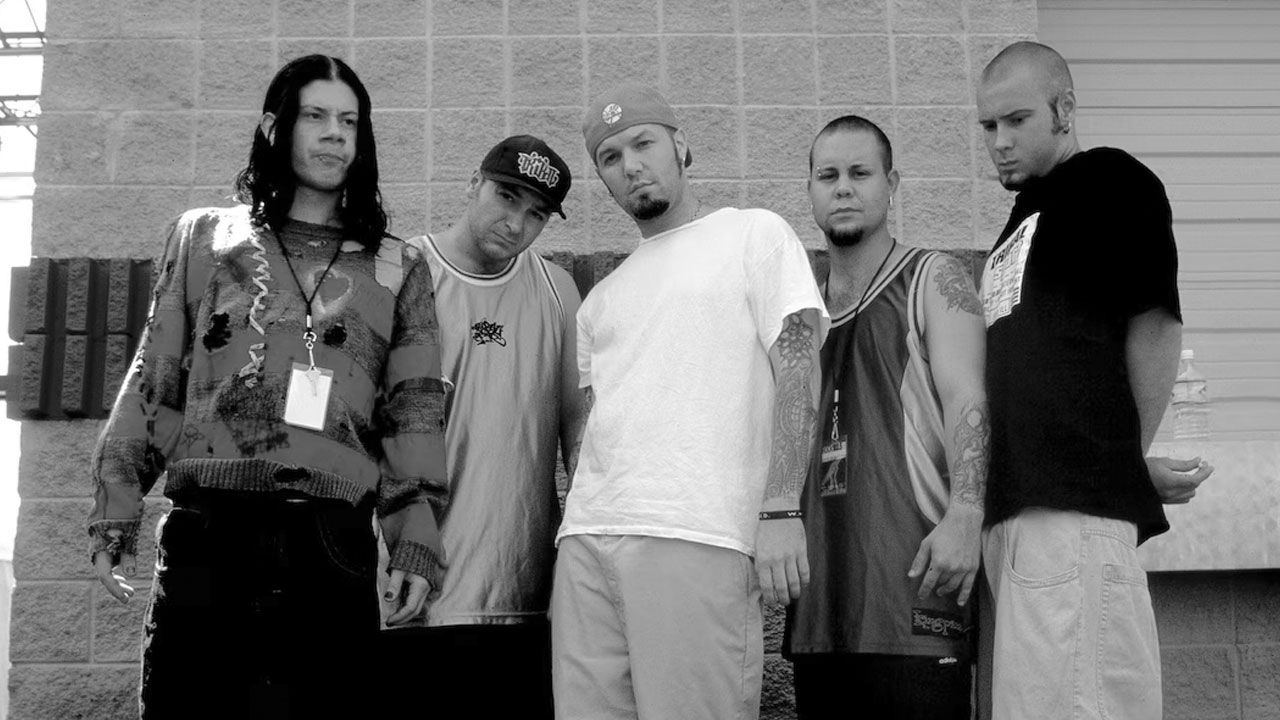
“Today we lost our brother, our bandmate, our heartbeat,” the band wrote in a statement. “Sam Rivers wasn’t just our bass player — he was pure magic. The pulse beneath every song, the calm in the chaos, the soul in the sound.”
Born and raised in Jacksonville, Florida, Rivers began playing music in middle school, initially as a tuba player before moving to bass and guitar. In the early 1990s, he and frontman Fred Durst performed together in a local group called Malachi Sage. Alongside drummer John Otto, guitarist Wes Borland, and DJ Lethal — formerly of House of Pain — they formed Limp Bizkit in 1994.
The band quickly rose to prominence during the nu metal explosion, fusing rap, rock, and heavy metal in a sound that came to define the era. With hits such as “Nookie,” “Rollin’ (Air Raid Vehicle),” “Break Stuff,” and “Re-Arranged,” Limp Bizkit became a mainstay on MTV’s Total Request Live and one of the most polarizing acts in rock. Their cover of George Michael’s “Faith” and high-energy live shows helped propel the band to international stardom.
By the late 1990s, Limp Bizkit had become one of the biggest names in American rock, earning three Grammy nominations and performing at major festivals, including the ill-fated Woodstock ’99 in Rome, New York. The group’s performance there became emblematic of the festival’s chaos, marked by violence, vandalism, and sexual assault allegations — controversies that shadowed both the event and the band’s career.
When Borland temporarily departed in 2001, Rivers stepped in on guitar for the band’s 2003 album Results May Vary, which included a cover of The Who’s “Behind Blue Eyes.” Outside of Limp Bizkit, he also produced music for Florida-based groups such as Burn Season and Embraced.
Rivers stepped away from performing in 2015 due to health complications stemming from liver disease. In a 2022 interview with Variety, he reflected on that period of his life: “I got liver disease from excessive drinking … I had to leave Limp Bizkit in 2015 because I felt so horrible. A few months later, I realized I had to change everything. I quit drinking, got treatment, and eventually received a liver transplant, which was a perfect match.”
After recovering, Rivers rejoined Limp Bizkit in 2018 and continued performing with the band. Their most recent album, Still Sucks, was released in 2021, and the group returned to the charts in 2025 with the single “Making Love to Morgan Wallen.”
“He was a once-in-a-lifetime kind of human — a true legend of legends,” the band said in its statement. “His spirit will live forever in every groove, every stage, every memory. We love you, Sam. We’ll carry you with us, always. Rest easy, brother. Your music never ends.”
DJ Lethal, the group’s longtime turntablist, added in a tribute: “Please respect the family’s privacy at this moment. Give Sam his flowers and play his basslines all day. We are in shock. Rest in power, my brother. You will live on through your music, your charity work, and the lives you touched. Enjoy every millisecond of life — it’s not guaranteed.”
Rivers’s work with Limp Bizkit helped shape the sound of an era — a mix of aggression and groove that bridged hip-hop and heavy metal for a generation of listeners. His passing marks the end of a chapter in American rock history, one defined by the raw energy and unlikely crossover success of nu metal’s heyday.


