
Roskomnadzor Threatens WhatsApp With Full Block. Russia’s communications regulator, Roskomnadzor, issued a sharp warning on Nov. 28, 2025, stating it may move to impose a complete block on WhatsApp after what it described as repeated violations of Russian law. The agency said the Meta-owned service had failed to comply with requirements intended to curb criminal activity, accusing the platform of enabling the planning of terrorist attacks, recruitment efforts, and large-scale fraud targeting Russian citizens. This warning, officials said, marks the most serious escalation to date in a months-long confrontation.
Roskomnadzor Threatens to intensify restrictions gradually, allowing the country’s 97 million monthly WhatsApp users time to migrate to approved domestic alternatives. Yet the regulator stressed that a failure by Meta to comply could result in a nationwide ban. Users in major cities such as Moscow have already encountered intermittent disruptions, including delayed messages and degraded call quality, as part of Russia’s broader push for digital sovereignty.
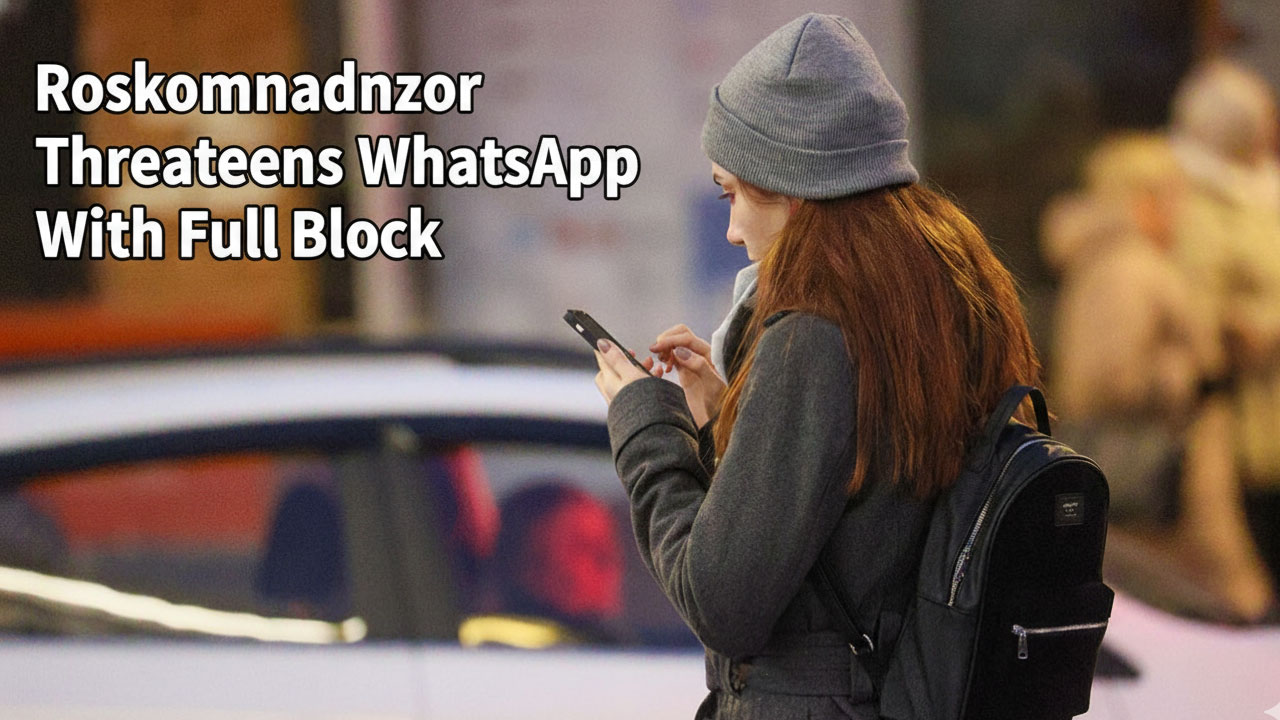
WhatsApp remains one of Russia’s most widely used communication tools, integral to personal exchanges, business coordination and local services. A full block, analysts say, could affect daily routines and emergency communications across the country.
Key Information on Roskomnadzor Threatens WhatsApp
| Category | Details |
|---|---|
| Regulator | Roskomnadzor |
| Platform Targeted | WhatsApp (owned by Meta) |
| Monthly Active Users | 97 million (Russia, 2025) |
| Daily Active Users | 82 million |
| Main Allegations | Terror planning, recruitment, fraud facilitation |
| Initial Restrictions Began | August 2025 |
| Current Status | Gradual service degradation; threat of full ban |
| Promoted Alternative | Max messenger (VK Company) |
Allegations of Criminal Activity and Legal Violations
At the heart of the dispute is the claim that WhatsApp has become a conduit for illegal activity within Russia. Officials say the encrypted messaging service has been used to coordinate terrorist operations, including planning and execution, and to recruit participants through channels that evade detection. Authorities also accuse the app of enabling widespread fraud, identity theft and other cybercrimes that exploit vulnerable users.
Russian law—particularly the Yarovaya amendments—requires communication services to store user data and provide it to law enforcement upon request. Roskomnadzor argues that WhatsApp’s refusal to comply, citing end-to-end encryption, creates a “black hole” that impedes monitoring of serious threats.
Meta has countered that weakening encryption would jeopardize user safety and violate global standards on data protection. Russian officials have rejected that argument, claiming their demands target only criminal actors, not ordinary users. The standoff underscores a deeper rift between Western tech governance and Russia’s increasingly assertive internet controls.
Phased Restrictions and Expanding User Impact
August Measures Targeting Calls
The first round of restrictions began in August 2025, when Roskomnadzor throttled voice and video call functions on WhatsApp and Telegram. Officials said scammers had used these tools to conduct phishing operations and spoofed calls. Users across urban centers reported choppy audio, dropped connections and slower call initiation.
November Disruptions to Messaging
By November 2025, disruptions expanded to basic messaging functions in several regions, with delayed deliveries and temporary outages reported on social media forums and local tech platforms. Roskomnadzor defended the incremental approach as a way to ease the transition for Russia’s nearly 100 million WhatsApp users.
Users in Moscow and St. Petersburg have increasingly relied on VPNs to bypass disruptions, though use of such tools sits in a legal gray zone. In rural areas, where connectivity is already limited, degraded WhatsApp service has further strained communications, especially in regions experiencing security-related network shutdowns.
Technology analysts warn that prolonged technical barriers could fragment Russia’s communication ecosystem, pushing users toward domestic apps while eroding confidence in foreign platforms.
WhatsApp’s Enduring Appeal Despite Pressure
Even under mounting restrictions, WhatsApp remains Russia’s most widely used messaging platform. As of September 2025, the app reached 97 million monthly active users—surpassing Telegram’s 91 million—and maintained 82 million daily users.
Its stronghold stems from its streamlined interface, reliable performance on low-cost smartphones, and widespread familiarity across age groups. Adoption remains particularly high in regions where network quality fluctuates, as WhatsApp’s lightweight design sustains stable messaging.
Still, the very scale of its user base has made WhatsApp a prime target for regulatory pressure. Officials say encrypted communications allow threats to go undetected. Analysts estimate that if restrictions persist, WhatsApp’s user base could decline by 20 to 30 percent by mid-2026, though the platform’s resilience in other restricted markets suggests some users will adapt through workarounds.
Promotion and Rise of Max as the National Alternative
In parallel with its tightening measures against Meta, Roskomnadzor has accelerated promotion of Max, a state-supported messenger developed by VK Company and launched in March 2025. The new service has been positioned as a secure, Russian-compliant alternative that offers messaging, voice and video calling, file sharing and integration with VK’s broader digital ecosystem.
Officials say Max complies fully with Russian data laws, including mandatory data storage and cooperation with law enforcement. Public institutions, state enterprises and regional governments have already begun transitioning to the platform, with some ministries issuing internal advisories encouraging employees to shift from WhatsApp.
The push for Max aligns with Russia’s broader digital sovereignty strategy, which aims to reduce reliance on foreign technology platforms, ensure regulatory compliance and centralize oversight of digital communications. Analysts note that Max’s rise reflects a pattern seen in other countries where governments promote domestic alternatives as geopolitical tensions reshape the global technology landscape.
As Roskomnadzor Threatens increasingly severe measures, the future of WhatsApp in Russia remains uncertain. Whether Meta moves toward compliance or Russia advances toward a full ban, the confrontation is set to reshape how millions of Russians communicate in the months ahead.


