
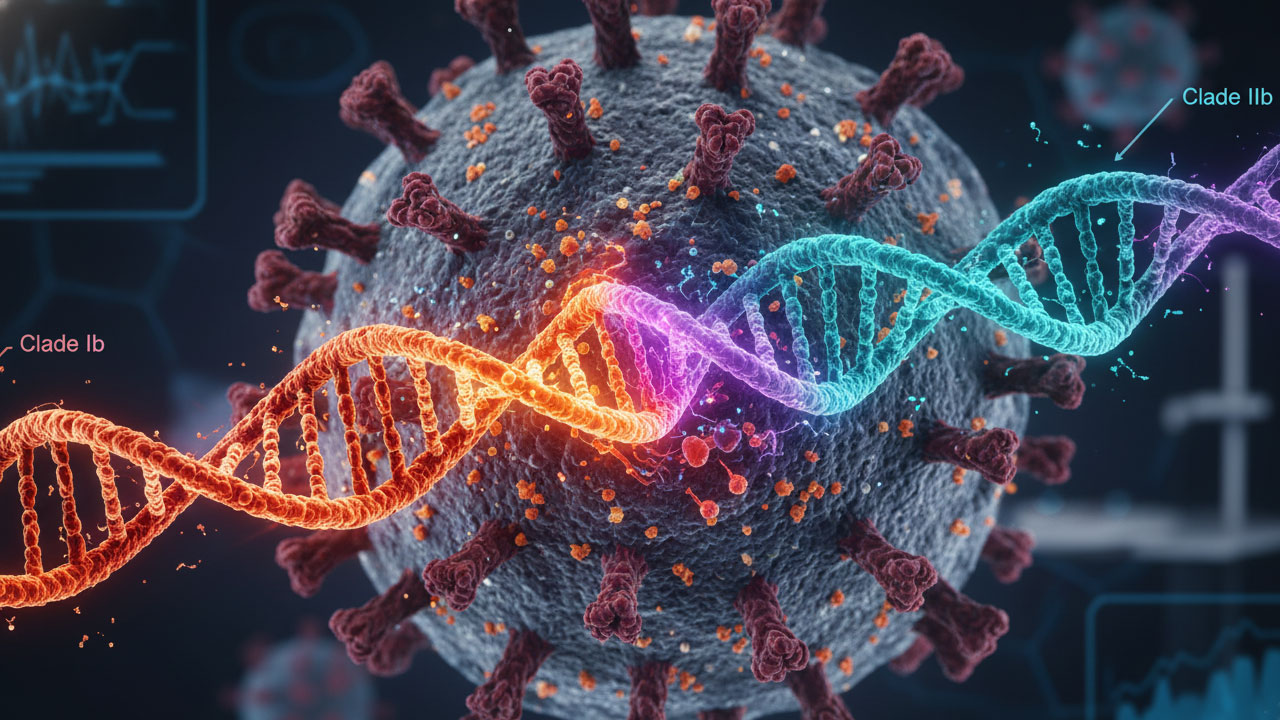
New mpox strain identified in England raises global health concerns. UK health authorities have confirmed the detection of a new mpox strain in an individual who recently returned from Asia, officials said. This strain, which has yet to receive an official designation, represents a genetic recombination of two major mpox virus types, clade Ib and clade IIb.
The UK Health Security Agency (UKHSA) emphasized that viral evolution is a normal phenomenon. “It is normal for viruses to evolve,” said Dr. Katy Sinka, head of sexually transmitted infections at UKHSA. “Further genomic analysis will allow us to understand how mpox is changing.”
While the clinical severity of this new variant is still under investigation, public health officials continue to stress vaccination as the most effective method to prevent severe disease. Mpox infections are typically mild for many patients, though complications can occur in certain populations.
Genetic Composition of the New Strain: New mpox strain identified in England
Genomic analysis revealed that the new virus strain contains elements from clade Ib and clade IIb. Clade IIb was associated with a global outbreak in 2022 affecting multiple countries, whereas clade Ib has recently shown early signs of localized spread in some European nations.
Officials are conducting further studies to determine how this recombinant strain behaves clinically and epidemiologically. “Understanding the transmissibility and severity of this strain is critical,” added Prof. Trudie Lang, director of the Global Health Network at the University of Oxford. “While the UK has strong surveillance systems, control in more vulnerable populations globally remains challenging due to uneven vaccine access.”
Vaccination Guidelines and Effectiveness
UK authorities recently encouraged vaccination among gay, bisexual, and other men who have sex with men, particularly those at higher risk. Groups prioritized for vaccination include:
- Individuals with multiple sexual partners
- People engaging in group sexual activities
- Visitors of sex-on-premises venues
Health officials report that current mpox vaccines are approximately 75–80% effective against the virus. Although no studies have yet confirmed efficacy against this new strain, preliminary analyses suggest a high degree of protection remains likely.
Key Information Table On Mpox Vaccination Overview
| Parameter | Details |
|---|---|
| Target Groups | MSM (men who have sex with men), multiple partners, sex-on-premises visitors |
| Vaccine Effectiveness | 75–80% against known mpox strains |
| Current Guidance | Vaccination strongly recommended for high-risk groups |
| Protection Against New Strain | Expected high, under investigation |
| Monitoring Agency | UK Health Security Agency (UKHSA) |
Expert Perspectives on Viral Evolution
Dr. Boghuma Titanji, assistant professor of medicine at Emory University, warned that continued global circulation of mpox could accelerate viral recombination. “The more mpox spreads worldwide, the greater the opportunity for the virus to recombine and adapt, entrenching it as a persistent human pathogen,” she said.
The emergence of this new mpox strain underscores the ongoing need for global vigilance. Prof. Lang emphasized that monitoring viral spread and severity is essential to understanding public health risks. If additional cases emerge, authorities will need detailed epidemiological data to assess transmissibility and clinical outcomes.
Current Global Situation of Mpox
As of 2025, nearly 48,000 mpox cases have been confirmed worldwide, with 2,500 cases reported in the past month alone. The majority of infections have occurred in Central Africa. Although international cases are generally mild, the virus remains a concern due to its capacity for genetic change and human-to-human transmission.
The new strain’s detection in England is a reminder that infectious diseases can quickly cross borders in our globalized world. Public health officials urge prompt reporting and adherence to vaccination protocols, particularly for individuals in high-risk categories.
Understanding Mpox
Mpox, formerly known as monkeypox, is characterized by a range of symptoms, including:
- Lesions or skin rash lasting 2–4 weeks
- Fever and headaches
- Back pain, muscle aches, and fatigue
The virus spreads through close physical contact, respiratory droplets, and contaminated objects such as clothing, bedding, or towels. Health officials recommend that individuals who suspect infection contact NHS 111 for guidance.
Preventative measures, including vaccination and early diagnosis, remain the cornerstone of mpox control strategies. Authorities continue to monitor the global situation closely, recognizing the potential for further viral recombination.

Global Public Health Implications
The appearance of a new mpox strain highlights several public health priorities:
- Vaccination Access: Ensuring equitable distribution in vulnerable populations.
- Surveillance: Strengthening genomic testing to detect emerging variants.
- Public Awareness: Informing high-risk groups about symptoms and prevention.
- Research: Evaluating the effectiveness of existing vaccines against recombinant strains.
Dr. Sinka noted, “Vaccination is a proven way to protect against severe disease. Individuals eligible for the jab should ensure they are vaccinated without delay.”
Prof. Lang added, “While the UK has excellent systems to identify and control cases, other countries with limited healthcare infrastructure face greater challenges in containing mpox.”
Preparing for Potential Spread
Public health authorities worldwide are taking a proactive approach. Monitoring travel-related cases, ensuring vaccine availability, and enhancing communication to high-risk groups are key steps in preventing widespread transmission.
The detection of a new mpox strain identified in England serves as a timely reminder of the dynamic nature of viral pathogens. As global health networks continue surveillance and research, vaccination and public awareness remain central to mitigating the impact of mpox worldwide.
Key Takeaways for the Public
- The new mpox strain identified in England is a recombinant of clade Ib and clade IIb.
- Vaccination remains the most effective protection, especially for high-risk groups.
- Genomic surveillance and rapid detection are essential to controlling further spread.
- The global community must maintain vigilance to prevent the virus from establishing a persistent foothold in human populations.
- Individuals experiencing symptoms should contact local health services immediately for testing and guidance.


