
NASA Pushes Moon Mission to 2027 Over Technical and Budget Hurdles. NASA has announced that the highly anticipated Artemis III mission, originally slated for 2025, will now launch in September 2027. This marks the first crewed lunar landing attempt in more than five decades and delays humanity’s return to the Moon. The postponement, confirmed by NASA officials on December 6, 2025, stems from a combination of technical, safety, and budgetary challenges.
The Artemis program, initiated to establish a sustainable human presence on the Moon, has faced multiple hurdles in its effort to restore American leadership in deep space exploration. Artemis III represents a critical milestone: the mission aims to land the first woman and the first person of color on the lunar surface, underscoring NASA’s commitment to diversity and inclusion in spaceflight.
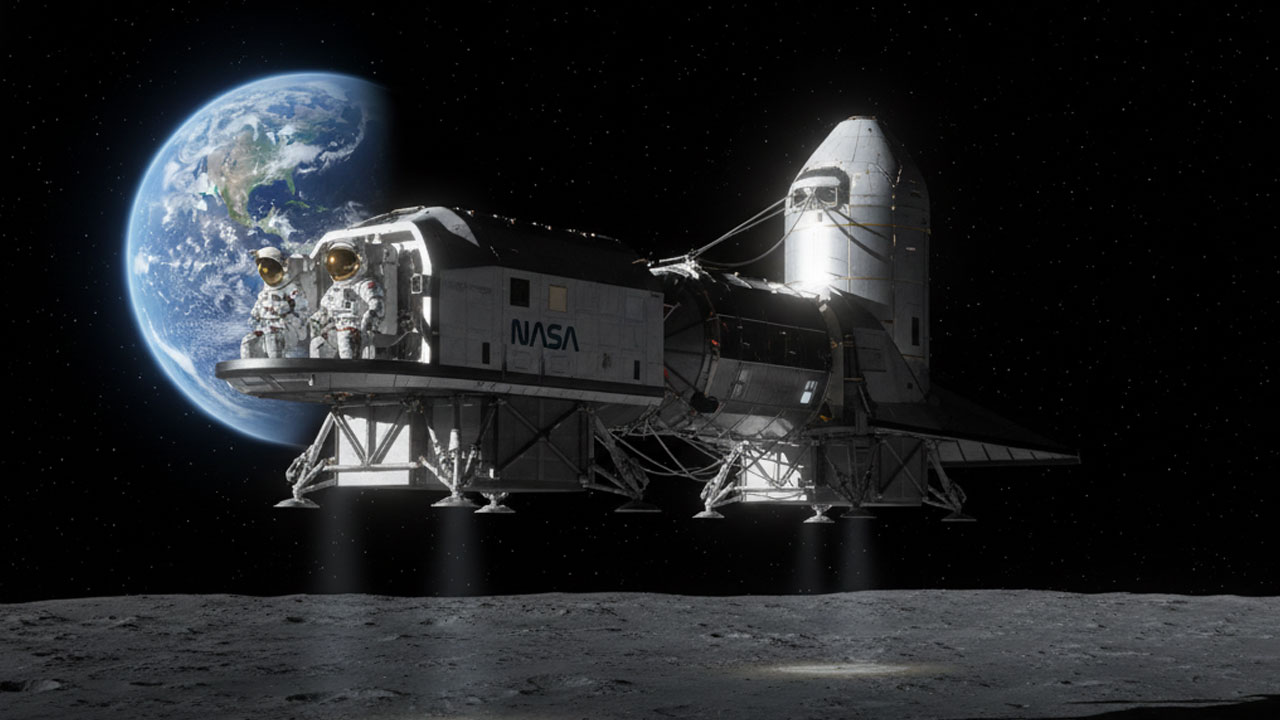
While the announcement disappointed space enthusiasts worldwide, NASA stressed that safety and mission integrity remain the agency’s top priorities.
Technical Hurdles Delay Artemis III
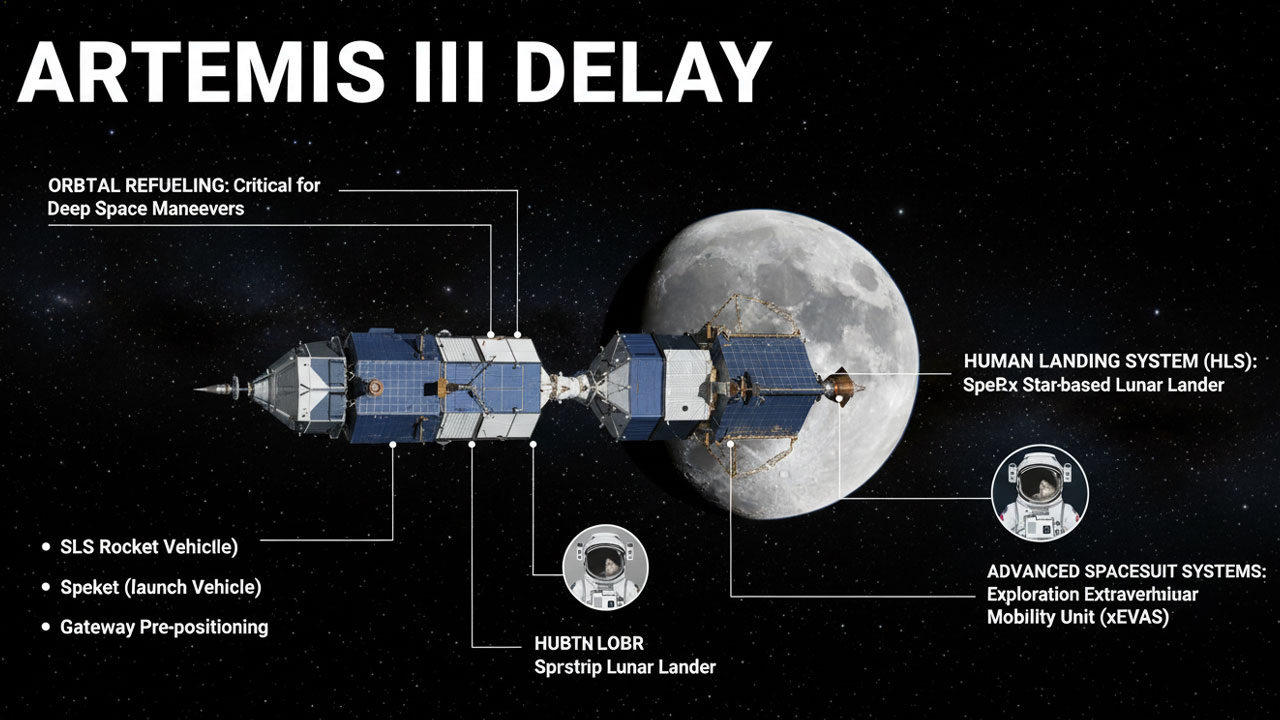
The primary reason for the Artemis III Delay is the technical complexity of the spacecraft and associated systems. NASA’s human landing system (HLS), developed in partnership with SpaceX, requires additional development and testing before it can safely transport astronauts from lunar orbit to the Moon’s surface.
A central concern is the HLS’s orbital refueling capability. This innovative technology, essential for extending lunar operations, has not yet been fully tested in a crewed mission context. Any premature launch could jeopardize crew safety and mission success.
Additionally, new spacesuits being developed by Axiom Space are behind schedule. These suits are specifically designed for lunar surface operations, including mobility, life support, and thermal regulation. NASA officials emphasized that rushing the development of suits without thorough testing could pose unacceptable risks to astronauts.
Budgetary Pressures and Congressional Oversight
Financial constraints also contributed to the Artemis III Delay. NASA’s budget requests for the Artemis program have not always been fully met by Congress, resulting in limited funding for accelerated hardware development.
Industry analysts note that complex aerospace programs frequently encounter funding fluctuations, which, when combined with technical challenges, can lead to extended timelines. NASA has stated that the new 2027 launch window allows the agency to complete necessary testing without compromising safety or engineering standards.
Impact on Artemis Program Timeline
The Artemis III Delay has cascading effects on the broader Artemis roadmap. Artemis II, the crewed lunar flyby mission, is now scheduled for September 2025. This adjustment ensures that each mission incorporates lessons learned from its predecessor, maintaining a methodical progression toward sustainable lunar operations.
Key Information Table On NASA Pushes Moon Mission to 2027
| Detail | Information |
|---|---|
| Mission Name | Artemis III |
| Original Launch Date | 2025 |
| Revised Launch Date | September 2027 |
| Primary Contractor | SpaceX (Human Landing System) |
| Spacesuit Supplier | Axiom Space |
| Artemis II Launch | September 2025 |
| Mission Objectives | First woman and first person of color on Moon |
| Program Goal | Establish long-term lunar presence |
| Reasons for Delay | Technical development, safety testing, budget |
| NASA Statement | Prioritizing astronaut safety and mission success |
The schedule revision allows engineers to refine spacecraft systems, perform comprehensive simulations, and address unforeseen technical issues. This careful approach mitigates the risk of mission failure and enhances the likelihood of achieving long-term objectives, including the eventual establishment of a permanent lunar base.
Global Implications and Space Race Context
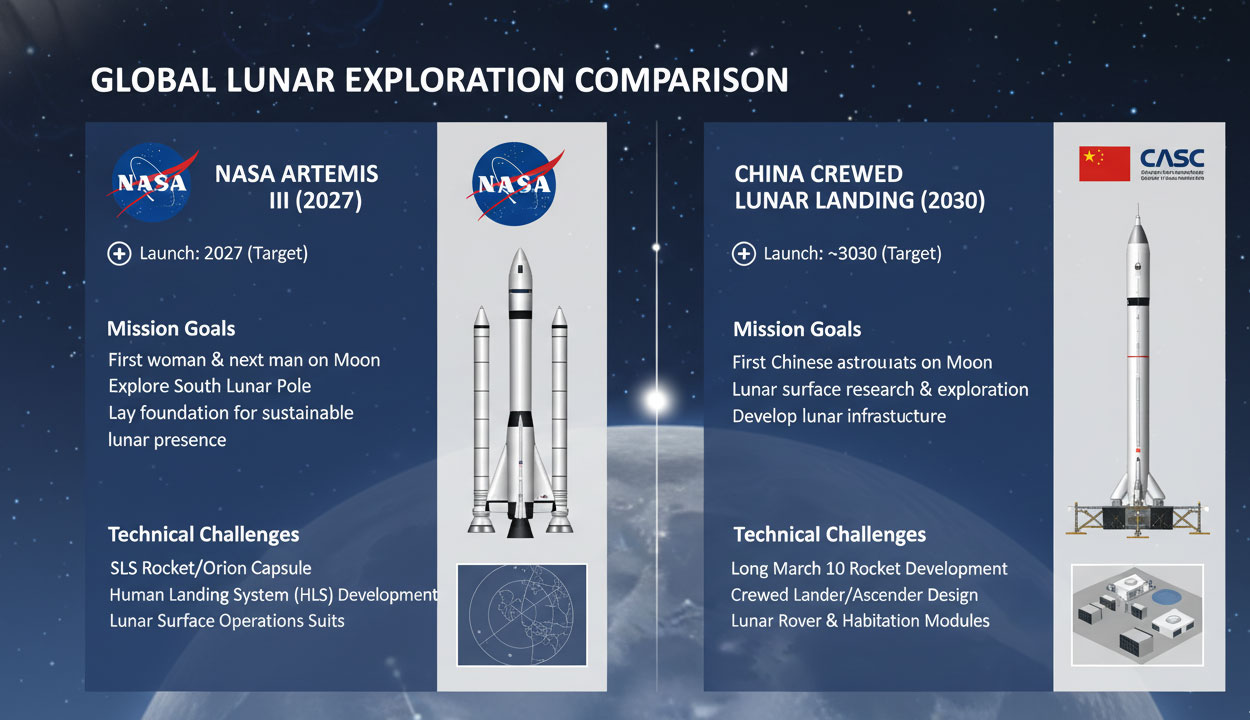
The Artemis III Delay also alters the global lunar exploration landscape. China has announced its ambition to conduct a crewed lunar landing around 2030, which positions the U.S. and China as competitors in the next era of human spaceflight. The revised 2027 timeline narrows the gap between the two nations’ lunar programs, introducing heightened international interest and strategic considerations in lunar exploration.
For NASA’s industrial partners, the delay offers additional time to perfect hardware, though it also extends development costs. Scientific teams anticipating Artemis III’s lunar surface research, including studies on geology, lunar resources, and potential in-situ resource utilization, must now postpone experiments until the new timeline.
Artemis III Mission Significance
Artemis III is more than a symbolic return to the Moon; it represents a critical step toward sustainable human presence in deep space. The mission will demonstrate new technologies, refine human-robotic collaboration, and provide data essential for long-term exploration objectives.
NASA’s emphasis on astronaut safety reflects lessons learned from prior space programs, including Apollo and the Space Shuttle era. Every element, from orbital docking to lunar lander propulsion systems, must undergo rigorous validation before astronauts are entrusted to operate them.
Industry and Scientific Reactions
Space industry analysts have contextualized the Artemis III Delay within broader trends in aerospace development. Programs of this scale often encounter unexpected technical setbacks, from propulsion systems to life-support innovations. Ensuring mission success in the extreme conditions of the lunar environment requires deliberate pacing.
The scientific community views the delay as an opportunity to further refine research objectives, experiment design, and mission logistics. Lunar exploration promises insights into planetary formation, solar system history, and potential resource utilization, all of which depend on the safe and successful execution of crewed missions.
The Human Element
Beyond technical and strategic considerations, Artemis III underscores NASA’s commitment to representation and diversity. Landing the first woman and first person of color on the Moon symbolizes a more inclusive approach to space exploration and inspires a new generation of scientists, engineers, and astronauts.
The program’s human-centered goals also reinforce the ethical imperative of prioritizing astronaut safety over schedule pressures. The Artemis III Delay demonstrates NASA’s recognition that ambitious objectives must be balanced with the well-being of those undertaking extraordinary risks.
Looking Forward
The revised 2027 launch date allows NASA to continue meticulous testing, ensure budget compliance, and integrate lessons learned from Artemis I and II missions. Public interest in lunar exploration remains high, fueled by decades of fascination with the Moon and renewed enthusiasm for international space endeavors.
Although the Artemis III Delay is a setback, it reflects the practical realities of deep space exploration. Establishing a sustainable presence on the Moon is a complex undertaking, requiring incremental progress, rigorous safety protocols, and careful resource management.
Artemis III Delay
While the postponement of Artemis III to 2027 is disappointing, it underscores the immense challenges inherent in returning humans to the lunar surface. Technical hurdles, financial constraints, and astronaut safety considerations collectively shaped this decision.
NASA’s Artemis program remains on course to achieve its ambitious goals, with each step—no matter how delayed—bringing humanity closer to a permanent presence on the Moon. The world will have to wait a few more years for this historic mission, but the careful approach enhances the probability of a successful and groundbreaking achievement in space exploration.


