
Entertainment Unit Showdown: DIY vs. Prefab for Your Media Wall. Designing the perfect media wall is a blend of aesthetics, functionality, and personal taste. The Entertainment Unit is central to this vision, acting not only as a storage solution but also as the focal point of a living room or home theater. Homeowners today face a critical choice: should they invest in a DIY Entertainment Unit that reflects personal craftsmanship, or opt for a prefab model that promises convenience and uniformity? This analysis examines both approaches, offering practical insights for informed decision-making.
An Entertainment Unit is more than a television stand. It encompasses shelving, cabinetry, cable management, and often integrated lighting to create a cohesive media experience. Modern units may also accommodate gaming consoles, sound systems, and streaming devices, reflecting the increasingly complex needs of home entertainment setups.
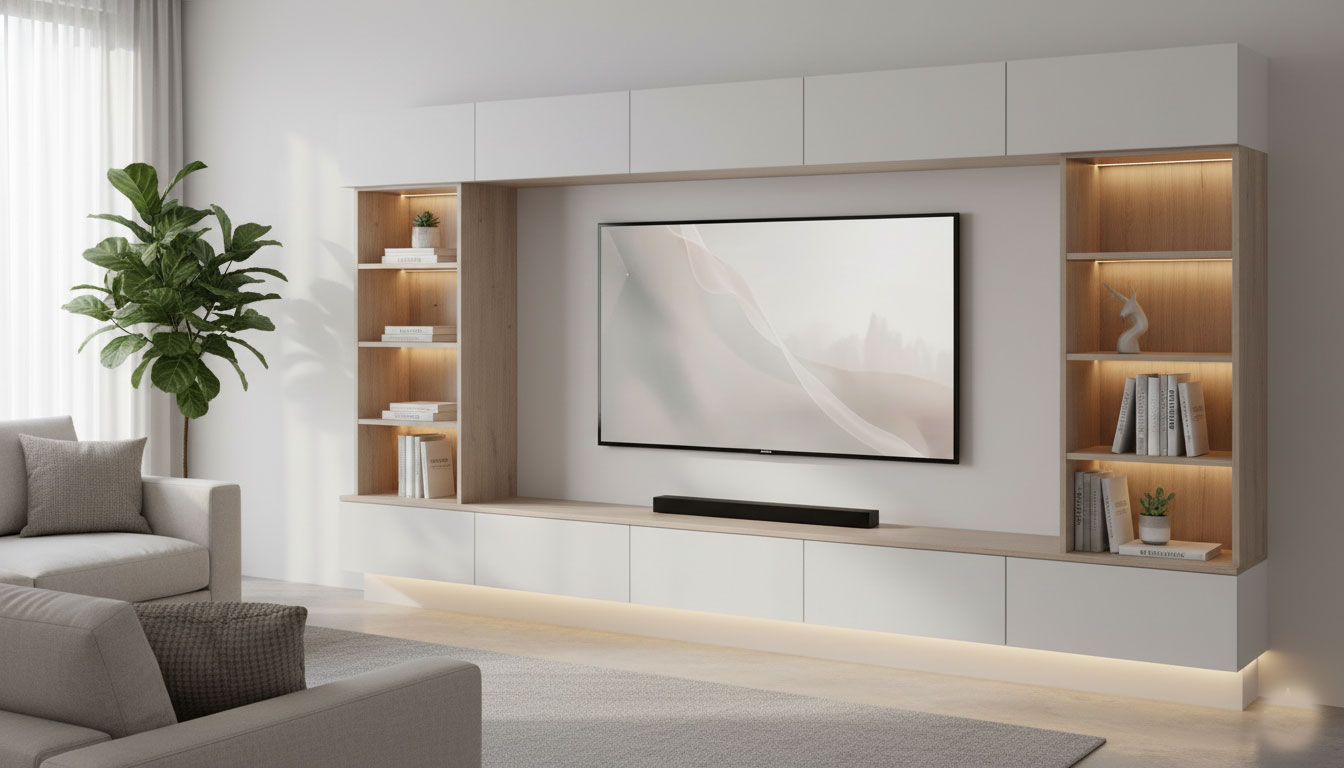
Key considerations when selecting an Entertainment Unit include:
- Space Efficiency: Optimizing the available wall area.
- Aesthetic Compatibility: Matching interior décor styles.
- Durability: Materials and construction affecting long-term usability.
- Functionality: Adequate storage, cable management, and device accessibility.
DIY Entertainment Unit: Customization and Creativity
Choosing a DIY Entertainment Unit is a commitment to personalization. Homeowners can design every aspect, from material selection to dimensions and finish. This approach allows for complete alignment with personal style and room requirements.
Benefits of DIY
- Customization: Create a unique design tailored to specific room dimensions and aesthetics.
- Material Flexibility: Choose sustainable or premium materials, such as reclaimed wood or engineered composites.
- Cost Control: Potentially reduce costs by sourcing materials independently and avoiding retail markups.
- Satisfaction: The process of building contributes to a sense of accomplishment and creative fulfillment.
Challenges of DIY
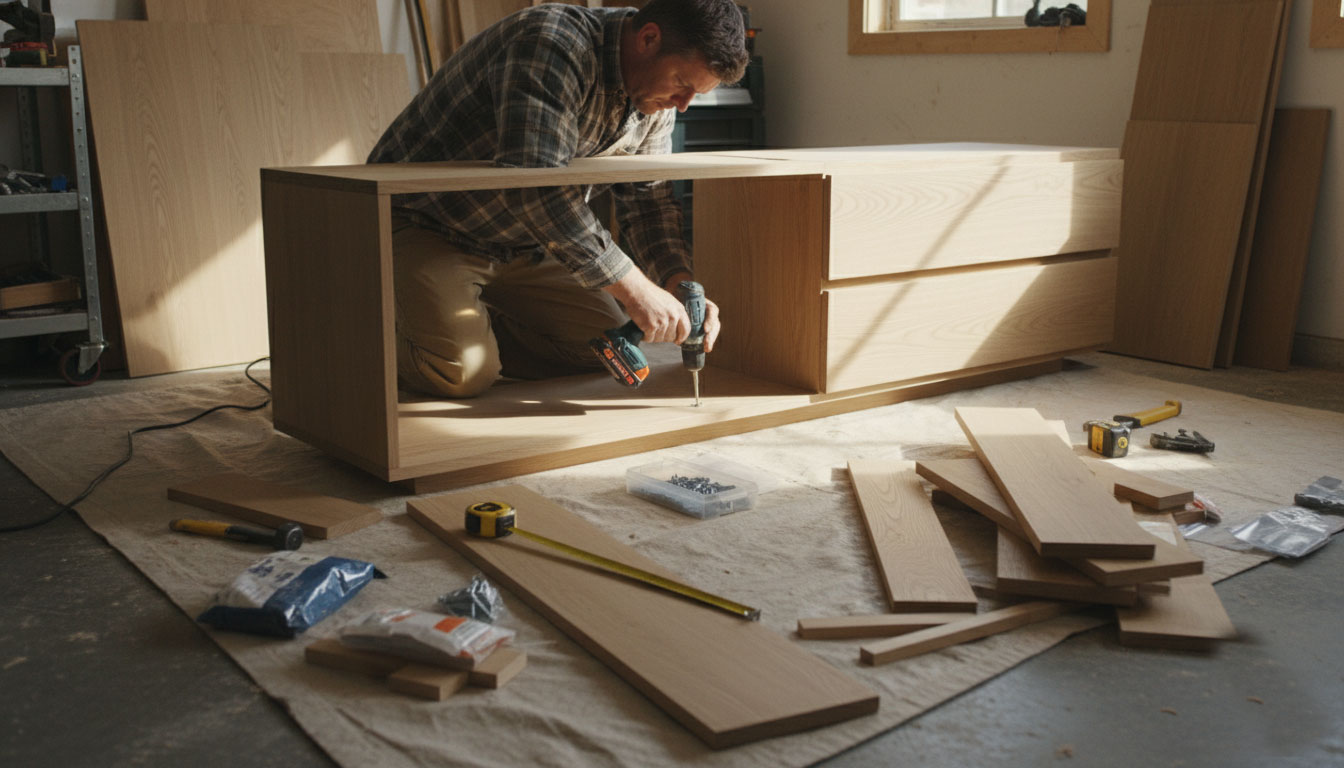
- Time-Intensive: Requires planning, construction, finishing, and installation.
- Skill Requirement: Demands woodworking or assembly skills; mistakes can be costly.
- Tool Investment: Necessitates purchase or rental of specialized tools.
- Durability Risks: Poorly executed units may lack the stability of professionally manufactured options.
Ideal Users
DIY Entertainment Units are best suited for homeowners who:
- Have moderate to advanced woodworking skills.
- Value personalized design over convenience.
- Are willing to invest time in hands-on construction.
- Seek unique materials or sustainable options unavailable in prefab units.
Prefab Entertainment Unit: Convenience and Consistency
Prefab Entertainment Units are mass-produced furniture designed for immediate purchase and installation. They cater to homeowners seeking efficiency, uniformity, and standardized quality.
More: Media Walls UK Installation Options: Pre-Built vs. Builders
Advantages of Prefab
- Time-Saving: Delivered ready-to-assemble or fully assembled, minimizing effort.
- Professional Finish: Factory-grade precision ensures uniformity in edges, fittings, and surfaces.
- Predictable Pricing: Transparent cost structures with limited variation.
- Warranty & Support: Often includes manufacturer warranties and after-sales services.
Limitations of Prefab
- Limited Customization: Constrained by manufacturer designs and sizes.
- Material Quality Variance: Lower-cost units may use particleboard or MDF instead of hardwood.
- Generic Style: Risk of a common look found in multiple homes.
- Transport Considerations: Large units may require delivery logistics or professional assembly.
-
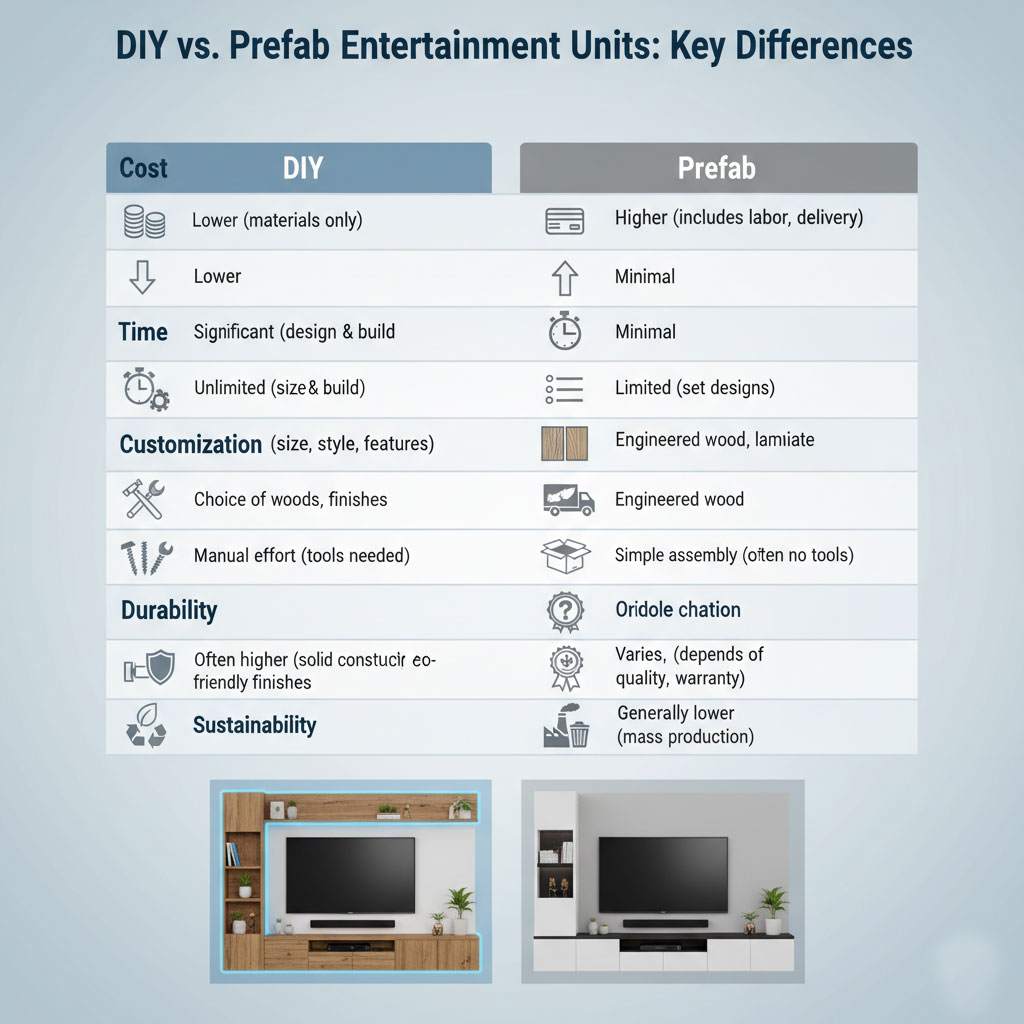
Entertainment Unit Showdown: DIY vs. Prefab for Your Media Wall
Ideal Users
Prefab Entertainment Units suit homeowners who:
- Prioritize convenience over full customization.
- Lack the skills or time for DIY construction.
- Seek a reliable, functional solution without extended lead times.
- Desire warranty coverage and professional support.
Key Table On Cost Comparison: DIY vs. Prefab
| Feature | DIY Entertainment Unit | Prefab Entertainment Unit |
|---|---|---|
| Average Cost | $300–$1,500 (materials only) | $400–$2,000 (fully assembled) |
| Labor Requirement | High (self or hired) | Low (assembly required) |
| Material Flexibility | High (wood, metal, glass) | Medium (limited to designs) |
| Installation Time | 1–4 weeks | 1–3 days |
| Customization Level | Very High | Low–Medium |
| Warranty | None (DIY) | Often included |
| Durability | Variable (depends on execution) | Standardized factory quality |
Design Considerations for Your Media Wall
When selecting an Entertainment Unit, several design factors determine whether DIY or prefab is appropriate:
Space Optimization
- DIY: Custom dimensions ensure every inch is maximized.
- Prefab: Standard sizes may leave unused gaps or require additional storage solutions.
Aesthetic Integration
- DIY: Perfect match for unique interior themes, from rustic to ultra-modern.
- Prefab: Offers standard finishes; matching unconventional décor may require modification.
Technological Integration
- DIY: Enables tailor-made cable management, hidden compartments for consoles, and integrated lighting.
- Prefab: Often designed for universal TV sizes and common electronics setups but may require DIY adjustments for advanced systems.
Sustainability and Material Considerations
Sustainability is increasingly critical in furniture design. Homeowners are more aware of environmental impacts:
- DIY: Allows selection of eco-friendly, reclaimed, or certified sustainable materials.
- Prefab: Quality varies; some manufacturers offer FSC-certified or low-VOC units, but many rely on cost-effective particleboard.
Case Studies: DIY and Prefab Implementations
DIY Example
A California-based interior designer built a walnut-finished Entertainment Unit for a 12-foot media wall. By designing custom shelving for a sound system, gaming consoles, and decorative items, the result was both functional and a unique centerpiece. Total cost: approximately $1,200; construction time: three weeks.
Prefab Example
IKEA’s Besta series is a globally recognized prefab solution. It offers modularity, easy assembly, and interchangeable finishes. A standard 8-foot unit can accommodate TVs up to 75 inches, soundbars, and storage compartments. Total cost: $850; assembly time: two days.
Both approaches demonstrate that the ultimate choice depends on user priorities: personal expression and customization versus convenience and speed.
Making the Right Choice
Selecting the appropriate Entertainment Unit is a balance of priorities:
- For Customization and Personalization: DIY is ideal for homeowners seeking a unique design aligned with their vision.
- For Convenience and Standardization: Prefab offers efficient installation, professional finish, and reliable quality.
- For Budget Sensitivity: DIY may save money on materials, but factor in tools and time. Prefab provides predictable pricing and minimal effort.
- For Long-Term Durability: Prefab units have factory-tested durability, whereas DIY units depend on execution quality and material choice.
Homeowners should consider lifestyle, skill level, and aesthetic goals. Consulting interior designers or professional carpenters can bridge gaps, especially for complex media wall designs.
The Entertainment Unit is both a functional necessity and an aesthetic statement. Whether opting for DIY craftsmanship or prefab convenience, the decision hinges on individual priorities: the thrill of personalization versus the simplicity of ready-made solutions. By understanding the trade-offs in cost, design, durability, and sustainability, homeowners can select a unit that elevates their media experience while harmonizing with their living space.
Choosing between DIY and prefab is not merely about construction—it’s a reflection of lifestyle, creative intent, and long-term vision for your home’s media environment.


