
Berkshire Hathaway Leadership Shifts Signal New Era. Berkshire Hathaway, the conglomerate led for decades by Warren Buffett, announced a sweeping series of leadership changes on Monday, marking a pivotal moment as the company positions itself for the post-Buffett era. The firm’s stock experienced modest declines in premarket trading, reflecting investor uncertainty surrounding the transitions.
The most notable shift involves Todd Combs, the current CEO of Geico and a key investment manager at Berkshire, who is set to leave for JPMorgan Chase to head the bank’s strategic investment group. Combs will also serve as a special advisor to JPMorgan CEO Jamie Dimon, signaling the high-profile nature of this move.
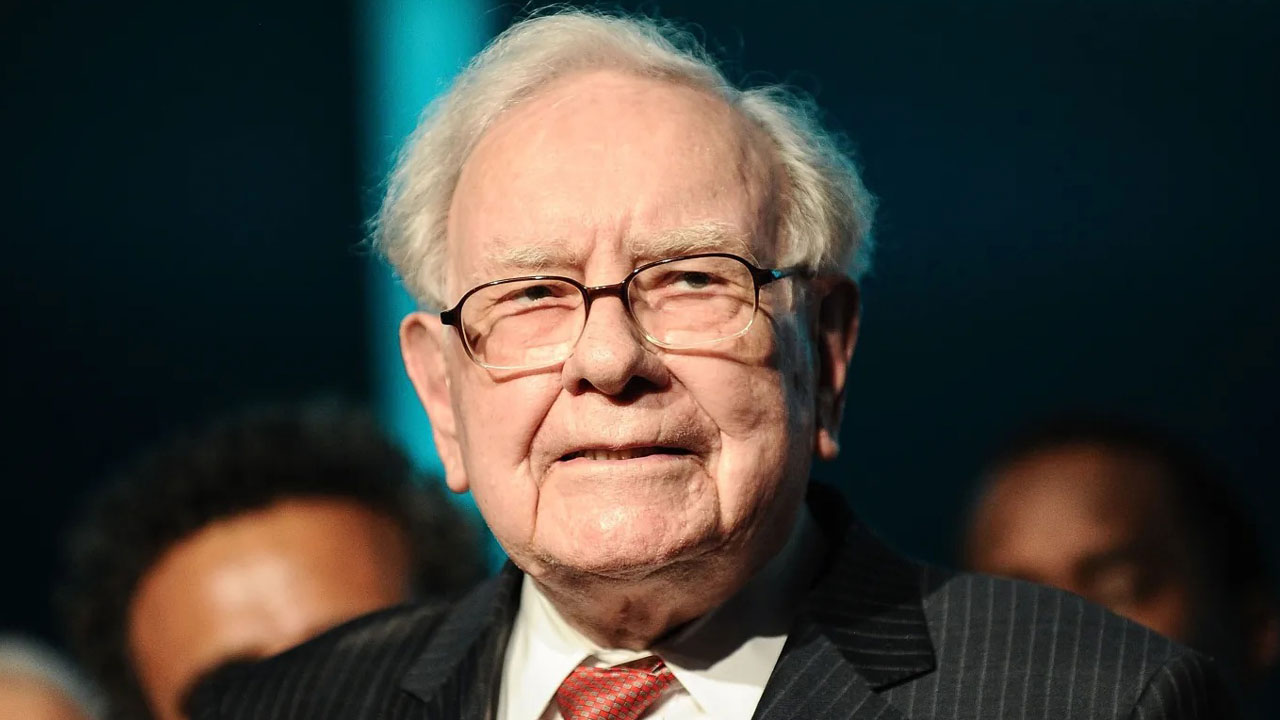
“Todd A. Combs, CEO of GEICO since 2020, has resigned to accept an interesting and important job at JPMorgan,” Buffett said in a statement. “JPMorgan, as usually is the case, has made a good decision.”
Combs’ tenure at Berkshire began in 2010, during which he managed roughly 10% of the company’s $300 billion equity portfolio alongside Ted Weschler. Buffett retained responsibility for the remainder of Berkshire’s investments. At the end of 2019, Buffett elevated Combs to the role of Geico CEO, where he led a notable operational turnaround for the third-largest U.S. auto insurer.
Executive Transitions Across Berkshire
Nancy Pierce, currently Chief Operating Officer at Geico, will step into the CEO role following Combs’ departure. Meanwhile, Marc Hamburg, Berkshire’s long-serving Chief Financial Officer, plans to retire in June 2027. Charles Chang, presently CFO of Berkshire Hathaway Energy, will assume the CFO position starting June 1, 2026, with both executives working closely to ensure a seamless transition.
At the operational helm, Greg Abel, Berkshire’s vice chairman and overseer of non-insurance businesses, will replace Buffett as CEO on January 1, 2026, while Buffett retains his position as chairman. Abel’s promotion represents a continuation of Berkshire’s streamlined management structure, emphasizing delegated oversight across diverse business segments.
Key Information Table On Berkshire Hathaway Leadership Changes
| Executive | Current Role | New Role | Effective Date |
|---|---|---|---|
| Todd Combs | Geico CEO & Investment Manager | Head of Strategic Investments, JPMorgan Chase | Jan 1, 2026 |
| Nancy Pierce | Geico COO | Geico CEO | Jan 1, 2026 |
| Marc Hamburg | Berkshire CFO | Retiring | June 2027 |
| Charles Chang | Berkshire Hathaway Energy CFO | Berkshire CFO | June 1, 2026 |
| Greg Abel | Vice Chairman | CEO, Berkshire Hathaway | Jan 1, 2026 |
| Adam Johnson | NetJets CEO | President, Consumer Products & Retail | Immediate |
| Michael O’Sullivan | Former Snap General Counsel | Senior VP & General Counsel, Berkshire | Jan 1, 2026 |
Strategic Implications of Combs’ Move to JPMorgan
Combs’ transition to JPMorgan is notable, as he has served on the bank’s board of directors for nine years, leaving the board to assume his new executive responsibilities. At JPMorgan, he will lead the strategic investment group within the bank’s security and resiliency initiative, a role that underscores the growing intersection between corporate investment strategy and financial technology solutions.
Industry analysts suggest that Combs’ departure represents a broader trend in which high-profile executives leverage operational and investment expertise across multiple sectors. His experience in steering large-scale portfolios at Berkshire, coupled with leadership at Geico, positions him uniquely to advise on JPMorgan’s strategic initiatives.
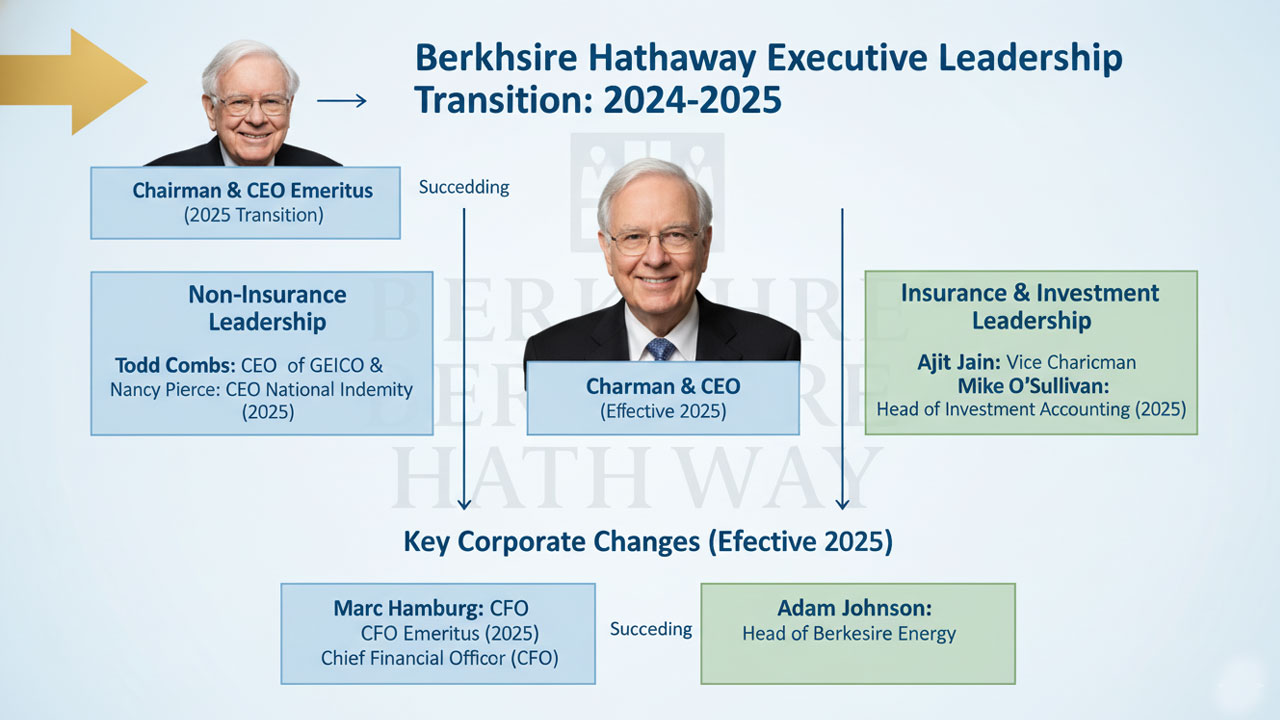
Non-Insurance Business Leadership and Oversight
In addition to insurance, Berkshire’s expansive non-insurance holdings—including BNSF, Berkshire Hathaway Energy, McLane, and Pilot—will remain under Greg Abel’s direct oversight. Adam Johnson, CEO of NetJets, has been appointed President of Berkshire’s consumer products, service, and retail business, a newly created role reflecting the conglomerate’s intent to expand and formalize management across its diverse portfolio.
The appointment of Michael O’Sullivan as senior vice president and general counsel further strengthens Berkshire’s governance framework. O’Sullivan, formerly Snap’s general counsel since 2017, brings extensive corporate legal expertise to the conglomerate at a time of executive transition.
More: Golden Globes 2026: Full Nominee List, Best Film, TV & Podcast Categories
Market Reactions and Investor Sentiment
Following the announcements, Berkshire stock dipped by 0.8% in premarket trading Monday. Analysts attribute the decline to investor caution amid leadership changes rather than concerns over operational performance. Historically, Berkshire’s decentralized management approach and Buffett’s reputation for meticulous oversight have reassured shareholders during periods of executive turnover.
The reshuffling of top management positions, including CEO transitions and CFO succession planning, reflects a carefully orchestrated strategy designed to maintain continuity and institutional knowledge. By overlapping tenures—such as Hamburg and Chang collaborating ahead of the CFO handoff—Berkshire ensures minimal disruption to its financial operations and reporting processes.
Contextualizing Buffett’s Legacy and the Succession Plan
Warren Buffett’s dual role as chairman and CEO has historically combined investment oversight with operational management—a demanding arrangement that few executives in modern conglomerates replicate. His decision to step back as CEO while retaining the chairman role signals a generational shift in leadership philosophy.
Greg Abel’s promotion is particularly significant given his stewardship of Berkshire’s non-insurance businesses. Analysts suggest that Abel’s focus on operational efficiency and strategic expansion will define the next era of Berkshire Hathaway, aligning with the company’s long-standing emphasis on disciplined investment and measured growth.
Meanwhile, Geico under Nancy Pierce is expected to continue its trajectory of stability and growth, supported by Combs’ prior initiatives in operational restructuring and market competitiveness. The insurance industry, increasingly influenced by digital disruption, will be closely watching Pierce’s leadership and Berkshire’s broader strategic directions.
Broader Implications for Corporate Governance
The Berkshire reshuffle exemplifies best practices in corporate succession planning. By announcing multiple transitions in tandem, the company minimizes uncertainty, reinforces governance structures, and underscores accountability at every level. This approach is aligned with emerging trends in conglomerate management, where overlapping executive tenures, internal promotions, and targeted external hires ensure operational continuity.
Experts note that Berkshire’s careful planning may serve as a model for other global corporations facing imminent leadership changes. Transparent communication, staged succession, and appointment of trusted internal executives mitigate risks commonly associated with CEO transitions, including potential declines in stock value, strategic drift, or operational inefficiencies.
Looking Ahead Berkshire’s Next Chapter
As Berkshire Hathaway navigates the post-Buffett era, the company’s leadership changes—highlighted by Combs’ departure, Abel’s promotion, and Pierce’s appointment—signal a thoughtful approach to continuity and strategic innovation. The combination of seasoned internal talent and targeted external recruitment reflects a forward-looking ethos, designed to preserve Berkshire’s legacy while adapting to evolving financial and operational landscapes.
Investors and industry observers will be monitoring the impact of these transitions closely. Key indicators include performance metrics at Geico under Pierce, strategic investment outcomes under Combs at JPMorgan, and operational performance of Berkshire’s non-insurance portfolio under Abel’s leadership.
Ultimately, the leadership restructuring demonstrates the firm’s commitment to institutional stability, prudent investment strategy, and meticulous succession planning—hallmarks of Buffett’s philosophy. This approach ensures that Berkshire Hathaway is positioned not only to survive but to thrive in the decades following Buffett’s tenure as CEO.
Berkshire Hathaway’s leadership changes are more than executive reshuffling; they represent a strategic blueprint for sustaining one of the world’s most complex conglomerates. By orchestrating a carefully staged succession plan and promoting seasoned executives to critical roles, the company maintains operational continuity while embracing a new era of leadership.
For investors, employees, and industry stakeholders, the reshuffle offers reassurance that Berkshire Hathaway will continue its tradition of disciplined growth, strategic oversight, and long-term value creation. As Buffett steps back, the legacy of meticulous governance, prudent investment, and thoughtful succession planning ensures that Berkshire’s trajectory remains robust and forward-looking.


