
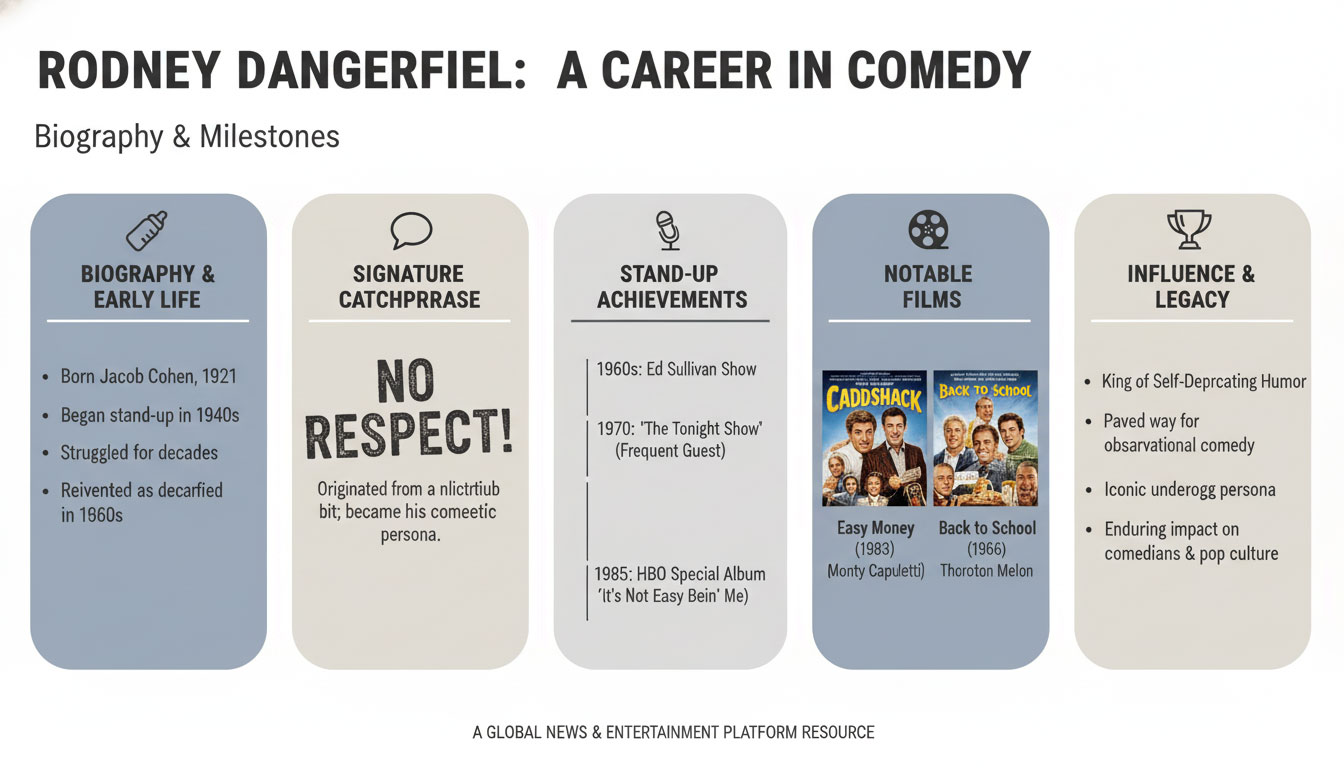
Rodney Dangerfield: Life, Career, and Enduring Comedy Legacy. Rodney Dangerfield, born Jacob Rodney Cohen on November 22, 1921, in Babylon, New York, emerged from humble beginnings to become a cornerstone of American comedy. His upbringing, marked by economic hardship and familial challenges, profoundly influenced his comedic voice, which centered on self-deprecation and relatable misfortune.
Adopting the stage name “Rodney Dangerfield” in the 1940s, Cohen navigated early setbacks in performance venues. The name itself was chosen to evoke humor and memorability. Despite initial struggles, these formative years shaped the hallmark persona that audiences would come to love.

Career Breakthrough and Television Fame
Dangerfield’s career achieved momentum in the 1960s and 1970s through repeated appearances on The Ed Sullivan Show and eventually The Tonight Show Starring Johnny Carson. His signature line, “I don’t get no respect,” became a cultural touchstone, encapsulating the comedian’s persona of perpetual underestimation.
Television appearances were pivotal in establishing his brand. Rodney Dangerfield became synonymous with a style of humor that combined physical comedy, one-liners, and a relatable everyman persona. His timing, cadence, and distinctive delivery set him apart from contemporaries and resonated with a wide audience.
Film Contributions and Notable Roles
Transitioning to film, Dangerfield expanded his influence. Notable works include:
| Film | Year | Role | Cultural Impact |
|---|---|---|---|
| Caddyshack | 1980 | Al Czervik | Cemented status as a comedic icon |
| Back to School | 1986 | Thornton Melon | Blended humor with family-friendly appeal |
| Easy Money | 1983 | Monty Capuletti | Highlighted signature self-deprecating style |
| Meet Wally Sparks | 1997 | Wally Sparks | Late-career showcase of comedic versatility |
These roles reinforced his brand, showcasing a blend of slapstick humor and relatable, everyman charm. Revenue from films and syndication contributed to his financial stability and sustained relevance.
Stand-Up Comedy and Legacy
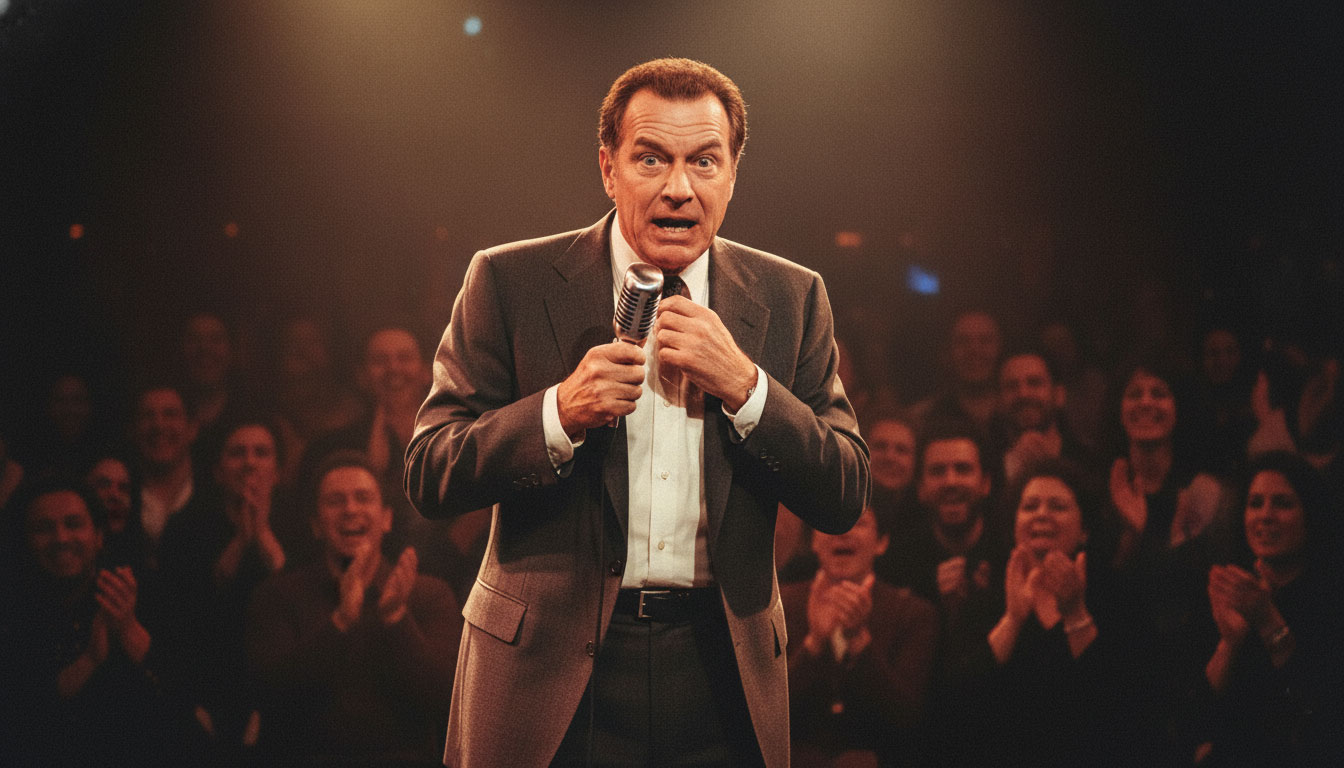
Beyond television and film, Dangerfield’s stand-up performances defined his professional identity. Performing at clubs nationwide, he cultivated a loyal audience with routines grounded in personal experience, observational humor, and rapid-fire delivery.
Rodney Dangerfield also influenced generations of comedians, including Jerry Seinfeld, Chris Rock, and Kevin Hart. His methods of using personal adversity as comedic material inspired modern observational and self-deprecating comedy.
Key elements of his style included:
- Quick, punchy one-liners
- Self-mockery and humility as humor vehicles
- Relatable narratives rooted in everyday struggles
- Integration of physical comedy with verbal wit
These elements ensured that Dangerfield’s humor transcended cultural and generational boundaries.
Awards, Honors, and Cultural Impact
Despite a career spanning decades, Dangerfield’s impact was measured not only in box office returns but in cultural legacy. He received numerous awards recognizing his contributions to comedy, including:
- American Comedy Awards for Lifetime Achievement
- Induction into the Comedy Hall of Fame
- Continued recognition in retrospectives, documentaries, and specials
His influence extended to shaping comedy club culture, late-night television norms, and even popular attitudes toward self-deprecating humor. Rodney Dangerfield remains a reference point for both contemporary comedians and entertainment historians.
Personal Life and Challenges
Dangerfield’s personal life was marked by resilience and complexity. Married twice, he balanced family commitments with the demands of a rigorous performance schedule. Health challenges, including heart surgery in the late 1990s, did not diminish his dedication to comedy.
His personal experiences informed his professional persona. By turning adversity into humor, Dangerfield created a universally relatable comedic voice. This duality of personal struggle and professional success contributed to both his fame and enduring legacy.
Influence on Modern Comedy
Modern comedians often cite Rodney Dangerfield as a pivotal influence. His techniques in timing, self-deprecation, and audience engagement are widely studied in comedic workshops and entertainment programs. The pervasiveness of his signature line, “I don’t get no respect,” underscores the lasting appeal of his persona in American pop culture.
His work also demonstrates how media exposure, from television to film, amplifies a comedian’s reach. Digital platforms today perpetuate his routines, ensuring that new audiences continue to discover his humor decades after its original performance.
Rodney Dangerfield’s Financial Success
While exact figures vary, estimates of Dangerfield’s earnings reflect decades of performance across multiple media. Revenue streams included:
| Source | Estimated Contribution | Notes |
|---|---|---|
| Stand-up tours | High | National and international performances |
| Film appearances | Medium | Box office and syndication revenue |
| Television appearances | Medium | The Tonight Show, Ed Sullivan Show, specials |
| Royalties | Low to Medium | Repeats and archival licensing |
| Endorsements | Low | Limited but occasional commercial partnerships |
This financial portfolio underscores how longevity, versatility, and media presence contribute to enduring success in comedy.
Enduring Legacy
Rodney Dangerfield remains a towering figure in American comedy. His unique blend of self-deprecating humor, sharp timing, and relatable narratives forged a career that spanned decades and influenced countless performers. Beyond laughs, Dangerfield’s work exemplifies resilience, adaptability, and the enduring power of humor as both art and cultural commentary.
His legacy persists in comedy clubs, television, film, and digital media, ensuring that audiences new and old continue to appreciate the distinctive voice of one of the 20th century’s most influential comedians.


