
Hybe Entertainment Corporate Structure: Understanding the Multi-Label System.Hybe Entertainment, formerly known as Big Hit Entertainment, has emerged as one of South Korea’s most influential entertainment conglomerates. The company transformed from a modest music label into a multi-label system that manages some of the world’s most popular K-pop acts, including BTS, Seventeen, and Tomorrow X Together (TXT).
The company’s growth strategy focuses on diversifying its operations across music production, artist management, content creation, and global business ventures. This approach positions Hybe Entertainment as a unique model in the global entertainment industry, combining corporate sophistication with a cultural influence that resonates worldwide.

Hybe Entertainment’s Multi-Label System
Hybe Entertainment operates under a multi-label framework, which allows it to maintain creative flexibility while leveraging centralized corporate governance. Unlike traditional single-label structures, this model enables Hybe to manage a variety of artists, genres, and business ventures under one umbrella.
Key Information Table On: Core Labels and Subsidiaries
| Label / Subsidiary | Focus Area | Notable Artists / Projects | Key Role in Corporate Structure |
|---|---|---|---|
| Big Hit Music | Main music production | BTS, TXT | Flagship label; primary revenue generator |
| Pledis Entertainment | Idol group management | Seventeen, NU’EST | Talent scouting and group development |
| Source Music | Girl group specialization | LE SSERAFIM | Niche genre focus, creative development |
| Belift Lab | Joint venture | ENHYPEN | Global artist development, international collaboration |
| Hybe Labels Japan | Regional market | Japanese artists | Localization and Japanese market strategy |
| HYBE Solutions | Technology & media | Content platforms, fan engagement tools | Digital innovation, media distribution |
This diversified approach allows Hybe Entertainment to mitigate risks inherent in the entertainment industry, such as fluctuating album sales or market trends, while simultaneously scaling global operations.
Strategic Benefits of the Multi-Label System
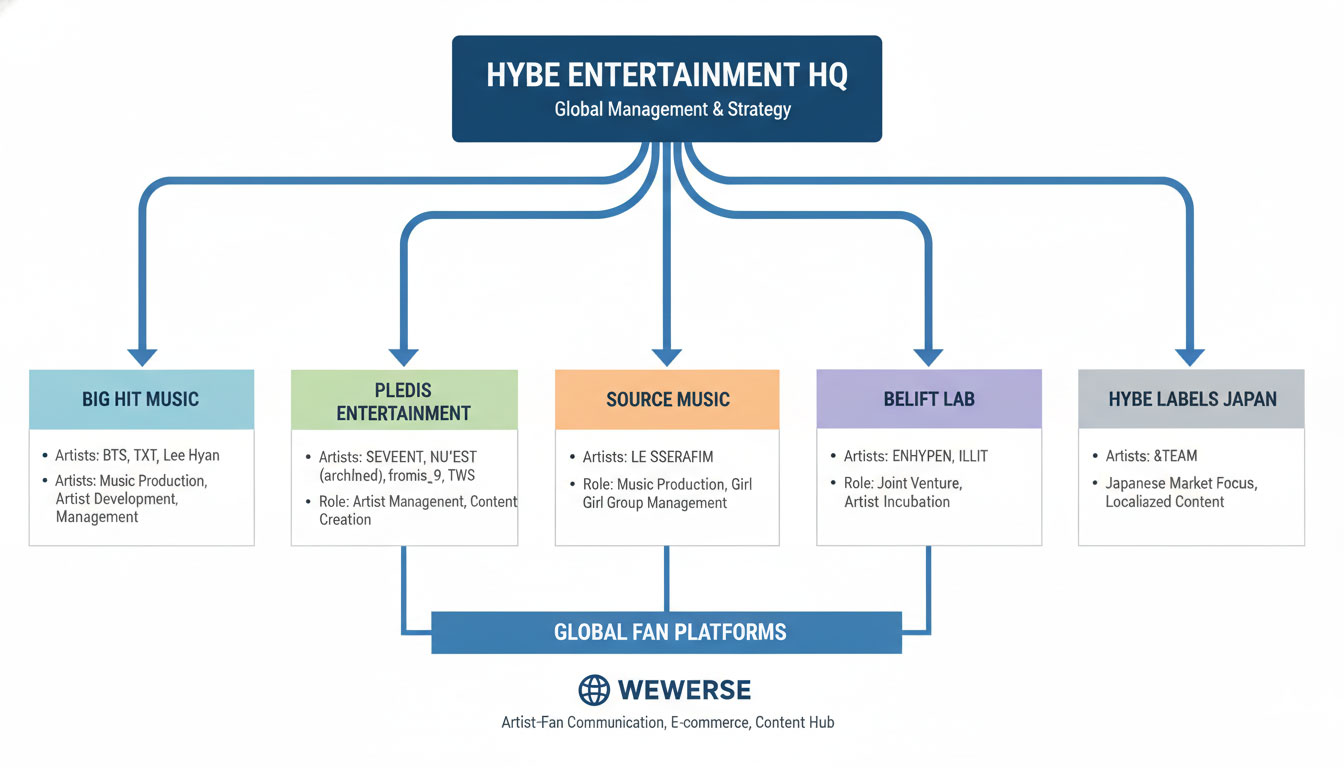
Creative Autonomy and Specialization
One key advantage of Hybe Entertainment’s multi-label system is that each subsidiary retains creative autonomy. Artists and producers within each label can innovate freely while benefiting from the corporate resources, marketing channels, and technological infrastructure of Hybe as a parent company.
Global Market Penetration
The multi-label model facilitates targeted international expansion. By tailoring strategies to regional markets—such as Hybe Labels Japan and Belift Lab—the company maximizes fan engagement and commercial success abroad. For example, Belift Lab’s ENHYPEN capitalizes on both Korean and Western markets, balancing cultural authenticity with global appeal.
Integrated Technology and Fan Platforms
Hybe Entertainment leverages digital platforms like Weverse and HYBE Connect to create direct-to-fan communication channels. This integration strengthens revenue streams beyond album sales, including merchandising, fan memberships, and virtual concerts. By centralizing technological infrastructure, Hybe provides each label with tools to enhance fan engagement without duplicating resources.
More: K-pop: Pros and cons of HYBE’s multi-label system
Corporate Governance and Executive Structure
Hybe Entertainment maintains a hierarchical corporate governance model that balances centralized decision-making with subsidiary autonomy.
- CEO & Executive Board: Oversees strategic decisions, mergers, and acquisitions.
- Label Heads: Manage artist development, production, and creative direction.
- Specialized Divisions: Include marketing, legal, finance, technology, and global business development.
This governance model ensures strategic alignment across labels while allowing creative teams to maintain their artistic vision. Analysts note that this structure has contributed to Hybe Entertainment’s ability to scale rapidly and adapt to shifting global music trends.

Hybe Entertainment’s Global Influence
Hybe Entertainment has redefined the global K-pop landscape, setting benchmarks in artist management, digital innovation, and cross-cultural engagement. BTS, its flagship group, has become a worldwide phenomenon, demonstrating the efficacy of Hybe’s multi-label approach.
The company’s strategy extends beyond music: partnerships with global tech firms, merchandise licensing, and multimedia content initiatives all reinforce Hybe’s position as a cultural and economic powerhouse. Its success has prompted other entertainment companies to explore multi-label models and diversified revenue streams.
Challenges and Industry Considerations
Despite its achievements, Hybe Entertainment faces challenges common to entertainment conglomerates:
- Market Saturation: K-pop’s global expansion faces potential fatigue, making continuous innovation critical.
- Talent Retention: Maintaining artist loyalty while managing multiple labels can strain corporate resources.
- Regulatory Environment: International expansion requires navigating complex copyright laws, labor standards, and digital content regulations.
- Brand Consistency: Balancing creative freedom across subsidiaries with a unified corporate identity is an ongoing management challenge.
Analysts suggest that Hybe’s ability to maintain agility while upholding corporate governance will be essential for long-term sustainability.
Looking Ahead: Hybe Entertainment’s Vision
Hybe Entertainment continues to invest in technological innovation, international partnerships, and sustainable artist development. Key strategies include:
- Expanding digital platforms for fan interaction and content monetization.
- Strengthening global partnerships to promote cross-market collaborations.
- Developing niche labels to explore emerging genres and untapped talent.
The company’s multi-label system provides the flexibility to pursue these initiatives while minimizing operational risks, positioning Hybe Entertainment as a blueprint for modern entertainment conglomerates worldwide.
Key Takeaways
- Hybe Entertainment’s multi-label system enables creative diversity and corporate efficiency.
- Subsidiaries specialize in different genres and markets, from BTS to ENHYPEN.
- Digital platforms enhance fan engagement and global revenue streams.
- Corporate governance balances centralized strategy with creative autonomy.
- Continued innovation and international expansion are central to Hybe’s long-term vision.
By integrating strategic foresight, technological innovation, and a globally oriented management model, Hybe Entertainment exemplifies how modern entertainment companies can thrive in an increasingly competitive and digitalized world.


