
Inside the SM Entertainment Training System: Pathways to K-Pop Stardom.The journey to becoming a K-Pop idol remains one of the most demanding and competitive career paths in the global entertainment industry. Among South Korea’s major agencies, SM Entertainment has built a reputation for developing artists through a highly structured training system that blends artistic rigor, performance psychology, and a distinctive approach to cultural production known as Cultural Technology. The company’s long list of influential acts, from H.O.T. to Girls’ Generation, EXO, Red Velvet, and aespa, positions its training program as a central blueprint for the modern K-Pop model.
This article offers a comprehensive, newsroom-grade analysis of the system: its philosophy, its structure, the expectations placed on trainees, and how it continues to shape the industry’s global direction.
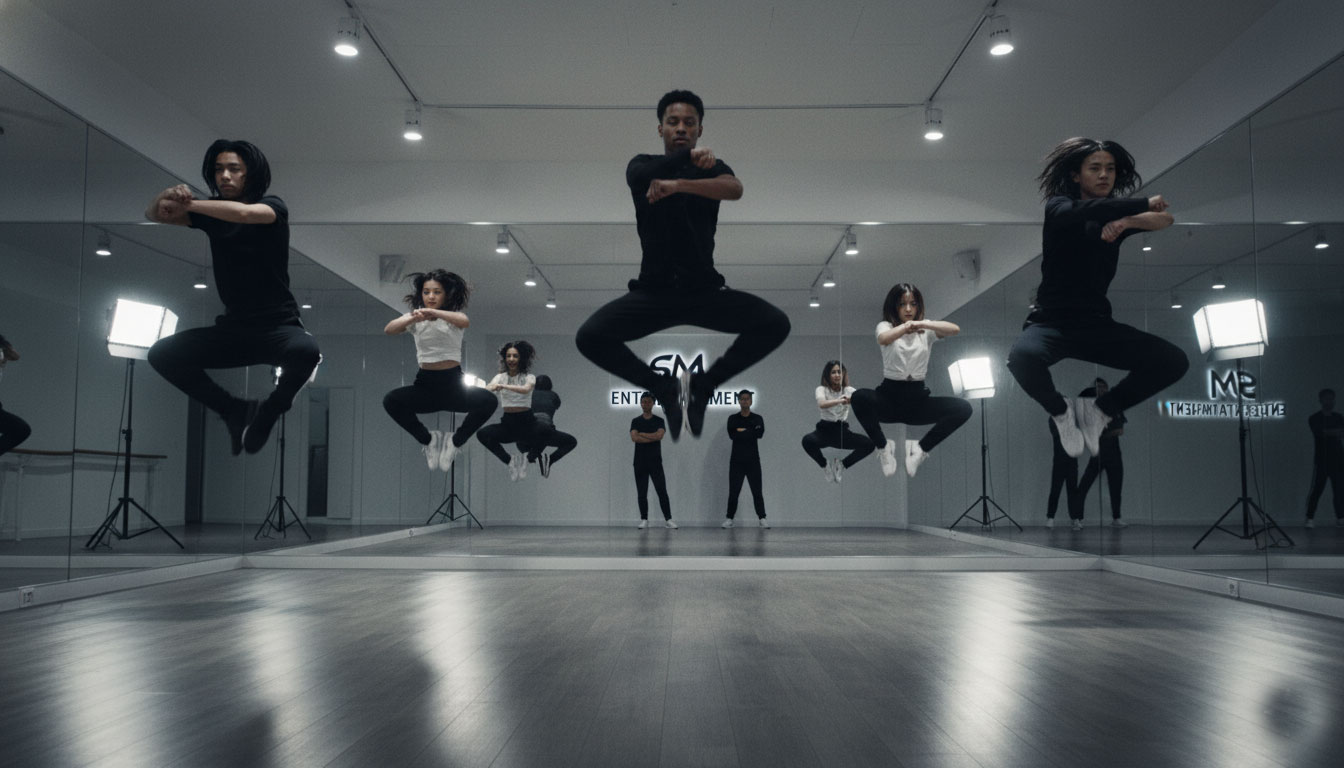
The Focus Keyword SM Entertainment is used throughout this article.
The Origins of a Training Culture
Cultural Technology as a Framework
The origins of the modern K-Pop training system trace back to the 1990s, when South Korean entertainment conglomerates began formalizing talent development methods inspired by both Japanese idol culture and American pop production. SM Entertainment was a pioneer in professionalizing this model. Its founder conceptualized a multi-layered pipeline that incorporated talent scouting, linguistic education, stagecraft, and a globalized pop music format.
The training system was built around the idea that cultural production could be engineered with precision. Trainees were not merely performers in development; they were long-term investments shaped through classroom learning, relentless rehearsal schedules, and continuous evaluation. This environment prioritized discipline and consistency, traits that later became synonymous with K-Pop’s global appeal.
The Audition Process
Global Scouting for Diverse Talent
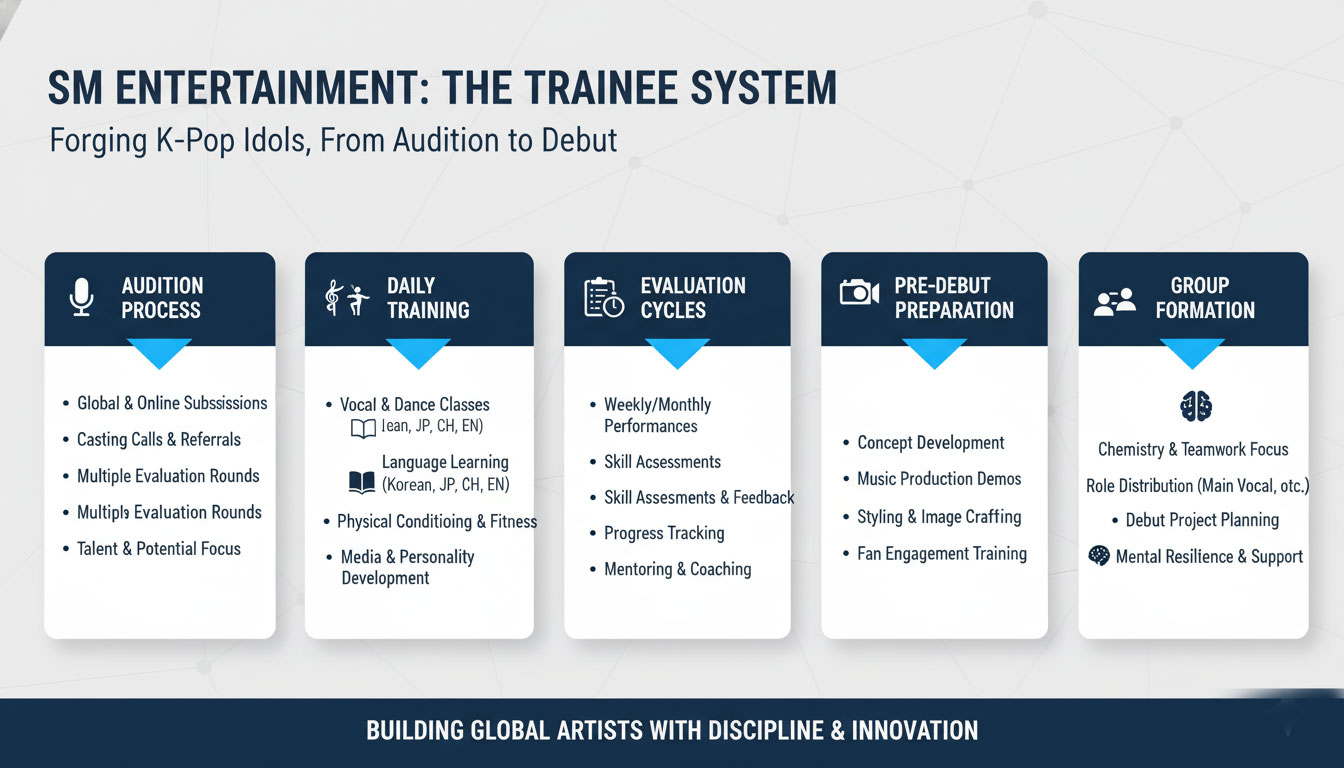
Auditions serve as the entry point into the trainee system. SM Entertainment conducts periodic global auditions across major cities in Asia, North America, and Europe, attracting thousands of hopeful applicants. The company has also used online submissions, reflecting its adaptation to digital platforms and the diversification of talent pools.
Applicants typically audition across four categories: vocal, dance, rap, and acting. Evaluators focus on potential rather than refinement, a strategic choice that allows the company to mold trainees according to its performance standards. The acceptance rate is incredibly low, underscoring the competition inherent in the process.
Early Development Begins Immediately
Once selected, trainees enter a structured environment where their schedules, education, and personal development are organized by training managers. Early-stage trainees often undergo assessments to determine their strengths and identify areas that require intensive training. Some profile as vocalists, others as dancers, and many undergo hybrid training designed to cultivate multidimensional performers.
Daily Trainee Life: Discipline, Routine, and Evaluation
Performance Training
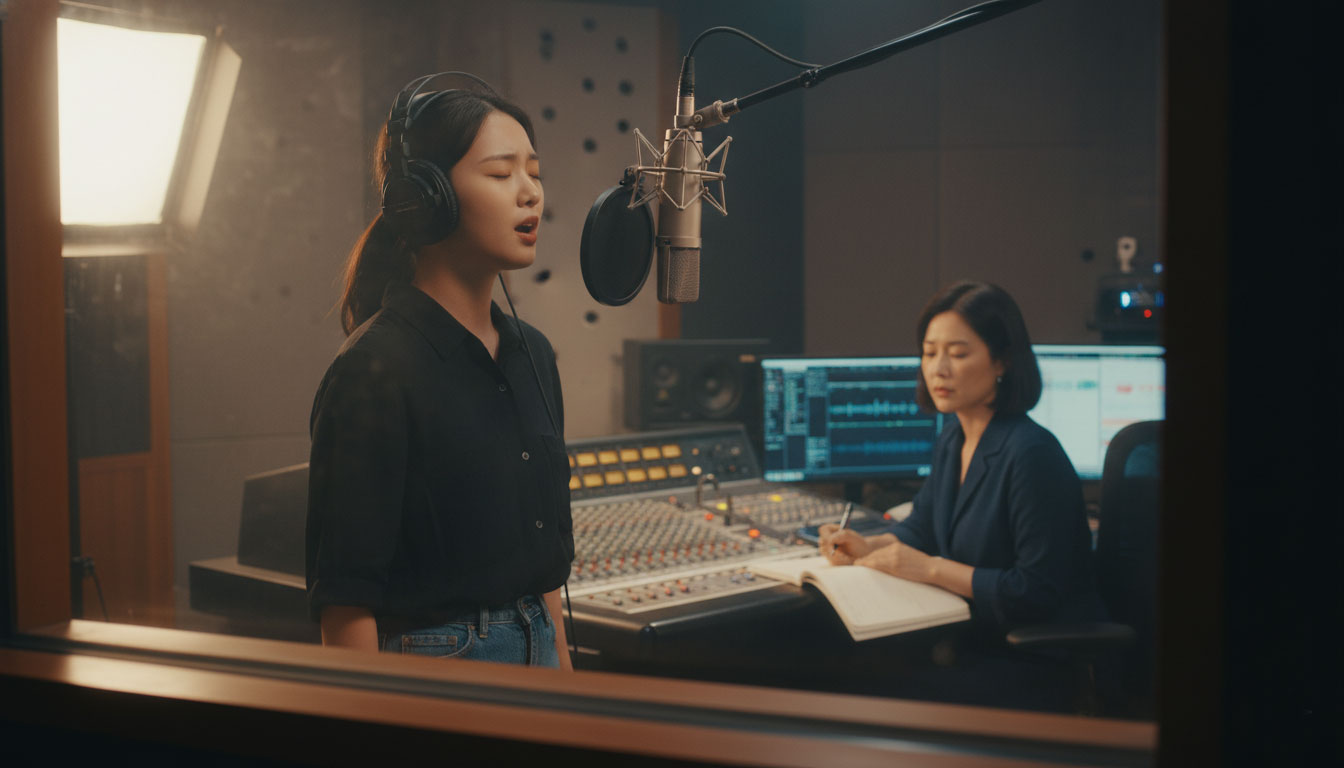
Trainee life is defined by its rigorous routine. Schedules often run from early morning until late evening, with hours dedicated to vocal sessions, dance practice, language classes, and acting workshops. These classes are shaped by seasoned choreographers, vocal coaches, and performance directors, many of whom have years of experience crafting the company’s signature sound and stage identity.
Dance training emphasizes synchronization, precision, and stamina. Vocal training, meanwhile, focuses on breath control, tone development, pitch accuracy, and the cultivation of personal timbre. These elements reinforce the SM Entertainment philosophy of developing artists who balance individual distinctiveness with group cohesion.
Evaluations and Ranking Systems
Evaluations are typically held monthly and sometimes weekly. These assessments determine whether trainees are improving and whether they remain suitable candidates for future debut opportunities. Evaluation panels may include choreographers, executive producers, trainers, and A&R staff. Trainees prepare assessed performances, usually short singing clips and choreography routines, which reflect their progress.
This ranking environment is highly competitive. Evaluations influence class assignments, debut consideration, and even the continuation of the trainee contract. The structure is intended to simulate the pressures of the idol industry and prepare trainees for the expectations of professional performance.
Mental and Physical Conditioning
The lifestyle demands considerable mental resilience. Trainees often confront high expectations, long hours, and the uncertainty of debut timelines. Agencies provide training managers who monitor health, discipline, and emotional well-being. Yet the pressure remains a defining feature of trainee culture.
Physical conditioning is equally emphasized. Regular fitness sessions help trainees build endurance, posture, and stamina required for high-intensity choreography. Many trainees follow nutrition plans designed to support performance health, ensuring they can meet the physical demands of idol life.
Key Information Table On Inside the Trainee System
| Training Component | Description | Purpose |
|---|---|---|
| Vocal Training | Daily sessions focusing on pitch, tone, breath control | Develop stable live and recorded vocals |
| Dance Training | High-energy rehearsals emphasizing synchronicity and stamina | Prepare for complex stage choreography |
| Acting & Media Classes | Lessons in expression, camera presence, and script delivery | Build versatility for variety shows and dramas |
| Language Training | Korean, English, Japanese lessons | Support global promotion and communication |
| Evaluations | Weekly or monthly performance assessments | Measure progress and readiness for debut |
| Physical Conditioning | Fitness and nutrition programs | Maintain stamina and stage endurance |
| Cultural Education | Lessons in performance etiquette and industry norms | Build professionalism and adaptability |
The Role of SM Rookies and Pre-Debut Groups
Internal Branding Before Debut
SM Entertainment has historically used internal pre-debut groups, such as SM Rookies, to introduce trainees to the public ahead of their official debut. These platforms allow trainees to perform, appear in company-produced content, and establish early rapport with audiences. This approach reduces debut risk by building recognition and assessing public responses.
SM Rookies has produced several notable idols who later joined major groups. The structure is also a way to test trainees’ stage presence, variety show aptitude, and chemistry with other potential group members.
Debut Selection and Group Formation
Crafting a Cohesive Team
Debut selection involves detailed deliberation among producers, creative directors, and management. Trainees are assessed on skill level, personality, group chemistry, professionalism, and stage readiness. The process may take years; some trainees train for a decade before debuting.
Group formation is a strategic decision influenced by market trends, musical direction, global targets, and internal creative visions. SM Entertainment often uses a distinctive conceptual approach, where each group embodies a thematic or stylistic identity. This identity is developed long before debut through internal planning and strategy meetings.
Final Preparation and Debut Stage
Once a lineup is finalized, intensive pre-debut training begins. Trainees are prepared for recording sessions, dance practices, concept photography, and variety show rehearsals. They learn choreography for their debut single, undergo styling sessions, and receive media training to handle interviews.
Their debut marks the culmination of many years of labor but also the beginning of relentless promotion cycles. Idol careers are defined by constant performance, content production, travel, and public interaction. Trainees who reach this point transition into a new stage of their professional life.
Industry Influence and Global Impact
SM Entertainment as a Training Model for the Industry
The training processes of SM Entertainment have influenced agencies across Asia and the global entertainment sector. Its system demonstrates how structured talent development can produce consistent performers capable of meeting the demands of international pop markets. Many global agencies now adopt variations of the trainee model or partner with Korean entertainment professionals to create similar programs.
Alignment with Global Pop Culture
SM’s focus on multilingual performance, cross-cultural collaboration, and digital strategy supports its global reach. Trainees often learn English, Japanese, or Mandarin, enabling them to engage with audiences beyond South Korea. This multilingual adaptability remains a core asset in global promotions and tours.
Ongoing Evolution
The training system continues to evolve with technological changes. Virtual training modules, AI vocal tools, and data-driven performance analytics are beginning to shape the next generation of idol development. As the K-Pop industry expands, SM Entertainment is expected to continue refining its approach to remain competitive.
Challenges and Debates Surrounding the Training System
Long Training Years and High Competition
Despite its successes, the training culture faces critique. The long developmental periods and competitive ranking systems place immense pressure on young trainees, many of whom start in their early teens. The uncertainty of debut outcomes also poses emotional challenges.
Work-Life Balance
Managing school, personal relationships, and the intensive trainee schedule requires considerable discipline. Agencies often provide educational support and ensure that minors continue their academic curriculum. Still, the pressure of balancing both worlds remains a subject of public conversation.
Agency Responsibility and Industry Regulation
There is growing discussion over labor rights, contract fairness, and mental health support for trainees. Industry observers emphasize the need for comprehensive regulatory frameworks to protect young talent, ensuring that their development is both sustainable and ethical.
The Enduring Legacy of the SM Training Model
SM Entertainment’s training system remains one of the most structured and influential in the global pop landscape. It is responsible for shaping some of the industry’s most enduring artists and for codifying a model that blends performance excellence with strategic cultural output.
Its legacy is visible both within South Korea and across the international pop ecosystem, where agencies study and adapt its methodologies. As the global appetite for K-Pop grows, the company’s training system continues to serve as a benchmark for producing performers capable of commanding global stages.


