
How Travel News Shapes Decisions for Frequent Flyers and Nomads? Reliable information is the backbone of modern mobility. For frequent flyers and digital nomads, the ability to make informed decisions rests on a steady flow of factual, trustworthy reporting from reputable sources. Airlines shift schedules with little notice, governments adjust entry requirements overnight, and severe weather increasingly interrupts global routes. In this environment, Travel News has become a critical tool for managing risk, planning itineraries, and navigating the shifting architecture of international travel.
The global travel ecosystem has expanded far beyond traditional tourism reporting. Today, the most valued information combines aviation intelligence, regulatory updates, geopolitical analysis, and digital-era mobility trends. This evolution has elevated the role of travel journalism from lifestyle category to essential public service.

Why Reliable Travel News Matters More Than Ever
For people who spend much of their lives in transit, reliable information isn’t an optional convenience. It is a fundamental safeguard. Frequent flyers face a growing set of variables that can disrupt even the most meticulously arranged itineraries. Digital nomads, in turn, depend on granular regional updates that influence where they live, work, and secure temporary residency.
Three forces have intensified demand for high-quality Travel News:
- Rising operational volatility in global aviation
- Geopolitical shifts affecting borders, visas, and entry conditions
- Climate-related disruptions altering flight patterns and regional stability
The result is a constant need for curated, up-to-date reporting that delivers accuracy without amplification or unnecessary speculation.
Travel as a Continuous Decision-Making Cycle
Modern mobility requires constant recalibration. Travelers track multiple categories simultaneously:
- Air traffic disruptions
- Visa and immigration policy changes
- Public health advisories
- Airline operations and fleet adjustments
- Currency fluctuations
- Infrastructure developments in major hubs
A strong Travel News ecosystem allows readers to anticipate changes rather than react to them.
Key Information Table On How Travel News Shapes Decisions for Frequent Flyers and Nomads?
| Information Category | Examples of Data Travelers Monitor | Why It Matters |
|---|---|---|
| Aviation Operations | Schedule changes, aircraft swaps, route openings | Helps avoid delays, plan connections, reduce risk |
| Border Policies | Visa rules, entry restrictions, digital nomad visa programs | Determines travel eligibility and long-term planning |
| Safety & Security | Regional stability, weather alerts, health advisories | Ensures personal safety and operational continuity |
| Consumer Rights | Refund rules, passenger compensation, airline policies | Supports informed decisions and financial protection |
| Travel Tech | Booking tools, eSIM updates, airport innovations | Enhances efficiency and real-time problem solving |
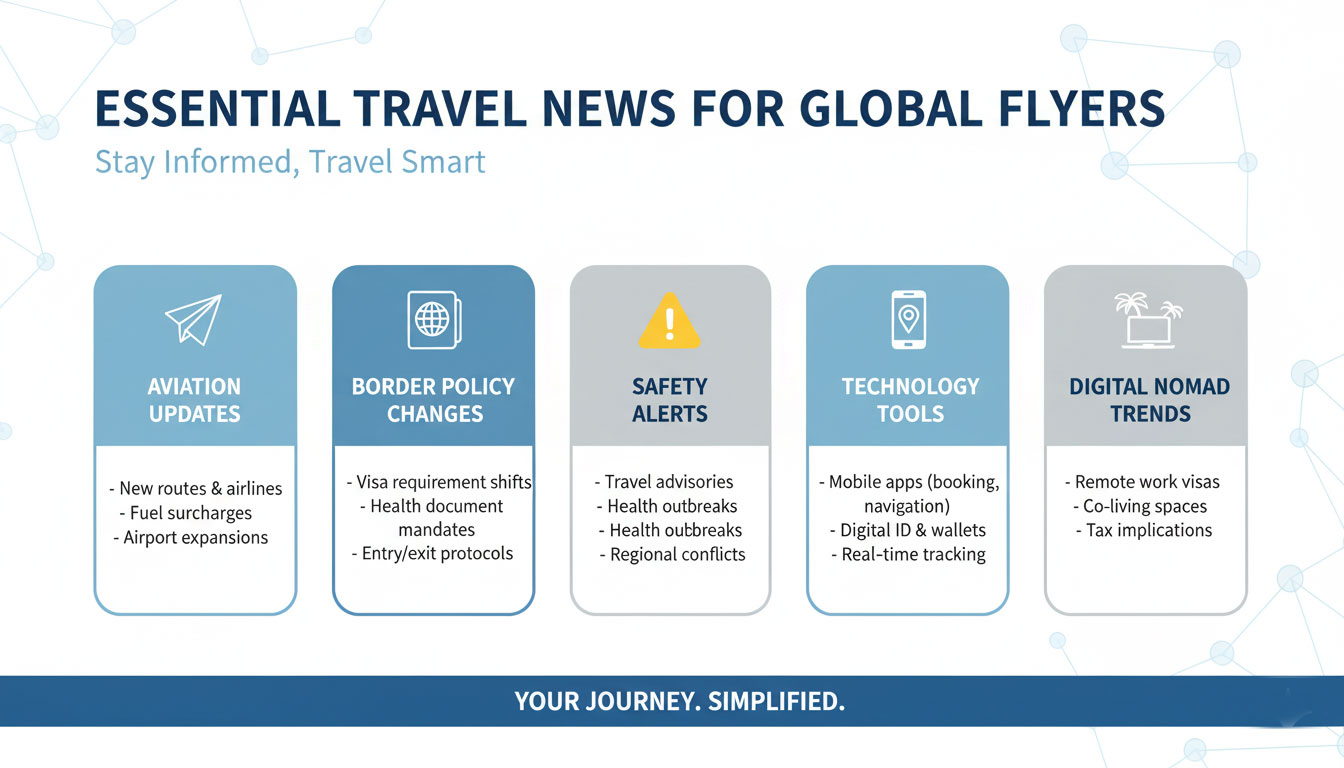
This set of categories reflects the broad scope of what modern Travel News encompasses, far beyond traditional leisure reporting.
Evaluating the Most Trusted Travel News Sources
Not all travel content is created equal. In the era of algorithm-driven feeds and social media amplification, distinguishing between verified reporting and promotional messaging is a critical skill. Trusted sources generally share three qualities: editorial independence, transparent methodology, and global access to primary information.
Aviation Data Providers
Industry-standard aviation dashboards provide real-time operational data. These platforms analyze flight activity, air traffic control directives, and infrastructure pressures. Frequent flyers rely on such outlets for trusted, high-frequency updates.
More: Decoding digital nomad destination decisions through user-generated content
Government and Multilateral Institutions
Immigration ministries, foreign affairs departments, and international aviation regulators issue primary-source updates. These agencies set the rules that govern travel. Travel News outlets with strong policy literacy translate these directives into digestible reporting.
Established News Organizations
Global media with dedicated travel or aviation desks provide context-rich coverage. Their reporting helps readers understand the implications behind disruptions, regulatory changes, and market shifts.
Specialized Travel Journalism Platforms
Industry-specific publications monitor airline alliances, loyalty programs, fleet developments, and regional airport analysis. Their audience includes airline executives, consultants, and high-frequency travelers seeking insider-level detail.
Digital Nomad and Remote Work Analysts
As remote work expands, new platforms specialize in analyzing residency programs, regional cost-of-living dynamics, connectivity infrastructure, and visa governance. This niche reporting has become critical to long-term mobility planning.
Travel News for Frequent Flyers
Frequent flyers face conditions increasingly defined by inconsistency. Airline networks are restructuring, infrastructure upgrades are delayed, and global hubs face recurring congestion. High-value travel reporting keeps readers informed about:
- Seasonal schedule changes
- Airline fleet renewals impacting seat availability
- Terminal redesigns that affect transfers
- Strikes or labor disruptions
- Shifting airline alliance partnerships
These developments can influence route viability and overall travel experience months in advance.

Loyalty Programs and Market Shifts
Elite flyers in mileage programs rely on precise reporting about:
- Tier qualification changes
- Award chart revisions
- Partner airline redemptions
- Devaluations in frequent flyer currencies
- Regulatory rules on points expiration
High-quality Travel News outlets provide analytical coverage that helps readers protect the value of their loyalty investments.
Travel News for Digital Nomads
Digital nomads operate with different dependencies compared to frequent business travelers. Their mobility is slower but more administrative. Reliable reporting is essential for navigating:
- Emerging digital nomad visas
- Residency income thresholds
- Tax implications across jurisdictions
- Internet infrastructure developments
- Local security and cost-of-living shifts
Critical information determines whether a destination is viable for long-term or short-term remote work.
Understanding Global Mobility Trends
Nomads benefit most from reporting that takes a wide-angle view of migration and residency patterns. For example:
- Countries adjusting remote-worker visa terms
- Regional blocs negotiating digital mobility agreements
- Infrastructure expansions that improve livability and connectivity
- Changes in political stability or public policy
Travel News helps nomads make informed decisions about where to base their work and lives.
The Impact of Real-Time Information on Travel Behavior
The rise of real-time reporting has rewired how travelers behave. Instead of relying on pre-trip research alone, frequent flyers and nomads now react dynamically to mid-journey updates. Airport closures, rerouted flights, or border rules can be understood in real time through mobile alerts and verified reporting channels.
For many travelers, the ability to pivot quickly is now a competitive advantage.
How Travelers Use Travel News to Reduce Risk
Access to accurate information reduces exposure to financial and logistical risk. Examples include:
- Choosing alternate routes during severe weather
- Avoiding airports undergoing infrastructure strain
- Adjusting travel dates to bypass regional instability
- Securing correct visas before arrival
- Tracking airline reliability trends
These decisions are shaped by the flow of trusted Travel News, which informs both daily planning and long-term strategy.
The Future of Travel News
The next evolution of travel reporting will likely be shaped by:
- Artificial intelligence-driven forecasting models
- Greater transparency from aviation regulators
- Data collaboration between airlines and journalists
- Expansion of digital mobility governance
- Increasing demand from globally mobile workers
As mobility becomes more complex, the informational ecosystem that supports it must become more sophisticated.


