
Starto Entertainment and the Future of Japanese Idol Culture. The Japanese idol industry is undergoing one of its most consequential transitions in years. With global audiences expanding and domestic expectations shifting, the sector faces growing pressure to modernize its image, restructure its management practices, and reposition itself on the global entertainment map. At the center of this moment stands Starto Entertainment, the newly rebranded agency that emerged from one of Japan’s most influential talent management lineages.
Its formation signifies not only a change of name but a deeper effort to rebuild trust, redefine artist-agency relationships, and align Japanese idol culture with global entertainment standards. The rebranding underscores the evolving demands placed on both talent and management, signaling the beginning of a new phase for one of the world’s most distinct entertainment ecosystems.
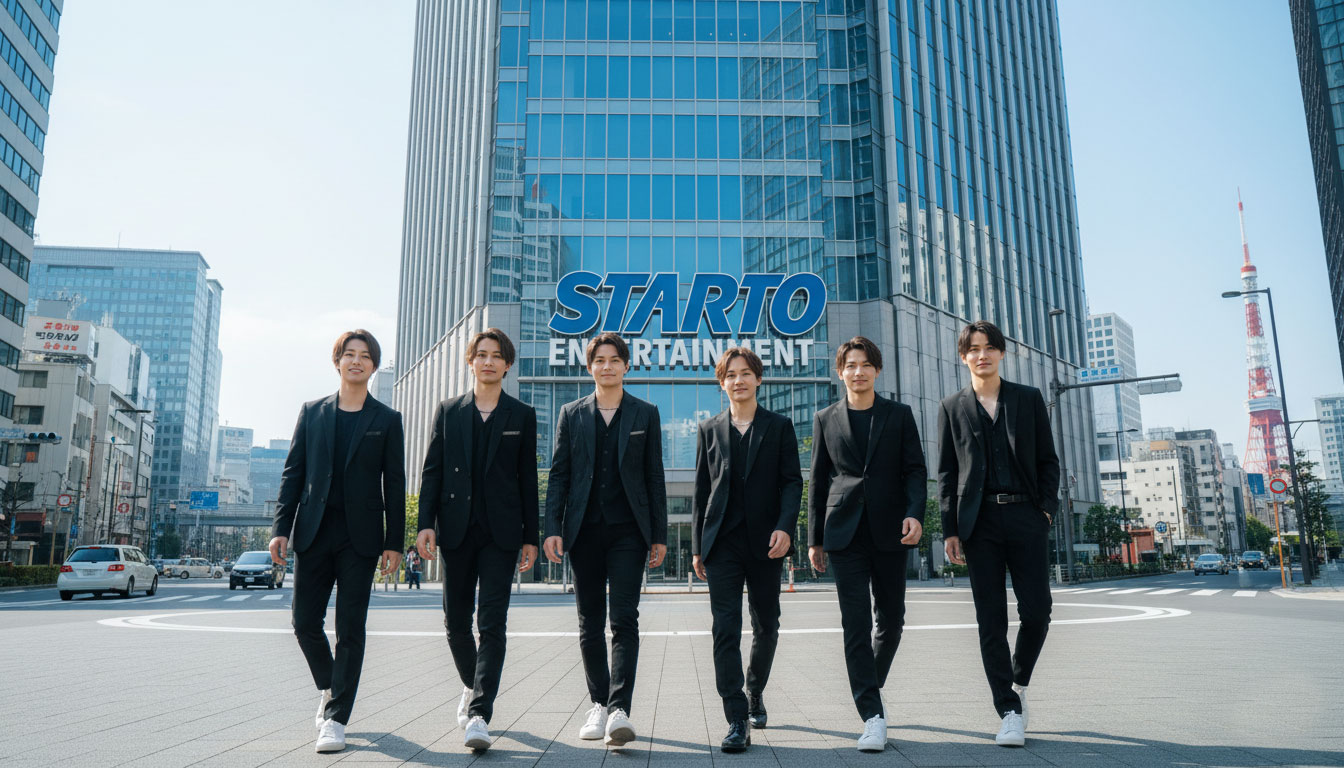
The Emergence of Starto Entertainment
Starto Entertainment was established as part of a broader restructuring of Japan’s traditional talent management landscape, particularly the segment overseeing male idol groups. Historically, the sector relied on long-standing practices, centralized control, and a tightly managed public image. Over time, this structure faced criticism for limited transparency and outdated operational models.
The decision to rebrand and restructure through Starto Entertainment reflects the industry’s broader recognition that modern audiences expect openness, digital fluency, and equitable treatment of artists. Although the agency maintains ties to decades of legacy expertise, its public mission emphasizes renewal and forward-looking strategy.
A Strategic Shift from Legacy to Innovation
Rebranding in Japan’s entertainment industry is rare, especially for large, established talent agencies. The move toward Starto Entertainment suggests three strategic priorities:
- Restoring public confidence in talent management operations
- Adopting international industry standards
- Enhancing competitiveness against Korea’s K-pop agencies
- Empowering artists with greater visibility and digital presence
These are not minor adjustments. They represent a reorientation of the agency’s operational ethos and an acknowledgement that Japanese idol culture must evolve to retain global relevance.
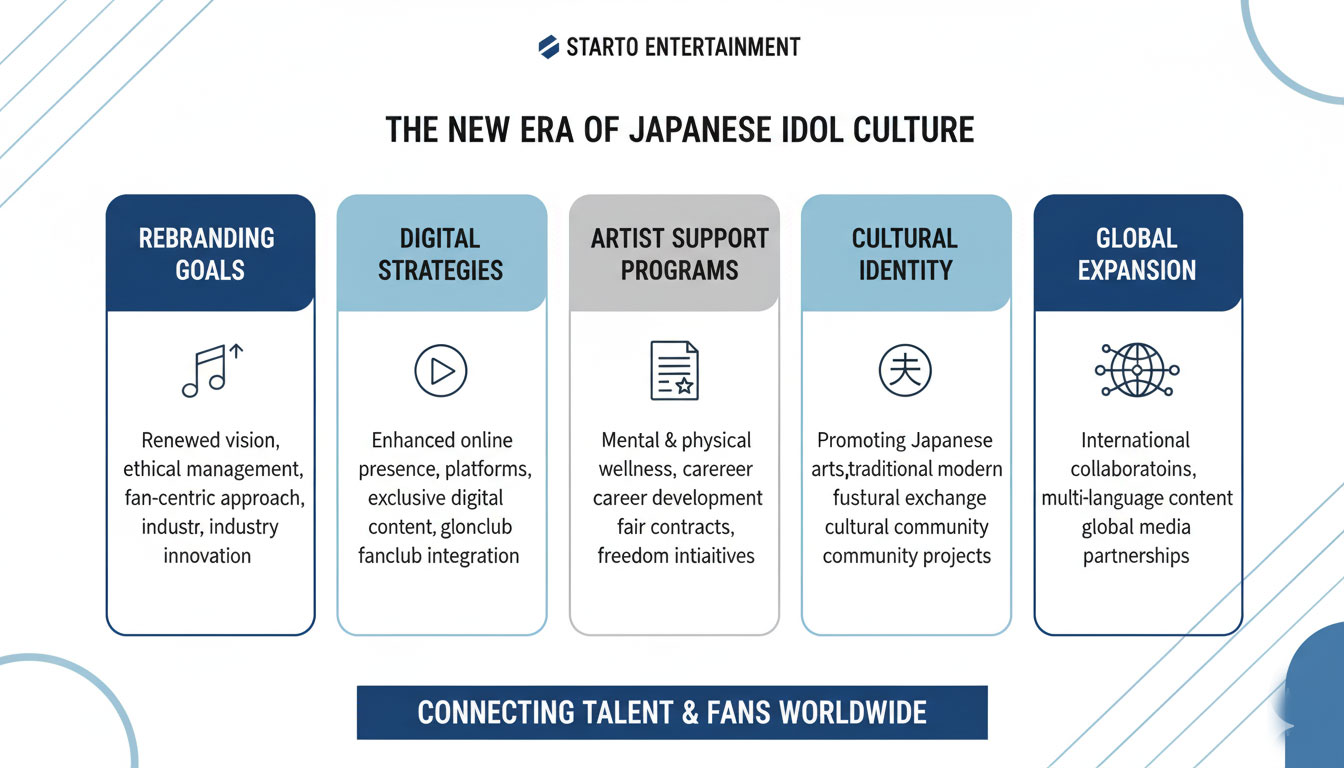
Starto Entertainment’s Position in the J-pop Ecosystem
Starto Entertainment retains responsibility for managing several of Japan’s most prominent idol groups and mainstream television personalities. With a deep roster and strong media partnerships, the agency remains a central cultural institution.
The J-pop ecosystem functions differently from other global pop industries. Idols in Japan are cultivated for their personalities, relatability, and long-term fan engagement rather than solely for music sales. Agencies like Starto Entertainment thus play a multidimensional role that spans training, media placement, public grooming, and cross-platform exposure.
The company’s new structure appears to emphasize:
- Increasing digital content production
- Expanding global fan outreach
- Supporting long-term artist development
- Updating contracts to reflect modern entertainment standards
This aligns with industry analysts’ assessments that idol management must become more fluid and transparent.
Key Information Table On integrated naturally
| Category | Details | Importance for the Industry |
|---|---|---|
| Agency Type | Talent management company | Responsible for training and promoting Japanese idols |
| Legacy | Built on decades of J-pop history | Influences industry standards and expectations |
| Rebranding Goal | Modernize structure and rebuild trust | Ensures long-term sustainability |
| Strategic Focus | Transparency, digitalization, global expansion | Aligns Japanese idols with international entertainment trends |
| Impact on Artists | Expanded visibility and improved support | Enhances career stability and creativity |
This table illustrates how Starto Entertainment’s restructuring addresses both internal and industry-wide challenges while preparing its artists for a rapidly changing entertainment landscape.
Rebranding as a Turning Point for Idol Culture
Rebranding is more than an aesthetic shift; it is a recalibration of values. Starto Entertainment has positioned itself to signal a new chapter for Japanese idols, focusing on:
- Enhanced artist welfare and well-being
- Responsible management practices
- Stronger internal governance
- Modernized promotional strategies
For years, the idol industry relied on controlled public personas and traditional management structures. Today’s audiences, however, are accustomed to transparent communication, open social engagement, and frequent content updates. The shift toward digital-first branding is one of the most notable changes.
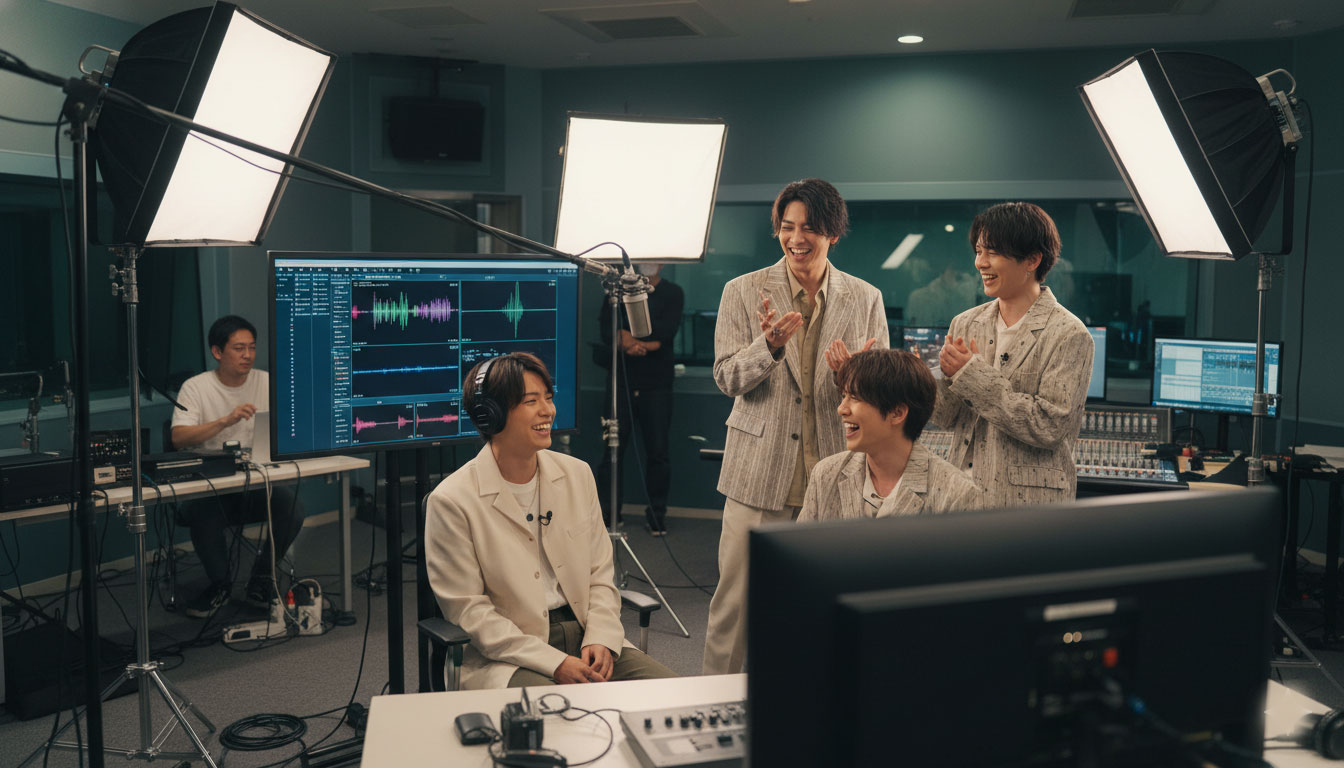
The Digitalization of Idol Promotion
The idol industry historically relied on television appearances, magazines, and in-person fan events. Starto Entertainment is now expanding its digital strategies to meet contemporary consumption trends. These strategies include:
- Social media platform expansion
- Short-form video production
- International streaming partnerships
- Data-driven fan engagement tools
Such developments are crucial as Japanese idols compete more directly with Korean K-pop acts, which benefit from aggressive global marketing and advanced digital infrastructure.
Maintaining Cultural Identity While Modernizing
A core question surrounding Starto Entertainment is how it will preserve the traditional appeal of Japanese idols while adapting to modern entertainment norms. J-pop idol culture is rooted in accessibility, innocence, relatability, and gradual talent development.
Unlike the polished and high-pressure systems in neighboring South Korea, Japan’s approach emphasizes emotional connection through variety shows, radio appearances, and long-term visibility.
Starto Entertainment’s challenge lies in modernizing without weakening these cultural pillars. Analysts suggest that the agency’s evolving strategy aims to:
- Strengthen core idol values
- Offer greater freedom of expression
- Modernize training and performance standards
- Foster healthier fan relationships
The shift emphasizes balance: honoring tradition while embracing innovation.
Starto Entertainment and Global Market Expansion
Japan remains a significant cultural exporter, though its international reach has historically been less aggressive than that of South Korea. Starto Entertainment’s rebranding signals a potential shift toward broader international engagement.
Key global initiatives may include:
- International concerts and tours
- Overseas merchandising alignment
- Global streaming platform presence
- Multilingual content strategies
- Cross-border collaborations
By modernizing its infrastructure and aligning with global distribution platforms, Starto Entertainment increases its potential to capture new audiences across North America, Europe, and Southeast Asia.
Artist Empowerment and Career Diversification
The entertainment industry increasingly values artists who can diversify across sectors. Starto Entertainment appears ready to embrace multi-path career models that include:
- Film and television appearances
- Voice acting and anime partnerships
- Digital influencer roles
- Commercial endorsements
- Cross-industry collaborations
Diversification enhances artists’ financial stability and strengthens the brand recognition of the agency itself.
Challenges Facing Starto Entertainment
Despite its bold restructuring, Starto Entertainment faces substantial challenges, including:
- Rebuilding public trust after years of industry scrutiny
- Addressing the expectations of long-time fans
- Competing with international production ecosystems
- Implementing modern management systems
- Balancing tradition with innovation
These challenges will require structural transparency, ethical governance, and continued engagement with both domestic and international stakeholders.
A Future Defined by Reform and Opportunity
Starto Entertainment’s rebranding represents more than a corporate transformation. It symbolizes a turning point for Japanese idol culture, which now stands at the intersection of tradition, digital innovation, and global expansion.
If the agency successfully implements its commitments to transparency, artist-centered policies, and digital modernization, it may help usher in a reinvigorated era for Japan’s entertainment industry.
As market dynamics evolve and global audiences diversify, Starto Entertainment’s strategic path will likely influence not only its own roster but the broader trajectory of idol culture for years to come.


