
Entertainment Law 101: Intellectual Property Basics for Indie Creators. Independent creators in film, music, and digital media often navigate complex legal landscapes without formal legal training. Entertainment Law serves as the foundational framework to protect creative assets, ensure fair compensation, and prevent unauthorized use of intellectual property (IP). Understanding these legal mechanisms is crucial for any indie creator seeking sustainable careers in competitive media markets.
This guide explores essential aspects of Entertainment Law, emphasizing copyright, trademarks, licensing, and contracts. It also contextualizes these topics for independent creators, highlighting practical strategies to safeguard work, negotiate agreements, and minimize legal risks.
What is Entertainment Law?
Definition and Scope
Entertainment Law is a specialized branch of legal practice that governs the rights, obligations, and business interactions of individuals and organizations in creative industries. It encompasses contracts, IP rights, labor law, licensing, and dispute resolution specific to entertainment sectors, including film, television, music, theater, and digital content.
For indie creators, understanding Entertainment Law is critical for establishing ownership, negotiating partnerships, and avoiding infringement claims that could jeopardize their projects.
Intellectual Property: The Cornerstone of Creative Protection
Copyright Basics
Copyright protects original works of authorship, including music compositions, scripts, films, and visual artwork. Under most international standards, copyright grants creators exclusive rights to reproduce, distribute, perform, or display their works.
Independent creators must register copyrights where applicable, ensuring legal recourse in cases of infringement. Digital platforms, streaming services, and social media amplify risks of unauthorized use, making proactive protection essential.
Trademarks and Branding
Trademarks safeguard brand identity, including names, logos, and slogans associated with creative works. Indie creators can benefit by registering trademarks to prevent others from exploiting similar branding, which can affect both revenue and reputation.
Patents and Technological Innovations
While less common for media creators, patents may apply to innovative production technologies or proprietary tools. Indie creators developing unique software or media devices should consult Entertainment Law experts to determine patent eligibility and protection strategies.
Licensing and Agreements
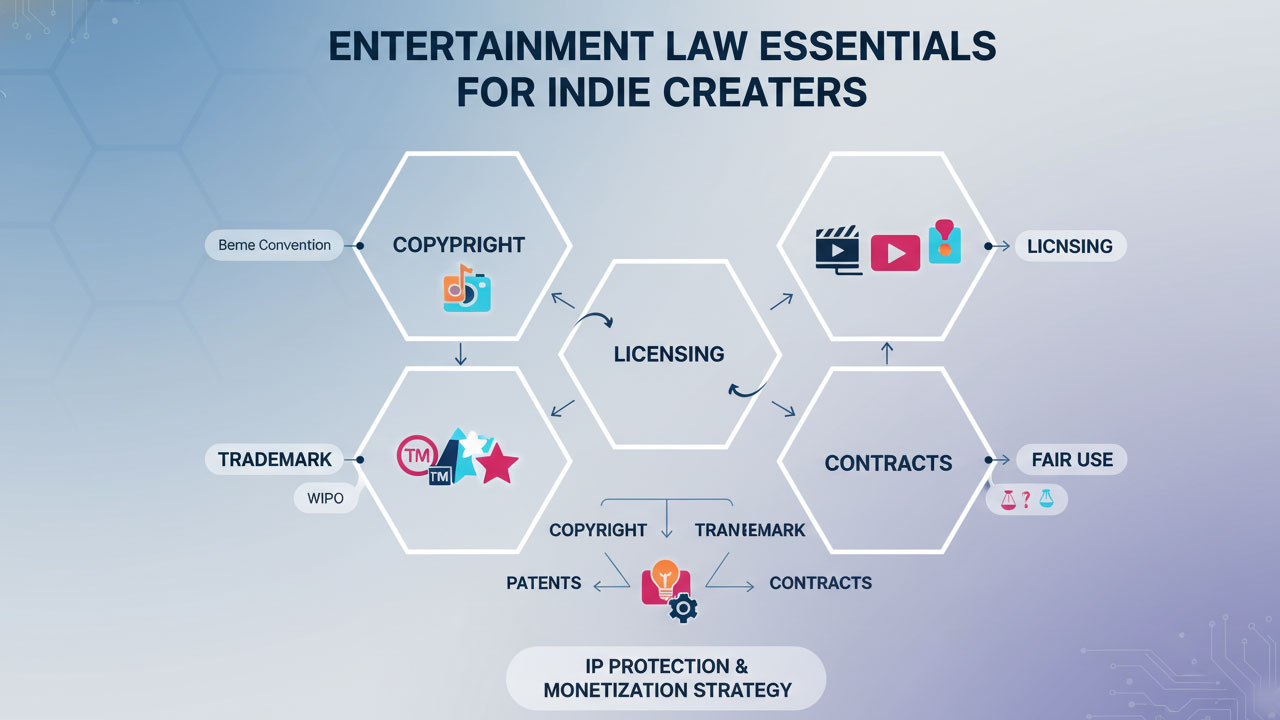
Music and Film Licensing: Entertainment Law
Licensing allows creators to authorize use of their IP while maintaining ownership. In music, sync licenses enable tracks to appear in films, games, or advertisements. In film, distribution and streaming licenses grant rights to third parties for a defined period or region.
Properly structured licensing agreements ensure that indie creators receive royalties, retain control over usage, and reduce exposure to unauthorized exploitation.
Contract Essentials
Contracts form the backbone of legal protection in Entertainment Law. Independent creators should focus on:
- Work-for-hire agreements: Define ownership and responsibilities when collaborating.
- Collaboration contracts: Clarify contributions, profit-sharing, and IP rights.
- Distribution agreements: Outline revenue models, rights duration, and media platforms.
Clear, written contracts reduce disputes and enhance professional credibility in negotiations.
Fair Use and Limitations: Intellectual Property Basics
Fair use permits limited use of copyrighted material without authorization, primarily for criticism, commentary, education, or parody. Indie creators must understand its boundaries to avoid infringement. Factors considered include the purpose of use, the amount of material used, and potential market impact on the original work.
Understanding fair use provisions under Entertainment Law empowers creators to produce derivative works, mashups, and educational content while minimizing legal exposure.
Key Information Table On Entertainment Law Essentials for Indie Creators
| Aspect | Description | Practical Tips for Indie Creators |
|---|---|---|
| Copyright | Protects original works of authorship | Register works, document creation dates, use watermarks |
| Trademarks | Protects brand identity (names, logos, slogans) | File USPTO or local trademark registration, monitor usage |
| Patents | Protects technological innovations | Seek legal advice if using proprietary software/tools |
| Licensing | Grants authorized use of IP | Draft clear agreements, specify duration & territory |
| Contracts | Legal agreements defining rights & responsibilities | Include work-for-hire clauses, revenue sharing, obligations |
| Fair Use | Limited use of copyrighted material without permission | Understand scope & document transformative purpose |
Digital Media Challenges and Legal Considerations
The digital era has expanded opportunities but also complicated legal frameworks. Platforms such as YouTube, Spotify, TikTok, and streaming services require creators to navigate:
- Content ID systems: Monitor unauthorized uploads and claim revenue.
- Royalty collection: Ensure accurate reporting and payments.
- Platform terms of service: Understand how IP ownership and user agreements interact with platform rules.
Independent creators must combine technical literacy with legal awareness to protect assets while maximizing visibility and revenue.

Global Perspective and Cross-Border Implications
Entertainment Law is subject to national legislation but often overlaps with international treaties such as:
- Berne Convention: Protects copyrights across member countries.
- WIPO Treaties: Provide guidance on digital IP protection.
- TRIPS Agreement: Defines minimum standards for IP enforcement globally.
Indie creators distributing content internationally must consider jurisdiction, licensing territories, and compliance with local IP laws to avoid cross-border disputes.
Common Pitfalls for Independent Creators
- Ignoring contracts: Verbal agreements or informal understandings often lead to disputes.
- Failing to register IP: Unregistered works may have weaker enforcement in courts.
- Overlooking platform terms: Misunderstanding rights granted to social media or streaming services can result in revenue loss.
- Neglecting collaborative agreements: Disputes over creative contributions are common without clear documentation.
Awareness of these pitfalls enables indie creators to proactively implement strategies under Entertainment Law to safeguard their work.
Looking Ahead: Future Trends in Entertainment Law
Emerging trends include:
- AI-generated content regulation: Determining authorship and copyright for AI-assisted works.
- Blockchain and NFTs: Using distributed ledgers to manage rights and royalties.
- Global streaming law harmonization: Facilitating easier cross-border content distribution.
- Interactive media law: Expanding IP frameworks to virtual reality, augmented reality, and gaming environments.
Independent creators who stay informed and engage legal counsel proactively are better positioned to navigate the evolving media landscape.


