
Japan earthquake 7.6 magnitude: Tsunami Warning Issued Across Northern Coast. Japan on Monday faced a major seismic event as a 7.6-magnitude earthquake struck off its northeast coast, prompting the Japan Meteorological Agency (JMA) to issue a tsunami warning for the northern Pacific coastline. The earthquake was centered 73 kilometers east-northeast of Misawa city, Aomori Prefecture, and occurred at 7:45 pm local time, according to the US Geological Survey (USGS).
Officials reported that the first tsunami waves, estimated at up to three meters, were expected to arrive along port areas spanning from Aomori to Iwate by 11:40 pm local time. The warning underscored the vulnerability of coastal communities in Japan, a nation situated along the seismically active Pacific Ring of Fire.
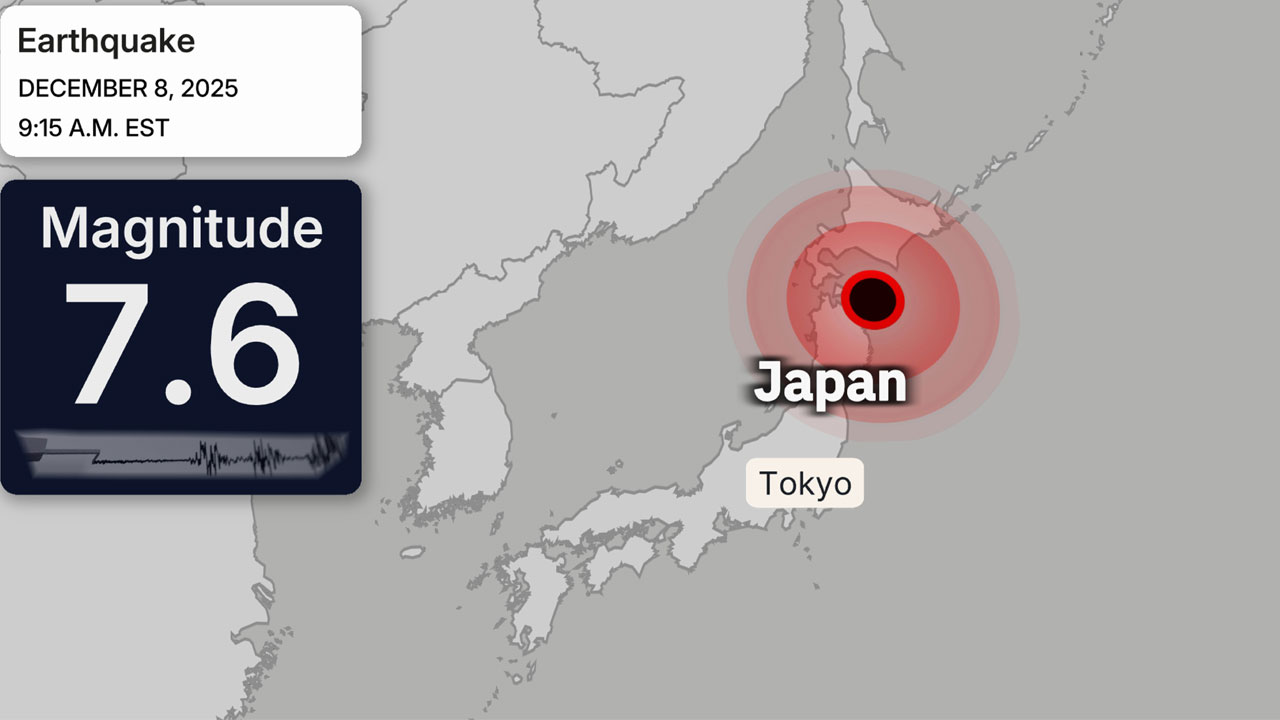
Shallow earthquakes in the 0–70 km depth range are particularly destructive, as they release energy closest to the Earth’s surface. This quake occurred at a depth of 53.1 kilometers, positioning it within this dangerous category.
Seismological Overview
The USGS confirmed the earthquake’s magnitude and depth, categorizing it as a significant shallow seismic event. Shallow quakes, such as this, often generate strong ground shaking and can trigger secondary hazards including tsunamis and landslides.
Japan has a long history of earthquake preparedness, supported by advanced early warning systems, building regulations, and community drills. The JMA continuously monitors seismic activity and provides real-time updates to local governments, media outlets, and residents.
Areas Most at Risk: Japan earthquake 7.6 magnitude
Coastal communities from Aomori Prefecture through Iwate were placed on high alert. Port cities and low-lying areas are particularly vulnerable to tsunami inundation, and residents were advised to move to higher ground immediately.
Emergency services in northern Japan mobilized rapidly, activating evacuation centers, patrols, and emergency communication channels. Authorities emphasized that even smaller waves following the initial tsunami could cause damage and should not be underestimated.
Japan’s Tsunami Warning System
Japan maintains one of the world’s most sophisticated tsunami warning networks. The JMA issues alerts via television, radio, mobile phone messages, and sirens in coastal regions. This system relies on real-time seismic data from ocean-bottom sensors, tide gauges, and satellite monitoring.
The current warning covers several prefectures along the Pacific coast. Residents were instructed to follow official instructions and avoid coastal roads, harbors, and rivers until further notice.
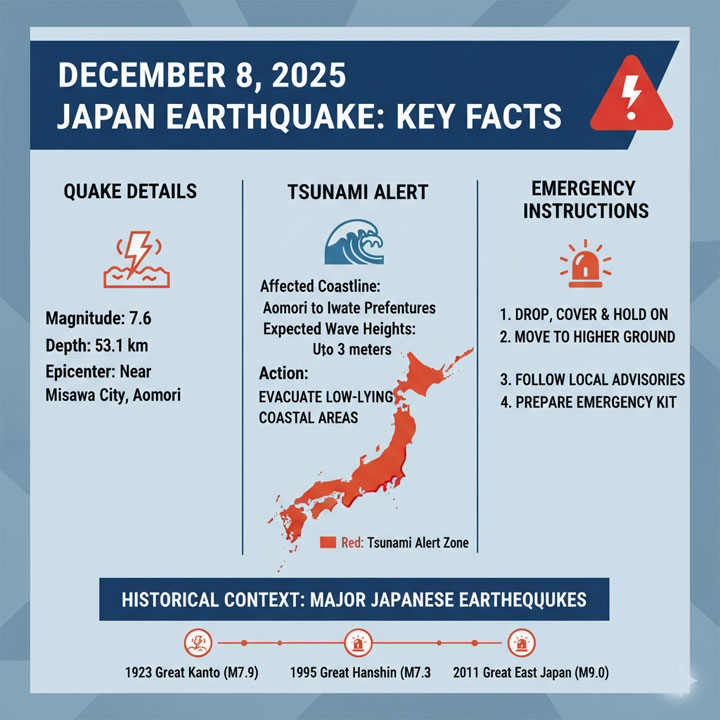
Key Information Table On Japan Earthquake Magnitude
| Parameter | Details |
|---|---|
| Earthquake Magnitude | 7.6 |
| Epicenter Location | 73 km E-NE of Misawa City, Aomori Prefecture |
| Depth | 53.1 km |
| Time of Occurrence | 7:45 PM local time, December 8, 2025 |
| Expected Tsunami Wave Height | Up to 3 meters |
| Coastal Regions Affected | Aomori to Iwate |
| Alert Issued By | Japan Meteorological Agency (JMA) |
| Monitoring Authority | US Geological Survey (USGS) |
| Tsunami Warning Type | Immediate evacuation advisory |
| Historical Context | Part of Japan’s seismically active Pacific Ring of Fire |
Impact and Preparedness
Historically, Japan has faced catastrophic earthquakes and tsunamis, most notably the 2011 Tōhoku earthquake, which reached a magnitude of 9.0 and caused widespread devastation. Lessons from such events have led to stricter building codes, coastal defenses, and nationwide disaster awareness campaigns.
In the wake of the 7.6-magnitude quake, authorities urged residents to stay informed, prepare emergency kits, and evacuate if instructed. Schools and businesses in affected regions were temporarily closed as a precautionary measure.
Community and Government Response
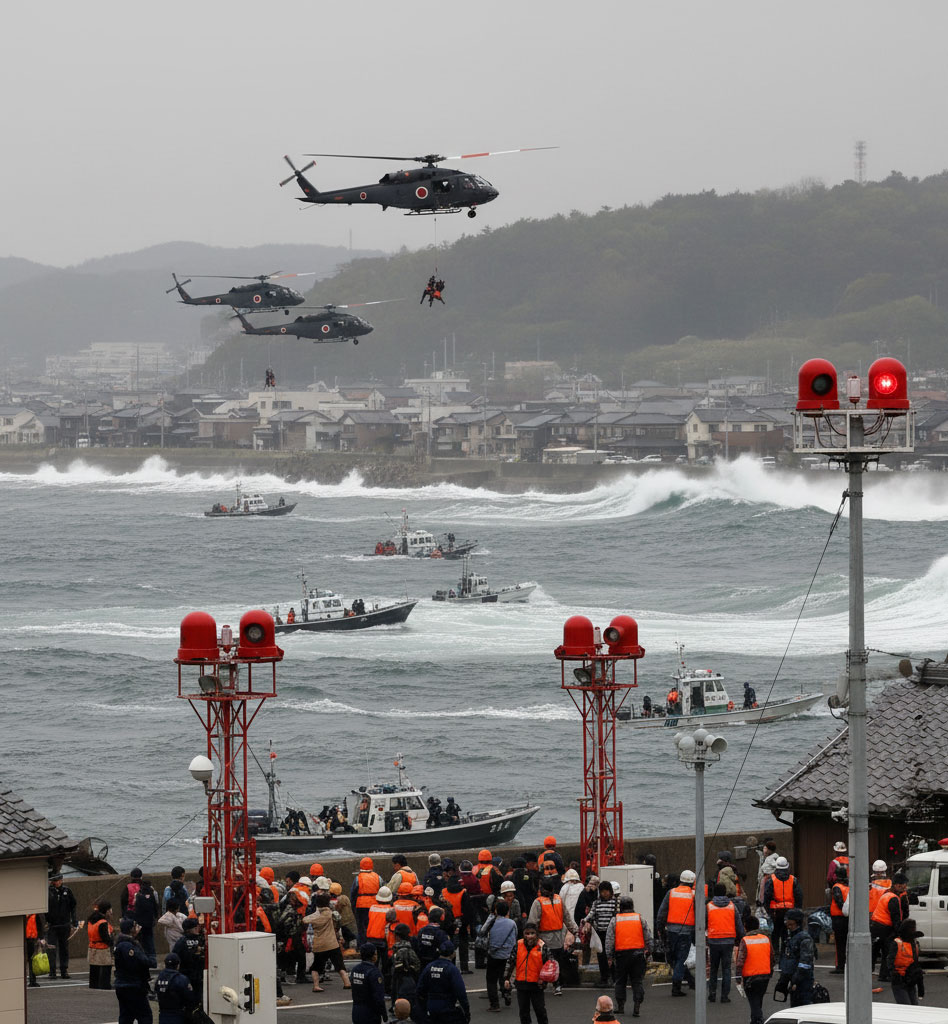
Local municipalities activated emergency response teams, including police, firefighters, and volunteers, to coordinate evacuation and relief. Helicopters and boats were placed on standby for search-and-rescue operations if needed.
Prime Minister’s office officials emphasized that the government is monitoring the situation closely and is ready to deploy additional resources. Hospitals in northern prefectures were advised to prepare for potential injuries related to the earthquake or tsunami.
Scientific Context
Seismologists note that the northeast region of Honshu, including Aomori and Iwate Prefectures, is prone to high-magnitude earthquakes due to the subduction of the Pacific Plate beneath the North American Plate.
Dr. Hiroshi Tanaka, a seismologist at the University of Tokyo, explained: “Shallow earthquakes like this one release tremendous energy at or near the surface, increasing both shaking intensity and the likelihood of tsunami generation. Residents should always treat alerts seriously.”
The USGS and JMA continue to monitor aftershocks, which can range from moderate to severe in magnitude. Aftershock sequences may persist for days, posing additional hazards to already stressed infrastructure.
Coastal Preparedness and Public Education
Japan’s coastal communities routinely participate in tsunami drills, educating residents on evacuation routes and safe zones. Sirens, smartphone alerts, and social media notifications provide multiple channels for timely warnings.
Public education campaigns emphasize the importance of moving to higher ground immediately after strong shaking, rather than waiting for official instructions, due to the rapid onset of tsunami waves following shallow offshore earthquakes.
International Monitoring and Alerts
Neighboring countries and international agencies, including the Pacific Tsunami Warning Center (PTWC), closely monitor seismic activity in Japan. Real-time data sharing allows for rapid dissemination of warnings and ensures that global shipping routes and nearby coastal populations are informed.
Japan’s earthquake resilience model is often cited internationally as a standard for tsunami-prone regions. Measures include reinforced coastal barriers, elevated evacuation buildings, and strict construction codes for residential and commercial structures.
Economic and Infrastructure Implications
A 7.6-magnitude earthquake can disrupt transportation, power supply, and communications. Ports along the Pacific coast may suspend operations temporarily, affecting regional trade. Railways, highways, and bridges are inspected immediately after seismic events to ensure safety before reopening.
Utilities companies monitor for potential damage to power plants, water treatment facilities, and gas lines. Businesses are advised to review contingency plans, protect critical assets, and communicate with employees during emergency situations.
Public Advisory
Authorities urge all residents to:
- Move to higher ground or designated evacuation centers.
- Avoid coastal areas, rivers, and low-lying regions.
- Follow official announcements via TV, radio, and mobile alerts.
- Prepare emergency kits with essentials such as food, water, medicines, and communication devices.
- Expect aftershocks and exercise caution when returning home.
Historical Perspective
Japan’s northeast coast has a long history of seismic activity. Significant quakes include:
- 2011 Tōhoku earthquake – magnitude 9.0, triggering a devastating tsunami.
- 1968 Tokachi-Oki earthquake – magnitude 8.2, causing severe infrastructure damage.
- 1896 Sanriku earthquake – magnitude 8.5, historically one of the deadliest tsunamis in Japan.
These events have shaped Japan’s approach to earthquake and tsunami preparedness, including early-warning technologies and strict building regulations.
Scientific Outlook and Future Preparedness
Experts emphasize that Japan earthquake 7.6 magnitude incidents are reminders of the country’s ongoing seismic risks. Investment in monitoring technologies, community drills, and resilient infrastructure remains critical to minimizing future casualties and economic losses.
The JMA, USGS, and other global seismic monitoring agencies will continue analyzing aftershocks, tectonic shifts, and coastal wave patterns to inform public safety measures in real-time.
The Japan earthquake 7.6 magnitude on December 8, 2025, underscores the persistent vulnerability of coastal communities in seismically active zones. While early warnings and preparedness protocols can significantly reduce casualties, public vigilance and rapid response remain essential.
Residents along the northern Pacific coast, from Aomori to Iwate, remain on alert as authorities monitor potential aftershocks and ongoing tsunami risk.
Japan’s example serves as a global model for earthquake-prone regions, demonstrating the importance of technology, education, and community readiness in mitigating the effects of natural disasters.


