
Filmmaker Quentin Tarantino offered a harsh critique of Tarantino Criticizes Paul Dano in There Will Be Blood, labeling him the “weakest male actor” in the guild and suggesting Austin Butler for the role.
In the landscape of American cinema, few voices carry the weight—or the polarizing potential—of Quentin Tarantino. Known as much for his encyclopedic knowledge of film history as for his directorial oeuvre, Mr. Tarantino has recently turned his critical lens toward one of the most acclaimed films of the 21st century: Paul Thomas Anderson’s There Will Be Blood.
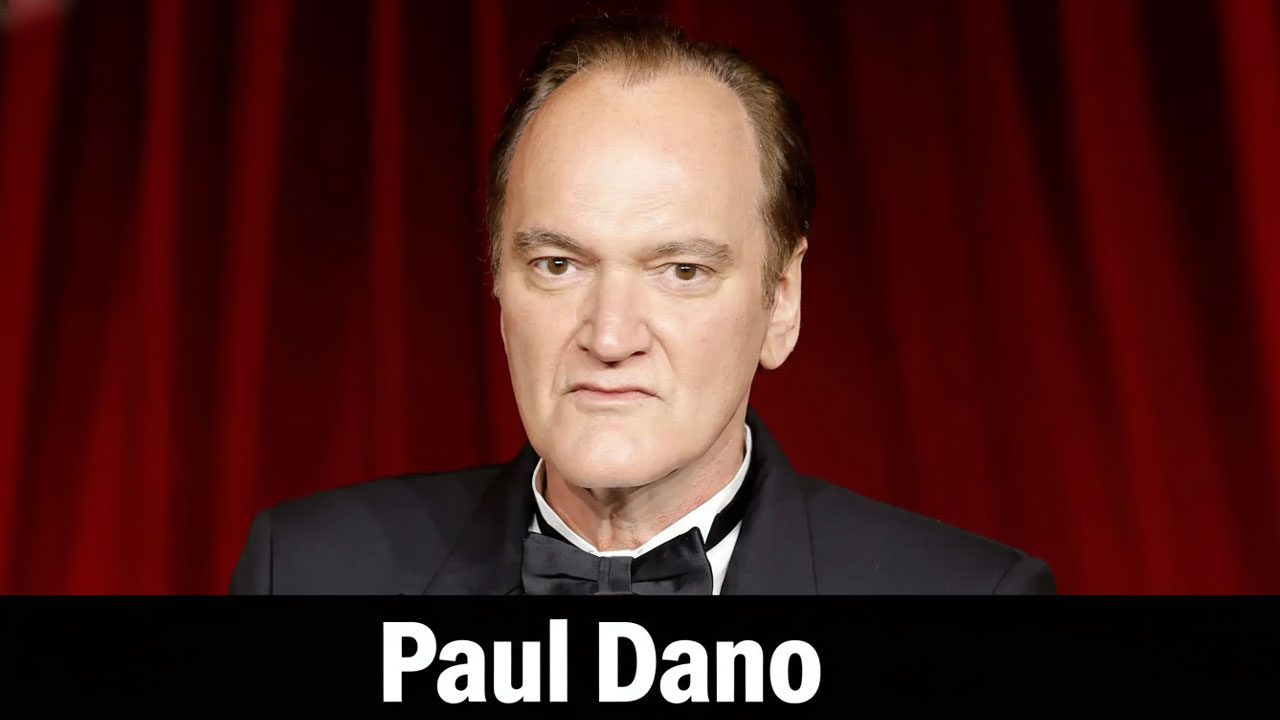
During a recent appearance on The Bret Easton Ellis Podcast, Mr. Tarantino offered a blistering assessment of the 2007 oil tycoon drama. While he ranked the film high on his personal list of modern masterpieces, he identified what he considers a singular, fatal flaw preventing it from taking the top spot: the performance of Paul Dano.
In a conversation that veered between film theory and candid insults, Mr. Tarantino labeled Mr. Dano the “weakest male actor in SAG” (Screen Actors Guild), arguing that his portrayal of the preacher Eli Sunday failed to match the titanic screen presence of Sir Daniel Day-Lewis. The comments have sparked a renewed debate regarding the casting of the film and the differing acting philosophies that define modern Hollywood.
The Critique: A “Giant Flaw” in a Masterpiece
Mr. Tarantino has never been shy about offering unvarnished opinions on his contemporaries. However, his specific targeting of Paul Dano stands out for its intensity, particularly given the actor’s generally high standing within the industry.
According to the filmmaker, There Will Be Blood currently sits at number five on his list of the best films of the 21st century. Yet, he believes it could have easily secured the number one or two position were it not for the casting of the antagonist.
“There Will Be Blood would stand a better chance to be in number 1 or number 2 if it didn’t have a big giant flaw in it, and the flaw is Paul Dano,” Mr. Tarantino told host Bret Easton Ellis.
The core of Mr. Tarantino’s argument rests on the balance of power within the film’s narrative. The story is driven by the conflict between Daniel Plainview, a ruthless oil prospector played by Daniel Day-Lewis, and Eli Sunday, a charismatic yet slippery evangelical preacher played by Mr. Dano. For the film to work as a true “two-hander”—a dramatic duel between two equals—Mr. Tarantino argued that the antagonist needed to possess a gravitas that he feels Mr. Dano lacked.
“Obviously, it’s supposed to be a two-hander, and it’s also so drastically obvious that it’s not a two-hander,” Mr. Tarantino stated. He went on to describe Mr. Dano as “weak sauce” and a “weak sister,” employing colloquialisms that underscored his dissatisfaction with the performance’s lack of masculine edge.
Key Information on Tarantino Criticizes Paul Dano
| Critic | Quentin Tarantino |
| Subject of Criticism | Paul Dano |
| Film Referenced | There Will Be Blood (2007) |
| Role in Question | Eli Sunday (Preacher) |
| Tarantino’s Ranking | #5 Best Film of the 21st Century |
| Suggested Replacement | Austin Butler |
| Podcast Host | Bret Easton Ellis |
| Date of Comments | December 2, 2025 |
The “Non-Entity” Performance
When pressed by Mr. Ellis, who attempted to defend the performance by suggesting that Daniel Day-Lewis’s portrayal was so “gargantuan” that no actor could effectively compete, Mr. Tarantino doubled down.
“So you put him with the weakest male actor in SAG?” Mr. Tarantino retorted. He further escalated the critique with a crude rhetorical question: “The limpest dick in the world?”
Mr. Tarantino later clarified that his issue was not necessarily that the acting was technically “terrible,” but rather that it lacked presence. “I’m not saying he’s giving a terrible performance. I’m saying he’s giving a non-entity performance,” he explained.
This distinction highlights Mr. Tarantino’s specific aesthetic preference. His own films are populated by actors with high-voltage charisma and distinct stylistic flourishes—performers like Samuel L. Jackson, Brad Pitt, and Christoph Waltz. Paul Dano, conversely, is known for internalized, often neurotic or fragile characterizations, a style that stands in stark contrast to the “cool” factor often prized in the Tarantino universe.
The director also revealed a broader distaste for certain archetypes in Hollywood, grouping Mr. Dano with other actors he finds unappealing. “I don’t care for him,” Mr. Tarantino said. “I don’t care for Owen Wilson, and I don’t care for Matthew Lillard.”
The Austin Butler Hypothetical
Perhaps the most surprising element of Mr. Tarantino’s commentary was his suggestion for who should have played the role of Eli Sunday. The director posited that Austin Butler “would have been wonderful” in the part.
This suggestion presents a significant chronological anomaly. There Will Be Blood was released in 2007, a time when Austin Butler was approximately 16 years old and primarily working in youth television programming on networks like Nickelodeon and Disney Channel. Mr. Butler would not break out as a serious dramatic actor until much later, eventually working with Mr. Tarantino himself in the 2019 film Once Upon a Time in Hollywood.
The mention of Mr. Butler, however, illuminates what Mr. Tarantino felt the role required: a magnetic, perhaps more traditionally masculine charisma that could stand toe-to-toe with Day-Lewis’s ferocious energy. It suggests that Mr. Tarantino envisioned Eli Sunday not as a sniveling opportunist—which is how Paul Dano played him—but as a formidable, charismatic rival.
Contextualizing the Production of There Will Be Blood
To understand the weight of Paul Dano‘s contribution to the film, it is necessary to revisit the tumultuous production history of Paul Thomas Anderson’s epic. The role of Eli Sunday was not originally intended for Mr. Dano.
Initially, Mr. Dano was cast in a small role as Paul Sunday, Eli’s brother, who appears briefly at the beginning of the film to sell the oil rights to Plainview. The role of Eli Sunday was originally cast with actor Kel O’Neill. However, two weeks into shooting in the arduous conditions of Marfa, Texas, Mr. O’Neill was replaced.
Reports from the time suggest that the intensity of working opposite Daniel Day-Lewis—who famously remained in character throughout the shoot—was a contributing factor to the casting change. With the production in jeopardy, director Paul Thomas Anderson turned to Paul Dano, asking him to take on the much larger role of Eli in addition to Paul.
Mr. Dano had only days to prepare for a leading role opposite one of the most intimidating method actors in cinema history. He adapted his performance on the fly, creating a character that was weaselly, petulant, and ultimately pathetic in the face of Plainview’s domination.
Many critics at the time, and in the years since, have argued that this dynamic was intentional. The tragedy of Eli Sunday is that he believes he is a prophet and a peer to Plainview, while the audience sees that he is merely a fraud. The “weakness” that Mr. Tarantino criticizes is, to many scholars of the film, the defining trait of the character as written and directed.
A Career of High-Profile Collaborations
Despite Mr. Tarantino’s harsh assessment, Paul Dano maintains one of the most enviable résumés in modern Hollywood. His career has been defined by collaborations with auteurs who, much like Mr. Tarantino, are considered masters of the craft.
The actor’s filmography serves as a rebuttal to the “non-entity” label. Following There Will Be Blood, for which he received a BAFTA nomination for Best Supporting Actor, Mr. Dano has been a muse for a diverse array of visionary directors.
- Steven Spielberg: Cast Mr. Dano as the gentle, conflicted father figure in his semi-autobiographical film The Fabelmans.
- Steve McQueen: Directed Mr. Dano in the Best Picture-winning 12 Years a Slave, where he played a cruel overseer, demonstrating a capacity for villainy.
- Bong Joon-ho: The Korean auteur behind Parasite utilized Mr. Dano in the eco-thriller Okja.
- Denis Villeneuve: In the psychological thriller Prisoners, Mr. Dano played a suspect with a complex mental state, holding the screen against Hugh Jackman and Jake Gyllenhaal.
- Matt Reeves: Mr. Dano reinvented the iconic villain The Riddler in The Batman, providing a terrifying, modern interpretation of the comic book character.
His list of collaborators also includes Spike Jonze (Where the Wild Things Are), Kelly Reichardt (Meek’s Cutoff), Rian Johnson (Looper), and Ang Lee (Taking Woodstock).
Furthermore, Mr. Dano has held his ground opposite major movie stars. Beyond Daniel Day-Lewis, he has shared scenes with Tom Cruise in Knight and Day, Harrison Ford in Cowboys & Aliens, Robert De Niro in Being Flynn, and Michael Caine in Youth. This consistent demand from the industry’s top tier suggests that while Mr. Tarantino may find his style “weak,” many of his peers find it indispensable.
The Subjectivity of Cinematic Taste
Mr. Tarantino’s comments on the podcast highlight the subjective nature of film criticism, even when it comes from a legendary filmmaker. His preference for a different type of performance in There Will Be Blood offers a fascinating “what if” scenario for film historians.
If the role of Eli Sunday had been played by an actor with the swagger of an Austin Butler (had he been age-appropriate), the film’s central conflict would have shifted from a bully crushing a gnat to a clash of two titans. It would have been a different movie—perhaps more “Tarantino-esque” in its confrontation, but potentially less faithful to the themes of hollow capitalism and false religion that Paul Thomas Anderson sought to explore.
Mr. Tarantino’s dismissal of Paul Dano as a “weak sister” also speaks to a specific brand of masculinity that permeates Tarantino’s own work. His protagonists are often capable of violence and verbal dominance. In contrast, Mr. Dano has built a career playing characters who are often physically unimposing but intellectually or emotionally complex.
Conclusion
The legacy of There Will Be Blood remains secure as a landmark of 21st-century cinema, regardless of Mr. Tarantino’s ranking. While the filmmaker’s critique is sharp, it has not dampened the industry’s enthusiasm for Paul Dano.
As casting directors and filmmakers continue to seek out performers capable of nuance and vulnerability, Mr. Dano’s calendar remains full. Meanwhile, Mr. Tarantino continues to prepare for his final film, The Movie Critic, a project that will undoubtedly feature the kind of performances he champions.
For now, the disagreement stands as a testament to the diverse interpretations of art. One man’s “weak sauce” is another director’s perfect casting choice. And while Mr. Tarantino may wish for a different version of Eli Sunday, history has recorded Paul Dano’s performance as the foil to Daniel Plainview—a performance that helped drive the film to critical immortality, even if it cost the movie the top spot on Quentin Tarantino’s list.


