
World Bank Backs $2 Billion Initiative to Tackle India’s Air Pollution. In a decisive move addressing one of the most pressing environmental challenges of the 21st century, the World Bank has approved a $2 billion funding initiative aimed at mitigating India’s Air Pollution. The plan is designed to accelerate clean air strategies in major urban centers and strengthen public health outcomes across the country.
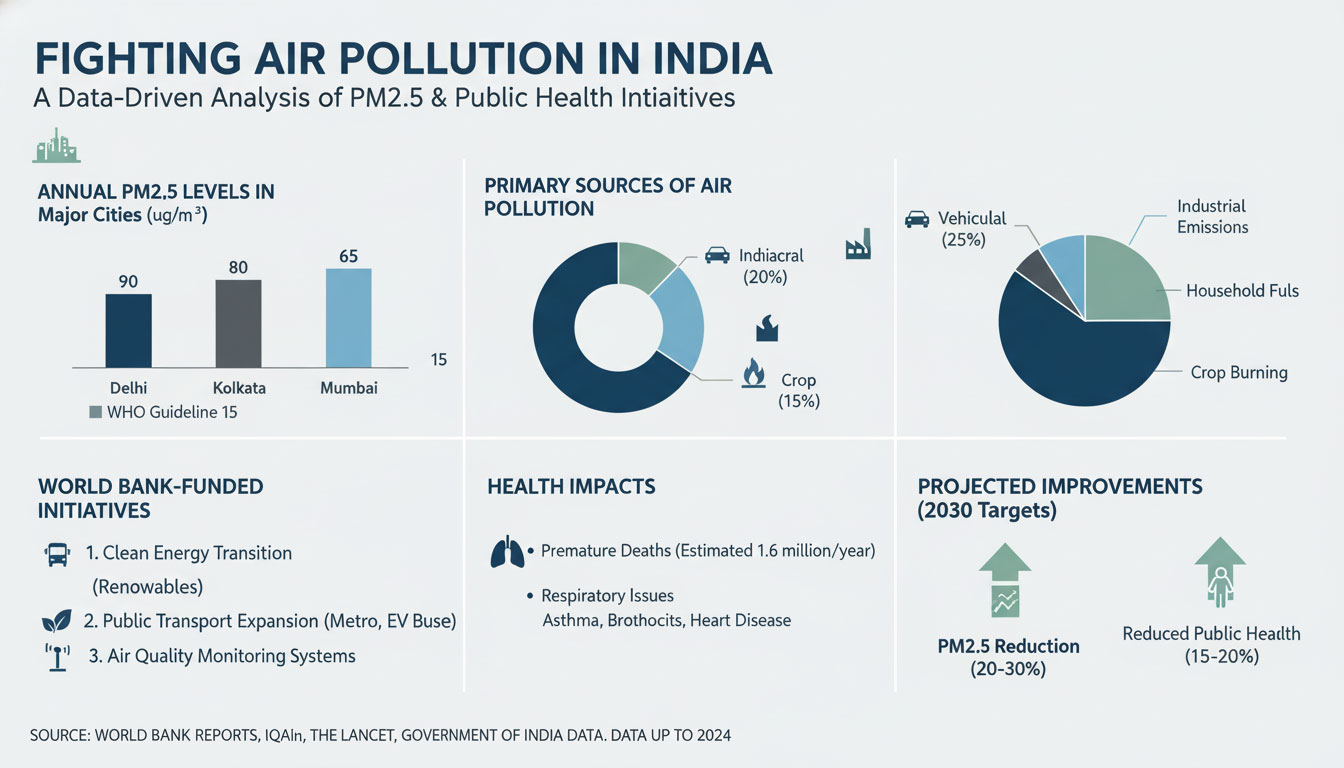
For years, India has grappled with dangerously high levels of air pollutants, including fine particulate matter (PM2.5) and nitrogen dioxide, which contribute to respiratory illnesses, cardiovascular disease, and premature mortality. According to the World Health Organization, several Indian cities regularly rank among the world’s most polluted, placing immense strain on healthcare infrastructure and economic productivity.

The Scale of India’s Air Pollution Problem
India’s rapid urbanization, industrial growth, and reliance on fossil fuels have compounded the air quality crisis. Cities like Delhi, Mumbai, and Kolkata experience seasonal spikes in smog, often exacerbated by crop burning and vehicular emissions. Even small reductions in particulate matter could save thousands of lives annually, demonstrating the urgency of strategic interventions.
| Factor | Current Status | Impact on Air Quality |
|---|---|---|
| PM2.5 Levels | Exceed WHO guidelines by 4–10x | Severe health risks |
| Vehicular Emissions | Rising steadily in metropolitan areas | Major contributor to urban smog |
| Industrial Pollution | Heavy emissions in manufacturing hubs | Localized air quality deterioration |
| Household Energy Use | Widespread use of solid fuels in rural areas | Indoor and outdoor pollution |
| Government Policies | Existing measures vary by state | Limited enforcement reduces efficacy |
The funding is intended to support comprehensive monitoring, policy implementation, and deployment of pollution control technologies, including cleaner fuels, emission reduction programs, and urban planning innovations.
A Multi-Pronged Strategy for Cleaner Air
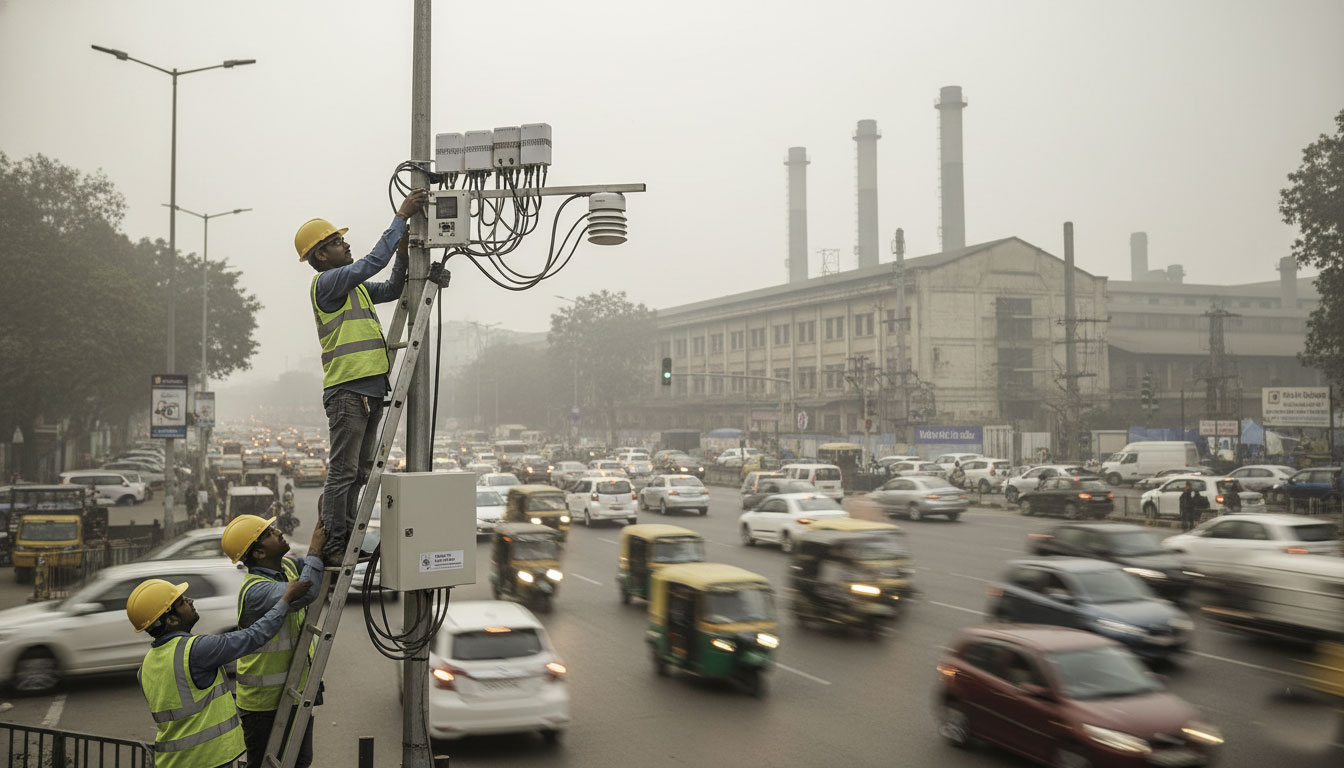
The World Bank initiative emphasizes a multi-pronged approach. It will fund the modernization of public transportation fleets, the installation of real-time air quality monitoring stations, and the promotion of renewable energy adoption in industrial sectors. Additionally, programs targeting behavioral change—such as reducing open burning and incentivizing electric vehicles—will complement technological interventions.
World Bank representatives have highlighted that India’s Air Pollution is not just a local concern; its transboundary nature affects neighboring countries and contributes to global climate challenges. By prioritizing air quality improvements, the initiative aims to deliver both public health and climate co-benefits.
Health Impacts and Economic Implications
The health toll of India’s Air Pollution is staggering. Studies suggest that more than 1.7 million premature deaths annually in India are linked to poor air quality, while respiratory and cardiovascular conditions are on the rise. Hospital admissions spike during periods of extreme smog, and children and the elderly are disproportionately affected.
Economically, poor air quality reduces labor productivity, increases healthcare expenditures, and discourages investment in heavily polluted regions. The World Bank’s funding is expected to produce measurable reductions in these costs by curbing emissions and improving urban livability.
Regional Disparities and Targeted Interventions
Pollution levels vary across India’s states, necessitating tailored strategies. Northern regions, particularly the Indo-Gangetic Plain, suffer from persistent smog due to seasonal crop burning and industrial activity. Southern cities, while relatively cleaner, face localized pollution from traffic congestion and energy production.
The initiative will prioritize high-risk areas for early intervention while promoting scalable models that can be implemented nationwide. Local authorities will collaborate with the central government, NGOs, and private stakeholders to ensure effective deployment.
Technological and Policy Innovations
Several technological solutions will be deployed under the World Bank program. Air purifiers for schools and hospitals, low-emission industrial processes, and electric vehicle incentives are key components. Simultaneously, policy measures such as stricter vehicle emission standards and industrial zoning reforms will reinforce technological adoption.
The initiative also emphasizes data-driven governance. Enhanced air quality monitoring will enable policymakers to respond quickly to pollution spikes, assess the effectiveness of interventions, and adjust strategies as needed.
Global Significance and Lessons
India’s Air Pollution crisis is emblematic of the environmental challenges faced by rapidly developing nations. The World Bank’s intervention provides a model for other countries experiencing similar urban air quality issues. Lessons learned from India’s comprehensive approach could inform international standards and collaborative climate action.
Measuring Success and Accountability
The program incorporates rigorous monitoring and evaluation frameworks to ensure transparency and effectiveness. Success metrics will include reductions in PM2.5 and PM10 levels, improved public health outcomes, increased adoption of clean technologies, and compliance with national air quality standards.
By approving this $2 billion funding initiative, the World Bank has reinforced its commitment to addressing India’s Air Pollution at scale. While challenges remain—ranging from regional disparities to behavioral change—the combination of financial support, technological innovation, and policy reform offers a pathway toward cleaner, healthier urban environments.
As India implements these interventions, the hope is not only for improved air quality but also for a blueprint that other developing nations can follow in mitigating pollution-related health risks while supporting sustainable economic growth.


